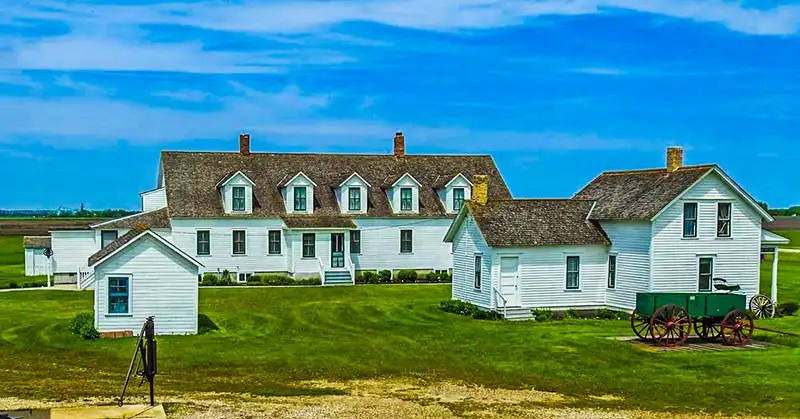
The Bagg Farm in Mooreton, ND, wasn’t the first, or even the largest, of the Bonanza farms. It has, however, survived the longest. Named to the National Register of Historical Places in 1985, it was also added to the State Historic Sites Registry in 1986. In 2005, the Bonanza farm was designated as a National Historic Landmark.
Not familiar with Bonanza farms? Think of them like scientist Bruce Banner turning into the Hulk.
Bonanza farms were bigger and better than other farms of the late 1800s due to more skilled managers and lots of workers. Eventually, though, like the Hulk, the farms returned to their original sizes.
What’s at the Bagg Bonanza Farm?
J.F. Downing was an attorney and businessman who established a Bonanza farm in North Dakota during the late 1800s.
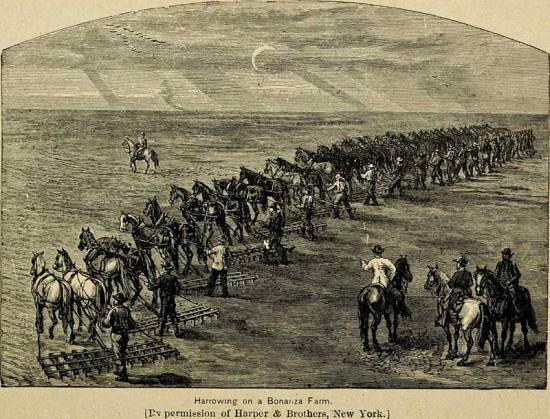
With landholdings exceeding 9,000 acres it was triple the smallest size Bonanza farms, but far short of the 75,000+ acres of the largest.
Downing’s nephew, Frederick Bagg, managed the farm for 20 years.
When Mr. Downing died in 1913, Frederick Bagg moved one-fourth of the buildings a short distance away and started the Bagg Bonanza farm with his wife, Sophia, who had been a cook on the Downing farm.
A number of buildings on the Bagg Farm, including its amazing centerpiece, the 1870s main house, originated on the nearby Downing Farm.
Restored Historic Buildings on the Bagg Farm
You can go into a number of restored historic buildings on the Bagg farm. Two of them, the mule barn along with the bunkhouse, were moved from the Downing farm in 1915. As well as restored buildings there are also foundations for buildings no longer on the site.
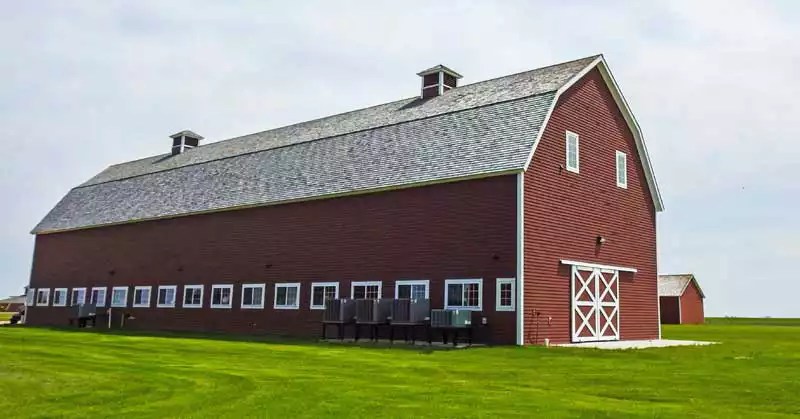
Seeing the enormity of the existing barn, which is 40′ by 28′, I can hardly imagine the barn that would have stood on the 128′ by 36′ horse and mule barn foundation!
With machine sheds to hold tools and machines, the blacksmith shop for shoeing horses, the garage that started as a machine shed but eventually housed cars, the foreman’s house and farm office, and granaries for storage (the elevator was destroyed during a wind storm in 1954), it was an effective farming system.
As you walk around the site, it’s easy to understand the orderly farming methods used to run a farming operation with the enormity of a Bonanza farm.
Linda’s Pick of the Displays
To be honest, it was the photos of the Bagg Farm Main House (84′ long and 30″ wide) that led me to put the Bonanza farm on our road trip itinerary. Similarly, plantation homes are one of the attractions I enjoy exploring most in the deep south.
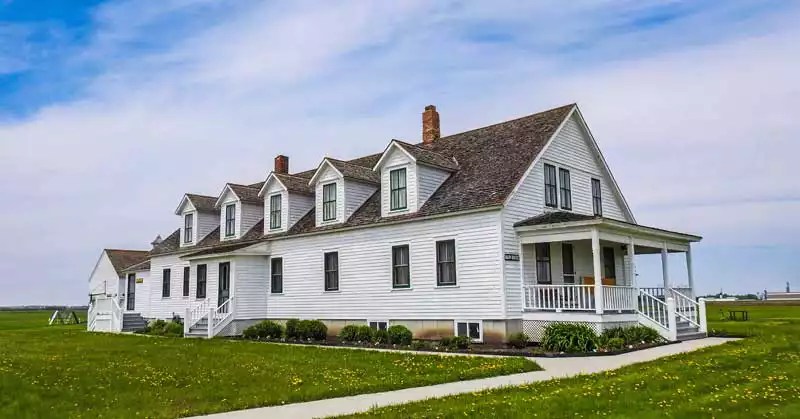
Indeed, I must confess that as a child, I’d snuck away more than once (unbeknown to my mother!) to explore pantries and parlors and upstairs rooms that were typically off limits when we were out visiting. And I was dying to get a chance to explore the completely restored 20-room main attraction at the Bagg Farm!
Rather, the first floor had both a main and family kitchen along with pantry, storage and clean-up rooms, a dining room that could seat 25 at a long table, bathroom and porches. Upstairs, there were twelve bedrooms to go with the four on the main floor.
Fast Fact: More simply built than I'd expected, the farm house had nothing in common with Louisiana plantation houses of the south. There was no formal sitting room — no place to entertain.
Day-to-Day Life on a Bonanza Farm
I found the day-to-day life on a Bonanza farm fascinating, with the dining room the most fascinating of all.
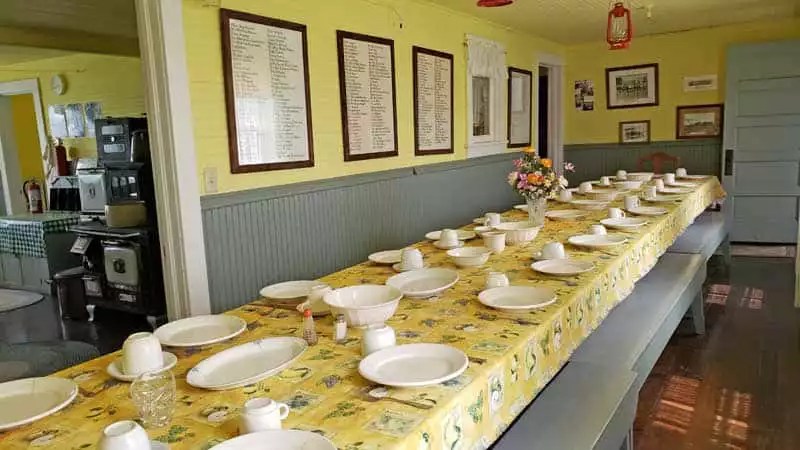
Around 100 to 120 men worked on the farm during seeding and harvest. Women, of course, worked in the farm house to do the cooking and cleaning. And there was a lot of both to do! These are some of the amazing things I learned from our guide touring the Bagg Farm, Virginia Goerger. A talented historian, she also wrote the book, A Century of LIfe on the Bagg Farm and Red River Valley (see the references below).
- 40 loaves of bread were baked daily
- A bushel and a half of potatoes were peeled and cooked daily in large copper wash boilers
- Half a hog or steer was cooked daily
- Farm raised animals were butchered twice weekly and stored in a refrigerated building
- 18 to 20 cows were milked daily for milk and cream
- 18 pies fit into the largest oven at a time
- Crews at the Bagg Bonanza Farm liked green tomato pie best in the 1920s
- 100 men could be served a meal in the dining room in less than an hour
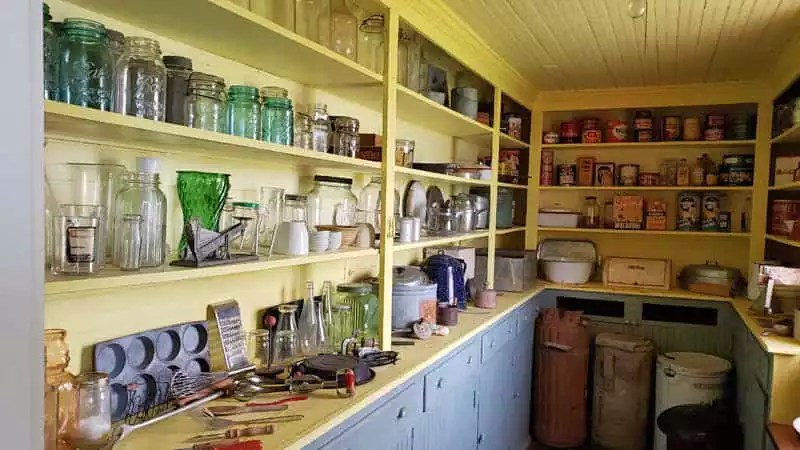
The pantry at the Bagg Bonanza Farm main house is still stocked with all of the cooking equipment.
If you’ve ever visited a traditional privvy, you’ll be impressed with the main outhouse that’s 8′ by 8′ in size. And the laundry building really speaks to the drudgery of daily chores! Inside it, you can also see generations of machines used to do laundry.
The laundry isn’t the only building with artifacts in it though. You’ll see all kinds of intriguing machines from the pantry of the main house to the forge, tools and materials for smithing.
[A version of this article was first published in the online publication, guide2travel.]
How Do You Visit Bagg Bonanza Farm?
The Bagg Bonanza Farm is located just outside the small town of Mooreton, ND, at 8025 169th Ave SE. With only around 200 people, there aren’t a lot of facilities. However, we bought a sandwich and delicious slice of lemon poppyseed loaf at the town’s service station.
Mooreton is about 48 miles south of Fargo, North Dakota, off of Interstate Highway 29 (I-29) at Exit 23B. From 23B continue west on the state road for 2.3 miles.
For information on operating hours and admission fees, as well as upcoming events at the Bagg Bonanza Farm, see:
Bagg Bonanza Farm
Bagg Bonanza Farm Facebook Page with Events
Read More Museum Reviews in North Dakota
Check out more reviews for museum attractions in North Dakota on guide2museums.com.
Explore More Historic Sites
- Chinatown in Montreal: A Fascinating Historic Site

- Canada’s Little-Known Cold War Museum: the Diefenbunker
- Discover the Mormon Handcart Historic Site & Devil’s Gate in Wyoming

- Historic Home of 1800s Governor in Lafayette, LA: Alexandre Mouton

- See 100 Miles Across Nebraska From Scotts Bluff National Monument

- Bishop’s Palace in Galveston, Texas: Victorian Era Castle

- Rip Van Winkle Gardens & Historic Mansion: Jefferson Island, Louisiana

- Robinson Roadhouse & Robinson Flag Station: Yukon Ghost Town

- USS Lexington Museum: WWII Aircraft Carrier in Corpus Christi, Texas

- Watson Lake Sign Post Forest Historic Site: Watson Lake, Yukon
- Medalta Museum: Ceramic Arts in Medicine Hat, Alberta
- Claybank Brick Plant National Historic Site: Claybank, Saskatchewan

- The Sheriff’s House Museum & Historic Site: A Hidden Gem in Devils Lake, North Dakota

- Soo Line Historical Museum & Historic Site: Weyburn, Saskatchewan

- Texas Seaport Museum: Gulf Coast History in Galveston, Texas

- Fred Light Museum: Battleford, Saskatchewan

- Frontier Prison Museum: Rawlins, Wyoming

- Toronto’s First Post Office Museum & National Historic Site: Ontario

- The Bastion: Designated Historic Place, Nanaimo, British Columbia

- Hearst Castle: National Historic Landmark in San Simeon, California

- Inglis Grain Elevators National Historic Site: Agricultural History in Inglis, Manitoba

- Evergreen Plantation: National Landmark Site in Edgard, Louisiana

- Cannington Manor Provincial Historic Park: Rich Lifestyles in 1880s Saskatchewan

- Mystic Seaport Museum: Historic Seafaring Village in Mystic, Connecticut

- National Doukhobor Heritage Village: Veregin, Saskatchewan

- Manhattan Project National Historical Park: WWII History in Hanford, Washington

References
Bommersbach, J. (2014). The last Bonanza farm. TrueWest. Retrieved from https://truewestmagazine.com/the-last-bonanza-farm/
Farms in North Dakota: A historical context. (2014). Bismarck, ND: State Historical Society of North Dakota. Retrieved from https://www.history.nd.gov/hp/PDFinfo/Farms-in-North-Dakota-Part1.pdf
Goerger, V. V. (2016). A century of life on the Bagg Farm and Red River Valley. Fargo: Knight Printing.
National Historic Landmark Designation: BAGG, FREDERICK A. AND SOPHIA, BONANZA FARM. (2005). United States Department of the Interior, National Park Service. Retrieved from https://npgallery.nps.gov/GetAsset/ccaecbfb-b034-4985-b425-9ff38fa594fa




 guide2museums.com