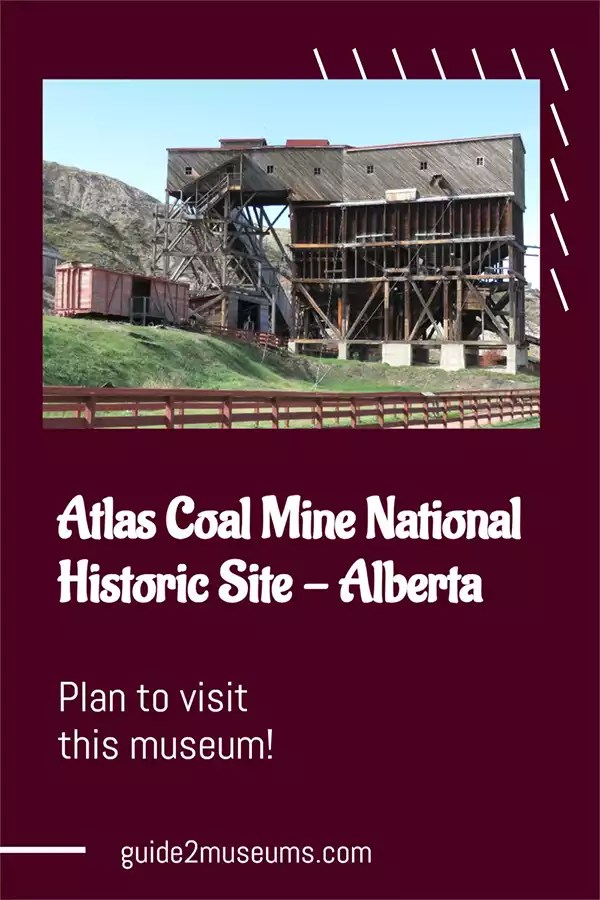
The Atlas Coal Mine National Historic Site is a museum with add-on tours. Visitors can really get up close and experience this part of Alberta’s natural resources history when they take one.
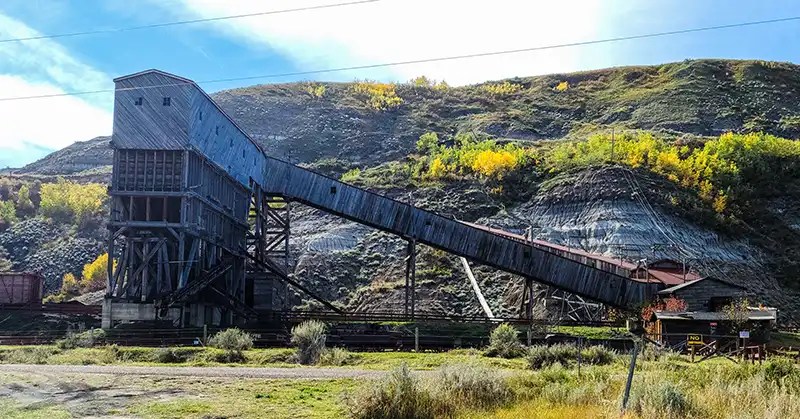
It’s located in the Drumheller, or dinosaur capital of the world, part of the province.
Linda’s Pick of the Displays
Everything at the Atlas Coal Mine National Historic site is fascinating, however, I enjoyed just wandering the site, reading the self guided interpretive panels and taking photos the most.
After all, what’s more photographic than a tipple?
If you’re like me, you’ve never even heard of one before never mind photographed it!

Fast Fact: A tipple is a large structure used at the mine to clean, sort, and load coal into the rail cars to be shipped to market. This is Canada's last existing wooden tipple. It's eight-stories high.
Of course, back in the day, the tipple was a busy, noisy, dirty place instead of an historic structure against the backdrop of the Drumheller badlands.
Every day 800 tons of black coal rattled down the moving belts.
Coal dust would have been everywhere, sticking to the miners’ faces, hair, hands and bodies.
Miners often started their careers working in the tipple. The job? Bone-picker. A bone picker sorted through the coal transported by train and conveyor belt from the mine entrance set high in the wall.
While locals worked the mines, so did men from elsewhere. The self guided tour gives you access to a miner cabin relocated from Rosedale.
Fast Fact: Smaller than today’s tiny houses, the 2.5 m by 2.5 m (8 ft x 8 ft) miner cabin held just a bed, chair and table, and a coal-fired stove for heat and cooking.
Its back wall was made from split fence posts and the roof from railway grain doors.
However, the shack was a big improvement over what they called a company house for bachelors, a canvas tent for six.
What’s in the Atlas Coal Mine National Historic Site?
The Atlas Coal Mine National Historic site is the most complete historical coal mine in Canada.
The tipple, one of its features, was moved here from one of the other sites in the winter of 1935/36.
How?
By hauling all of the pieces across the frozen Red Deer River by draft horse and crawler tractors.
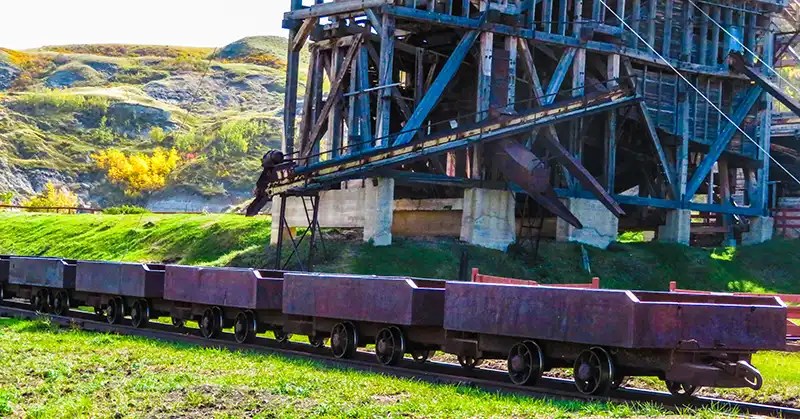
Fast Fact: The Atlas Coal Mine was just one of the 139 coal mines in the Drumheller Valley during the peak of the coal mining industry that lasted from the First World War to the 1950s. The Atlas No. 3 Coal Mine (historic site) was operational from 1936 to 1974.
Visitors have lots of options when it comes to visiting the historic site.
If you only have an hour or two, then the Site Admission ticket is likely the best one for you.
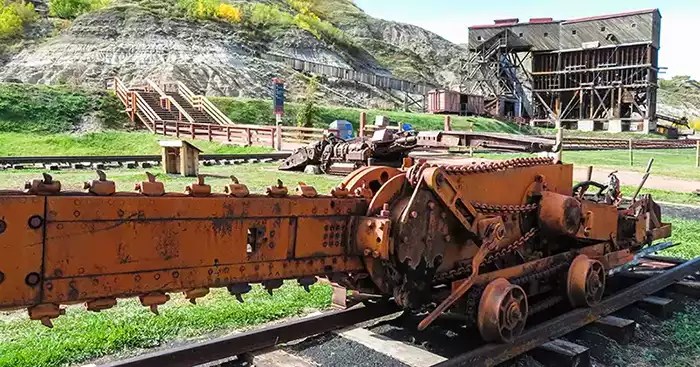
It gives you access to a number of buildings and mining machinery including the Grey House, Newcastle Bldg. and Lamp House.
Additional Guided Tours at the Atlas Coal Mine
If you have more time there are a number of guided tours that are fantastic!
- Train Ride (25 minutes) – with a 90 year-old electric locomotive on a surface tour of the mine site (best option for those with mobility concerns)
- Processing Plant Tour (45 minutes) – walk the gantry up 125 feet to the top of the tipple learning about sorting, storing, and shipping coal (medium walking difficulty)
- Mine Portal Hike (1 1/4 hours) – explore the Atlas underground and upper coal mining site areas (hard walking difficulty)
- Junkyard Archaeology Tour (1 hour) – explore Atlas archaeological mysteries through mega earthworks, demolished buildings, and mining equipment (walking difficulty medium)
Atlas No. 3 Coal Mine National Historic Site of Canada received its Federal Heritage Designation as a site of national historic significance in 2001.
Linda’s Road Trip Tips
I spent a couple of days in the Drumheller area before joining a friend at the Calgary Film Festival, so had a chance to explore the area and take a lot of photos.
Badlands fascinate me, as do the hoodoos, which are 5 m to 7 m (16 ft to 23 ft) high thin spires of rock formed by erosion. So, I found lots of photo opps in the area.
If you have time, take the whole Hoodoo Trail, if not, stop at the Hoodoo Park Provincial Historic Resource (labelled Hoodoos Trail on Google Maps) on your way to the Atlas museum. Hike up into the badlands or just climb a short way up into the hoodoos.

Old bridges are another thing I love. So, when you’re going to (or leaving) the Atlas Coal Mine museum take a side trip east of Hwy 10x at Rosedale heading towards Wayne, AB.
You’ll find 11 bridges, most wooden and only single lane. Indeed, this drive holds the Guinness Book of World Records for the most bridges in the shortest distance! Take a few minutes to whet your whistle, as they say, at the Last Chance Saloon when you arrive.
Who Should Visit the Atlas Coal Mine National Historic Site?
The great thing about visiting the Atlas Coal Mine site is that there’s something for everyone to enjoy. Anyone interested in energy production will find the history of coal and its importance to the country fascinating. Engineering buffs will love exploring the tipple.
Treasure hunters will be fascinated with the archaeology tour.
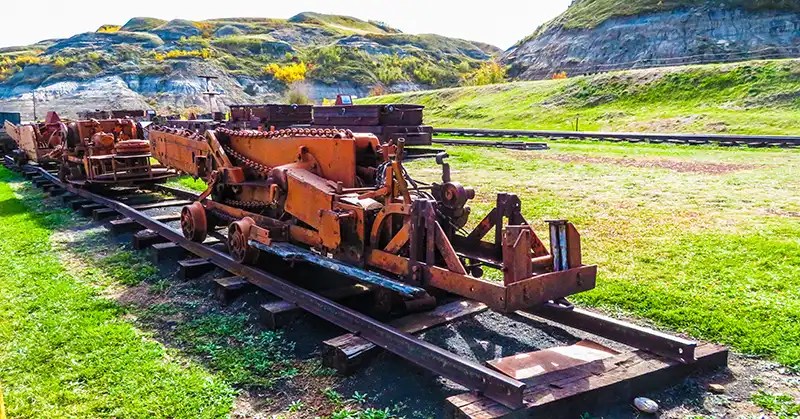
Those who love trains and their historic aspects will enjoy the train ride. The guides often do school tours, so they’re able to get the youngest visitors engaged in the experience and history of the site. And of course, history lovers will enjoy any — or all — of the mine and its tours.
Remember, however, to plan your tour around the physical and time requirements of the tours.
How to Visit the Atlas Coal Mine National Historic Site
The Atlas Coal Mine National Historic Site is 24 km (15 ml) southeast of Drumheller on highway AB-10E.
Parking: The site has lots of free parking.
Check out the playlist of YouTube videos on the museum.
Visit the Atlas Coal Mine National Historic Site website for hours and days open, tickets for guided tours, and current costs.
Keep up to date with what’s happening at the Atlas Coal Mine National Historic Site on their Facebook page.
Plan your visit using Google Maps. If you enjoyed this article, please pin it to share later.
Explore More Historic Sites
- Chinatown in Montreal: A Fascinating Historic Site

- Canada’s Little-Known Cold War Museum: the Diefenbunker

- Discover the Mormon Handcart Historic Site & Devil’s Gate in Wyoming

- Historic Home of 1800s Governor in Lafayette, LA: Alexandre Mouton

- See 100 Miles Across Nebraska From Scotts Bluff National Monument

- Bishop’s Palace in Galveston, Texas: Victorian Era Castle

- Rip Van Winkle Gardens & Historic Mansion: Jefferson Island, Louisiana

- Robinson Roadhouse & Robinson Flag Station: Yukon Ghost Town

- USS Lexington Museum: WWII Aircraft Carrier in Corpus Christi, Texas

- Watson Lake Sign Post Forest Historic Site: Watson Lake, Yukon
- Medalta Museum: Ceramic Arts in Medicine Hat, Alberta

- Claybank Brick Plant National Historic Site: Claybank, Saskatchewan

- The Sheriff’s House Museum & Historic Site: A Hidden Gem in Devils Lake, North Dakota

- Soo Line Historical Museum & Historic Site: Weyburn, Saskatchewan

- Texas Seaport Museum: Gulf Coast History in Galveston, Texas








 guide2museums.com