Giant plantations — sprawling complexes made up of 30 to 40 buildings and home to hundreds — often define the Antebellum era of the deep south. While there are dozens of plantations that have been restored, few are as intact as the Evergreen Plantation. It’s a National Landmark site, near New Orleans, Louisiana.
What’s at the Evergreen Plantation?
Evergreen Plantation is a privately owned plantation that provides private tours by arrangement.
Unlike many, it’s still a working sugar cane plantation where people live and work.
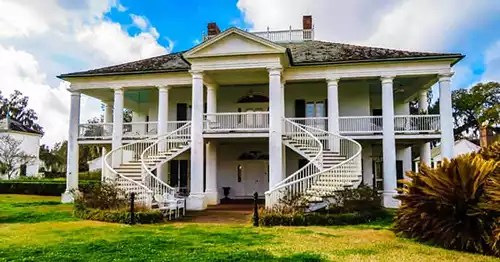
In fact, it joins Mount Vernon and Gettysburg in being granted landmark status for its agricultural acreage.
Historically, plantations came in various sizes, with all of them producing cash crops of some sort instead of subsistence agriculture, like a farm. Today, Evergreen is one of the largest, most intact plantation complexes in the South.
Do you know what makes a plantation different from a farm?
A plantation typically only produces one cash crop, although of course there were gardens to grow food for the plantation owner and workers as well. Typically, near New Orleans, the crop would have been sugar cane or cotton or tobacco. A farm, on the other hand may have livestock and a variety of crops.
It has 37 buildings on the National Register of Historic Places, 4/5 being from the Antebellum era.
The beautiful, Greek Revival style main house with its Federal accents is the main attraction at Evergreen. A pair of helical staircases extending from the facade are one of its most striking features — and certainly one of my favorite images.
Inside the Plantation House
Evergreen Plantation, as you’d expect, is only open during guided tours.

I can guarantee, however, that you’ll leave with a much greater understanding of Antebellum USA, as well as knowledge about the history of Evergreen at the end of your tour.
Fast Fact: Once you climb the staircase, you enter the plantation that began as a French Creole home built in the early 1790s. The house is built traditionally, so the main floor is three rooms wide and one room deep.
Front and back wide galleries, or verandas, provided a cool place to spend the evening on hot Louisiana nights back in Antebellum times.
The back galleries were later enclosed by Matilda Gray to give interior access to all the rooms.
When it was purchased by Matilda Gray in 1944, the buildings and plantation had been abandoned, so she started a restoration project continued by the current owner, her niece, Matilda Gray Stream. They’ve acquired the furnishings over the years, using nineteenth century antiques and paintings.
Dependency Buildings
The term, dependency buildings, was a new one to me. However, as you might expect, it simply means buildings near the “big house” that are necessary.
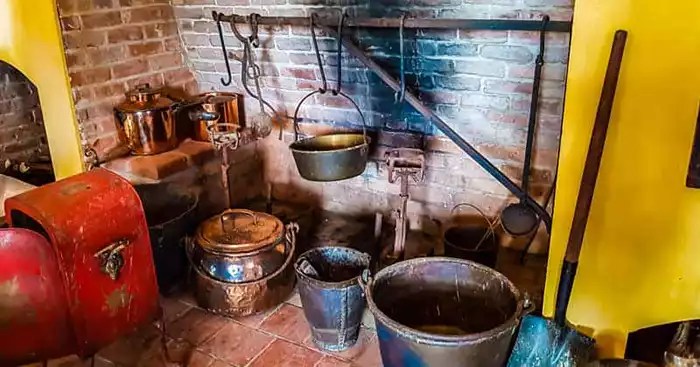
There are a number of dependency buildings at Evergreen:
- Kitchen — the hearth and wood fired oven are original to the 1790s construction of the main house.
- Pigeonniers — A narrow two-story building that held pigeons important for the eggs, meat, and dung.
- Privy — a rare example (!) outhouse with a “two holer” on two sides.
- Garconniere — the bachelor residence that housed the young men of plantation families, now used as a guest house.
Linda’s Pick of the Displays
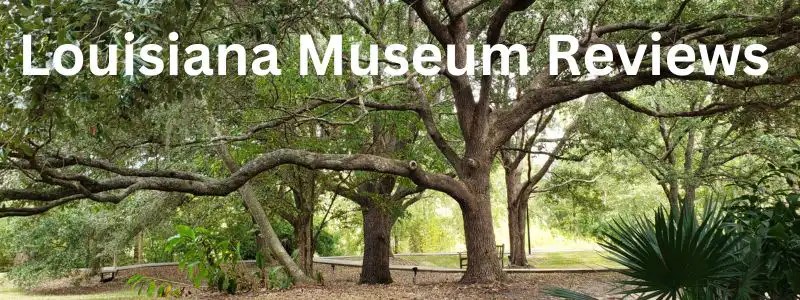
I have to preface this choice by saying I absolutely love live oak trees. There’s something about the gnarly branches and Spanish moss that I find beautiful. At Evergreen Plantation, a long row of live oaks creates a path between the rows of slave cabins.
Fast Fact: In 1944, when Mrs. Gray purchased Evergreen Plantation, the double row of twenty-two slave cabins were mostly occupied by sugar cane workers.
While the cabins weren’t included in the original restoration, they’ve been repaired and patched to keep them intact and authentic.

An 1835 document displayed at Evergreen Plantation lists the fifty-four persons who were enslaved at the time, along with their skills.
That year, the owner, Pierre Clidamant Becnel, had overspent on a renovation and fallen into bankruptcy. His cousin, Lezin Becnel, purchased the property, allowing Pierre and his family to stay until they could repurchase it the following year.
During the Antebellum era, thousands upon thousands of cabins that looked very similar to these filled the south. Now, however, finding them still standing quietly under the two long rows of live oak trees is a very rare site.
Linda’s Road Trip Tips
It’s only 45 miles from New Orleans, and 49 miles from Baton Rouge, to the plantation. If you haven’t been able to set up a tour of Evergreen when you’re planning to travel, check out Oak Alley Plantation instead, as they’re only 10 miles apart.
While Oak Alley does have cottages, there were no vacancies when we visited, so we stayed in Baton Rouge at the Crowne Plaza Executive Centre. Their seafood buffet on Friday night at the Patio Grill was amazing!
Who Should Visit Evergreen Plantation?
Currently, the plantation is offering private tours, which are well worth your time to set up. The plantation is also dedicated to research and education. They’ve also posted a virtual tour of the plantation for everyone to enjoy.
The grounds are extensive, so even though the land is flat, seeing everything might be difficult for anyone with mobility issues. Likewise, there certainly weren’t any elevators when plantation homes were built, so the stairs to the second floor could be a challenge.
How Do You Visit Evergreen Plantation?
You can watch a 9-minute virtual tour on YouTube.
Check the website to confirm its open status, as Evergreen has begun to offer private tours through a local tour agency. Contact phone number: 504 – 251 – 1595.
Address: 4677 Hwy. 18, Edgard, Louisiana. Plan your visit with Google maps.
Check the Evergreen Plantation Facebook page for more photos and information.
Read More Louisiana Museum Reviews
More Historic House Museums to Visit
- Historic Home of 1800s Governor in Lafayette, LA: Alexandre Mouton
 Check out this Lafayette, Louisiana, historic house restored to its 1848 grandeur. Its distinctive architectural elements make it listed on the National Register of Historic Places.
 - Adams Museum in Deadwood: Where Legends are Larger Than Life
 Deadwood, South Dakota has been entertaining people since1876. The Adams Museum archives the history of the infamous and the mundane in a house circa 1892.
 - Bishop’s Palace in Galveston, Texas: Victorian Era Castle
 Visit this historic house museum included in the top 100 most important U.S. buildings by the American Institute of Architects. It even withstood the 1900 Galveston Hurricane!
 - Rip Van Winkle Gardens & Historic Mansion: Jefferson Island, Louisiana
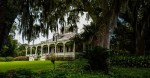 The 1870 historic home of Joseph Jefferson is the location of the Rip Van Winkle Gardens. The New Iberia, Louisiana, house is on the National Register of Historic Places.
 - The Sheriff’s House Museum & Historic Site: A Hidden Gem in Devils Lake, North Dakota
 The Sheriff’s House Museum is an historic house and National Historic site in Devils Lake, North Dakota. The restored brick home is beautifully decorated.
 - Campbell House Museum – 1820s Toronto, Ontario
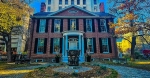 The Campbell House Museum is in Toronto, Ontario, Canada. Built in 1822, it’s the oldest remaining house from the Town of York site.
 - Hearst Castle: National Historic Landmark in San Simeon, California
 Visit one of the world’s most luxurious residences — Hearst Castle — in San Simeon, California. With everything from a Roman Pool/bath to 42 bedrooms this spot was a paradise for the rich and famous in the 1920s and 1930s.
 - Oak Alley Plantation: Grand Dame of Louisiana’s River Road
 Oak Alley is an historic plantation that offers everything. You can stay on site, enjoy authentic Cajun and Creole food, and tour the mansion.
 - Evergreen Plantation: National Landmark Site in Edgard, Louisiana
 The Evergreen Plantation is one of the largest, most intact plantation complexes in the south. It has 37 buildings on the National Register of Historic Places.
 - Casa Loma: Historic 98 Room House Museum in Toronto, Ontario
 Casa Loma is an historic home built like a castle. All three floors are furnished with original pieces and open to the public, as are the towers.










 guide2museums.com