The award winning Museum of Northern British Columbia is one of Prince Rupert’s main attractions. Not only is its building amazing, its collection of Indigenous artifacts date back to the end of the last ice age.

Indeed, the building is actually an artifact as it’s built like a traditional longhouse.
Linda’s Pick of the Exhibits
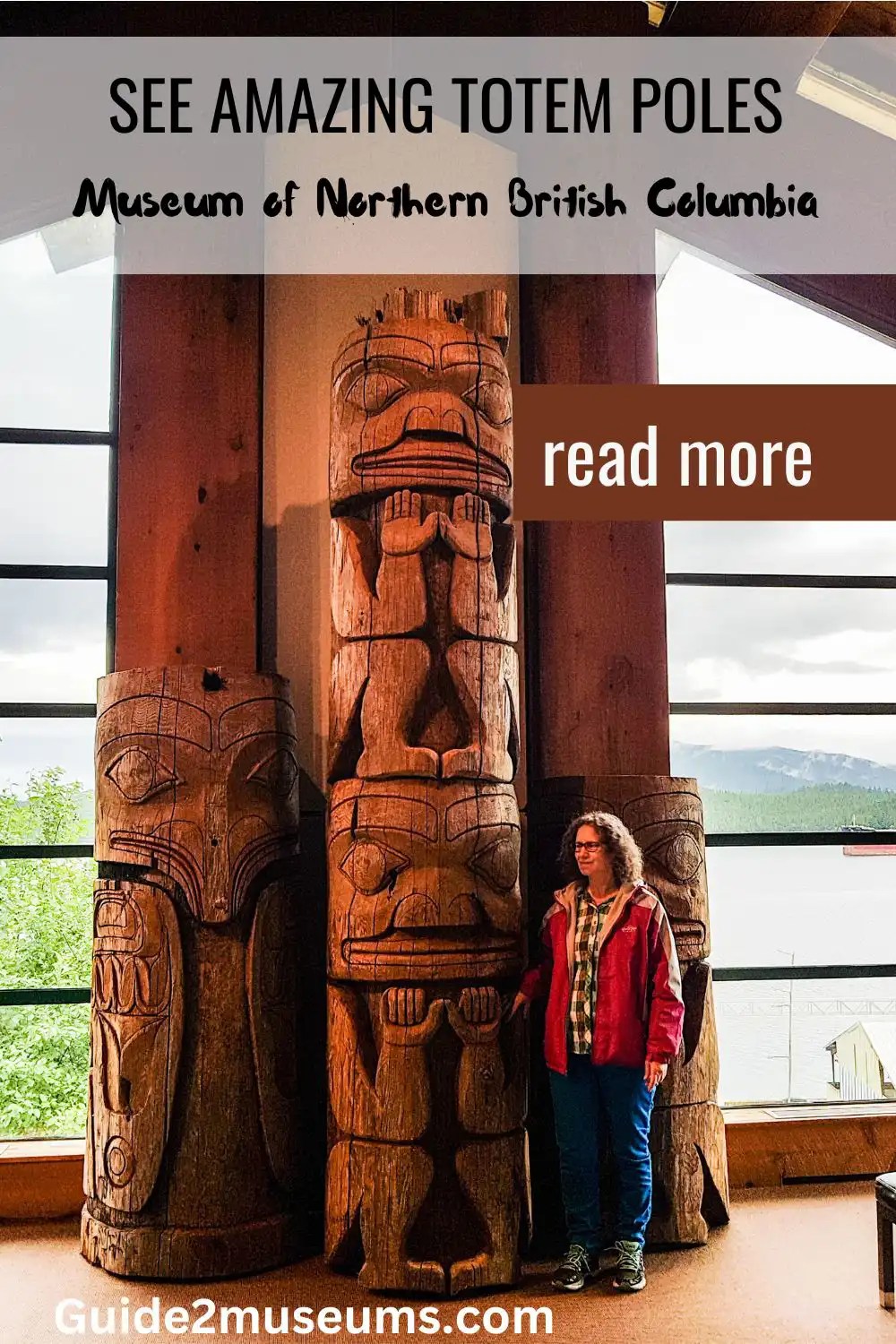
I have to admit I’m somewhat obsessed with trees since visiting the redwood forests on the West Coast. So, finding giant cedars in the lobby of the museum had me hooked.
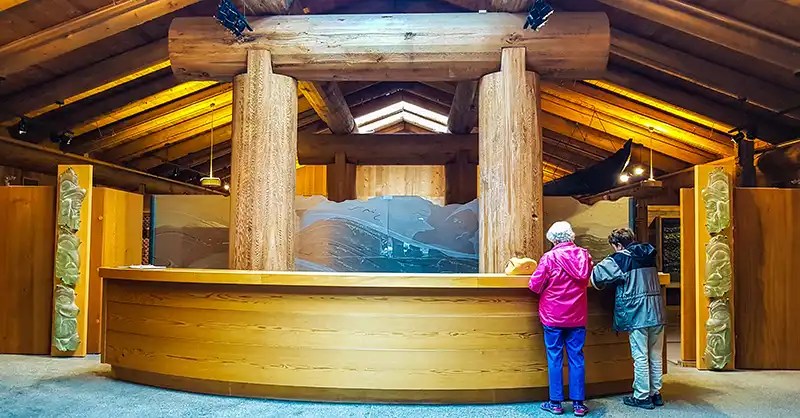
The great thing about cedar is that its scent endures long after the tree leaves the forest. So, the cedar smell made it feel like the museum was outdoors.
These Western red cedars are local to the Pacific Northwest, so have been used for millennia by locals.
Similarly, open spaces help create the museum’s outdoor atmosphere. The cedar continues throughout the building as visitors view different parts of the collection.
What’s in the Museum of Northern British Columbia?

Indigenous peoples have lived in British Columbia for more than 10,000 years.
The Museum of Northern British Columbia in Prince Rupert, British Columbia, traces their early history along with the growth of Prince Rupert.
The museum is important in preserving Canada’s Indigenous heritage. Indeed, seven of Canada’s eleven unique language families are spoken in BC’s 198 different First Nations.
The Northern BC Museums Association administers the museum, along with the Northwest Coast First Nations Artists’ Studioand the ‘Wiwaabm Ts’msyeen, the Tsimshian Performance Longhouse.
Fast Fact: The museum was established nearly a century ago, in 1924. The collection area runs between Portland Canal to the north and the Douglas Channel to the south.
The museum has a number of archival holdings from the early 1900s forward. Topics include an early history of Prince Rupert, the U.S. and Canada 54/40 boundary, and the area’s railway history. Diaries of Ben Codville, a lighthouse keeper on Pointer Island from 1898 – 1964, are an important part of the collection.
Art of Many Different Peoples
Many different materials have been used artistically in the Pacific Northwest over the centuries.
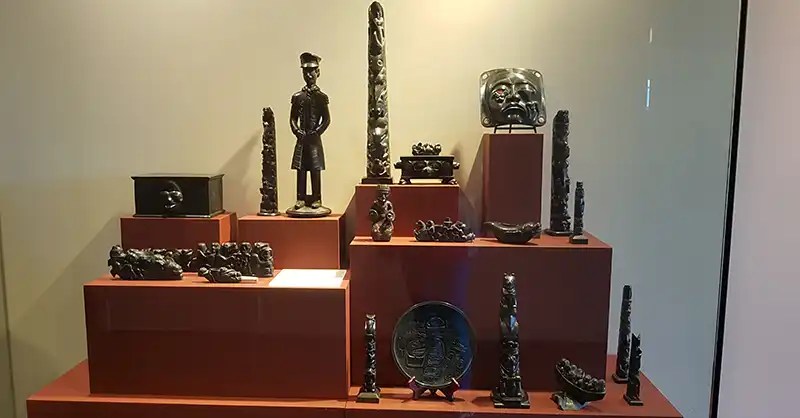
The Tsimshian people traded with others, including European trappers and explorers, for materials. This creates a rich collection of artistic pieces and clothing.
In particular, button blankets, or embellished blankets, are worn for ceremonial purposes.

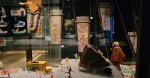
In addition to artifacts, the museum provides short histories of the area’s different cultural groups and their traditions.
Fast Fact: Other materials featured in the art collection include copper from the Northern Tlingit, obsidian from the Tahltan, and dentalium shells from the Nuuchahnulth
Linda’s Road Trip Tips

We arrived in Prince Rupert by car via the Alaska Marine Highway.
The first leg of our water journey took us from Skagway, Alaska, to the state’s capital, Juneau.
From Juneau to Prince Rupert was the longest section.
Keep in mind that the Marine Highway ships are basically ferries rather than cruise ships, so facilities aren’t exactly upscale. My strongest memory is of Friday fish for lunch, since our room on the ship was above the kitchen — we enjoyed the smell of fish all day (and most of the night!).
Of course, one of the most interesting parts of our experience was the nearly-complete lack of night in Alaska and Northern BC.
Indeed, I wouldn’t say Alaska was ever totally dark! It’s truly something everyone should experience!
After landing in Prince Rupert, we spent the night at the Moby Dick Inn, which was inexpensive and comfortable.
As well as the Museum of Northern British Columbia, we visited another Prince Rupert attraction, the Kwinitsa Station Railway Museum. The North Pacific Cannery Museum, not far from town, was also an interesting stop.
Who Should Visit the Museum of Northern British Columbia?
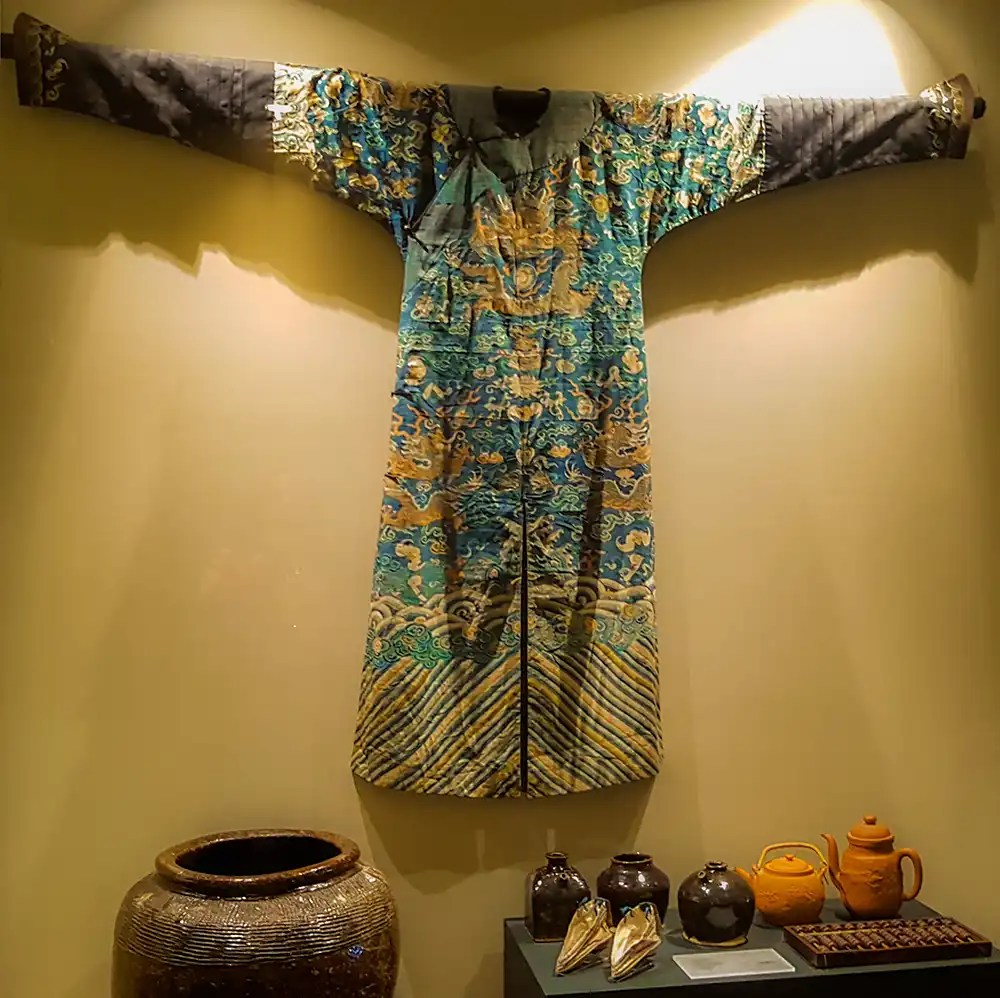
Whether you’re interested in art or history or culture, a visit to the Museum of Northern British Columbia is a must if you’re near Prince Rupert.
The museum is spacious and well laid out, making it easy to get around in, whether you’re using a wheelchair or stroller.
Information provided is in-depth, so you’ll learn a lot about the local First Nations.
How To Visit the Museum of Northern British Columbia
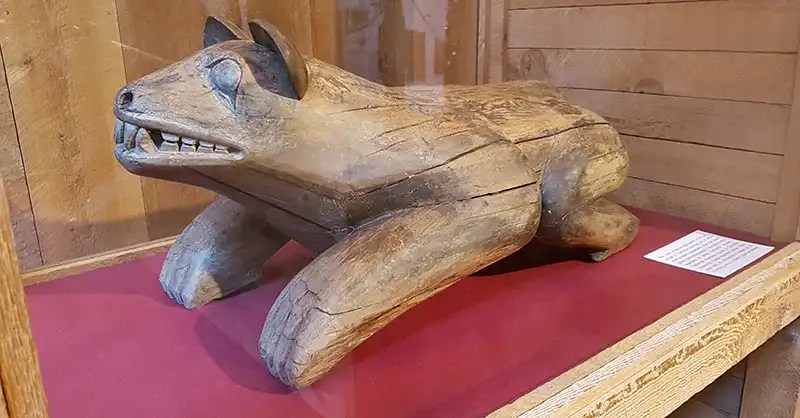
The Museum of Northern British Columbia is located in Prince Rupert, British Columbia, at 100 First Avenue West. Prince Rupert is on the Yellowhead Highway.
Find admission fees and year-round hours on the Museum of Northern BC website.
Get the latest news on the Museum of Northern BC Facebook page.
Explore the top attractions in Prince Rupert with this YouTube video.
Plan your visit to the Museum of Northern British Columbia with Google maps.
Find More Museum Reviews for British Columbia
Check out more reviews for museum attractions in British Columbia on guide2museums.com.
Read More Heritage Museum Reviews
- Boot Hill Museum: Kansas Wild West Myth Meets Lived History
- Maple Creek’s Intriguing Jasper Cultural & Historical Centre

- Front Street Cowboy Museum: Ogallala, Nebraska

- Discover the Mormon Handcart Historic Site & Devil’s Gate in Wyoming

- See 100 Miles Across Nebraska From Scotts Bluff National Monument

- Standout Ranching History at the MonDak Heritage Center: Sidney, Montana

- New Iceland Heritage Museum: Gimli, Manitoba, Canada
- Crazy Horse Memorial & Museums: South Dakota’s Black Hills
- Myra Museum: Lustron House & More in Grand Forks, North Dakota
- Fort Cody Trading Post: Miniature Wild West Show in North Platte, Nebraska

- Miracle of America Museum: 40+ Buildings in Polson, Montana

- Sukanen Ship Pioneer Village & Museum: Moose Jaw, Saskatchewan

- Museum of Northern British Columbia: Indigenous Art & History in Prince Rupert, British Columbia
- Heritage Village: Museum in Weyburn, Saskatchewan
- Vermilionville: Living History Open Air Village in Lafayette, Louisiana



 guide2museums.com