The historic McCormick Bridgehouse & Chicago River Museum is just one of the iconic buildings along the Chicago Riverwalk and its world-famous movable bridges.

However, the big thing about this Chicago attraction is that it shows you how its 37 movable bridges actually work.
Linda’s Pick of the Exhibits
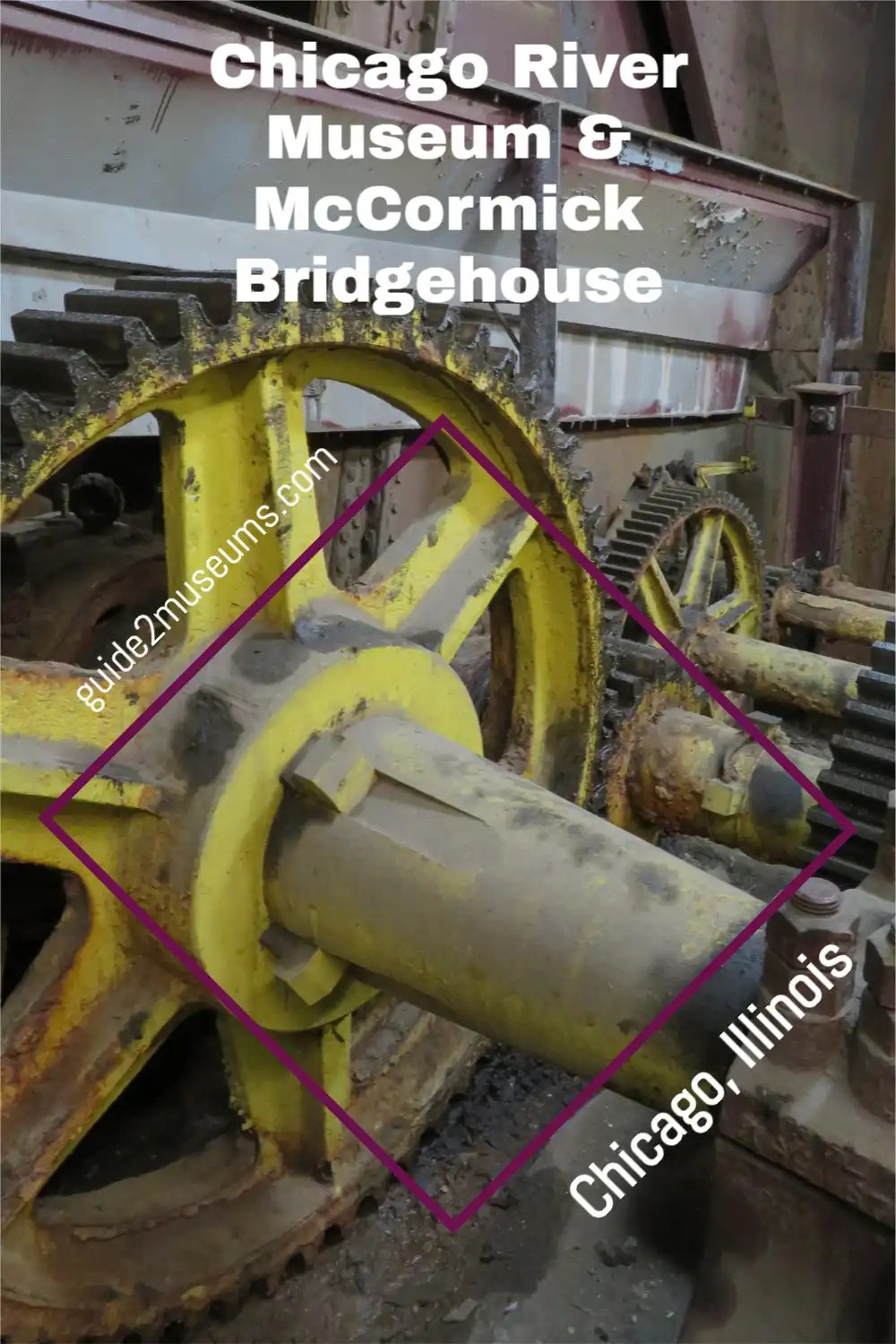
The McCormick Bridgehouse Museum is in the SW bridgehouse of the DuSable Bridge. My favorite part of it was those humongous big gears.
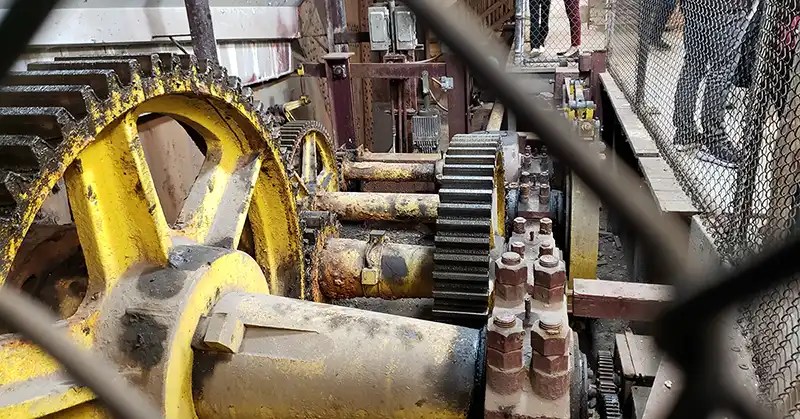
Opened back in 1920, the bridge is a bascule bridge. What’s a bascule bridge? Basically, it’s a drawbridge similar to those used on castles in medieval Europe. In fact, Tower Bridge (you’ve no doubt seen it a lot on tv shows set in London) is considered the second-built of modern bascule bridges.
How does a bascule bridge work?
The name, bascule, comes from the French word for balance scale. You know the kind — your doctor’s office may still use a balance beam scale to weigh you. So, you stand on the scale and the nurse moves attached sliding weights until the bar rests in a straight horizontal line. Voila, you have your weight.
In other words, the bascule bridge is all about balance. The two parts of the bridge lift straight up to let boats cross on the river beneath them.
Unlike a seesaw, which also has to balance, the pivot point (trunnion) isn’t in the middle. You have to put two kids of equal size (or move them closer or futher from the middle) to make them balance on the boards. For a bascule bridge, the pivot point is moved to one side and the seesaw is rebalanced.
Counterweights continually balance the leaves, or long movable arms that cross the river. With the DuSable Bridge,the ratio of the bridge to its counterweight is 3 to 1. It has a leaf weight of around 4,100 tons, with a counter weight around 12,000 tons.
It only takes a 108 hp electric motor, along with the gearing system, to open and close each leaf of the bridge. The bridge’s motor has comparable power to the motor of a 1950s Volkswgon Beetle.
One of the DuSable Bridge’s original names was the Michigan Avenue Bridge. It was officially renamed in 2010, after Chicago’s first permanent resident, Jean Baptiste Point DuSable. His homesite abuts the northern end of the bridge.
What’s at the McCormick Bridgehouse Museum?
The McCormic Bridgehouse is a five-story building providing a history of the Chicago River, its importance to the city, and the bridges that cross it. Its distinctive exterior has a number of bas-relief sculptures that show historical Chicago scenes.
Fast Fact: Chicago hired its first bridge tenders in the 1840s. They lived on the bridges in small houses that became known as bridgehouses. However, the McCormick Bridgehouse is named for Robert R. McCormick, former owner of the Chicago Tribune newspaper and president of the Chicago Sanitary District.
The DuSable Bridge ,along with its bridgehouses, was designated a Chicago Landmark in 1991 by the City of Chicago and the State of Illinois. This bridge has four neoclassical beaux arts style bridgehouses, with the SW bridgehouse being home to the museum.

Each story of the museum is dedicated to a different part of history.
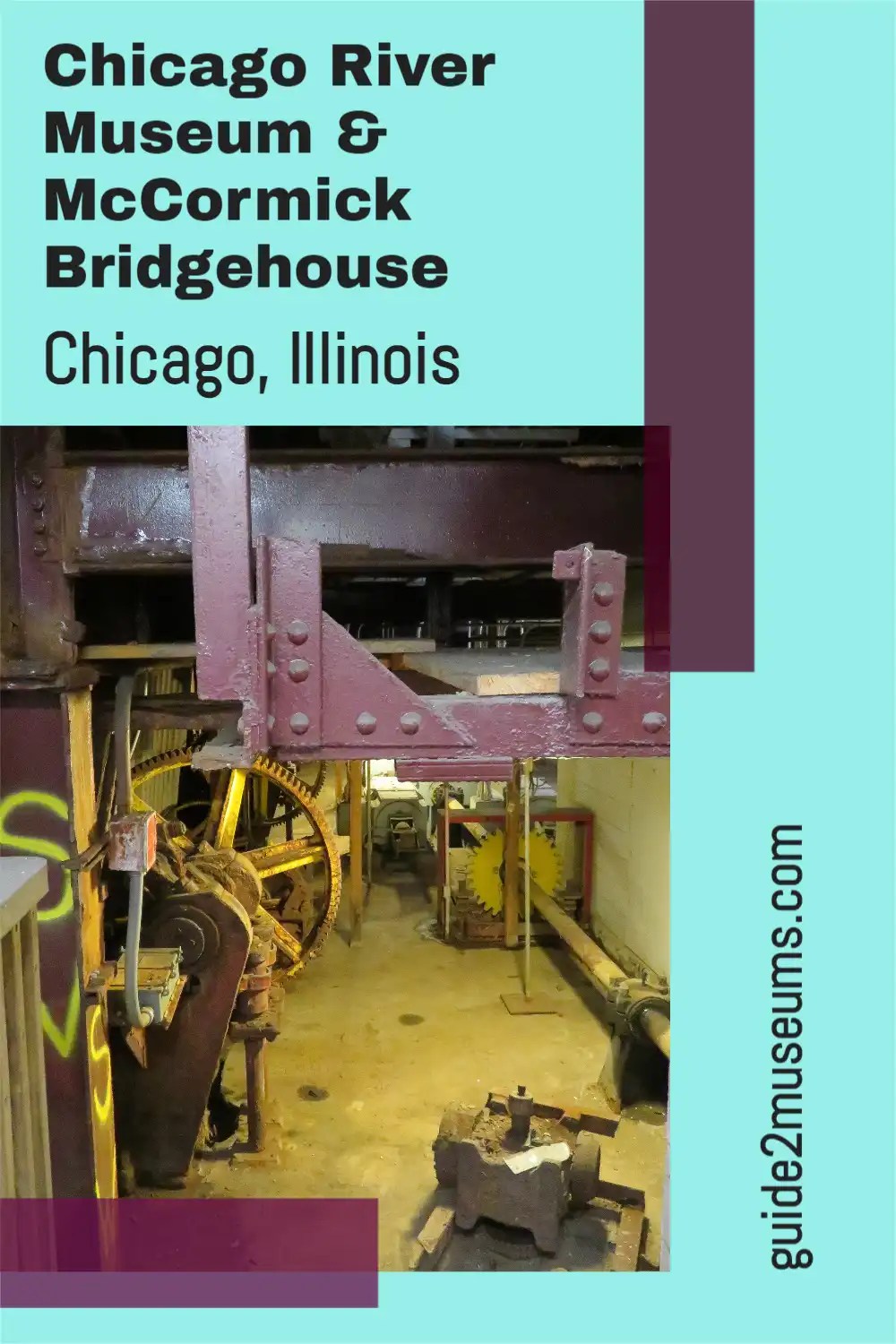
- 1st – A Prairie Stream and a Point of Contact: history of the first peoples in the area and the Europeans who moved there. The gear room is also in this area.
- 2nd – A Boomtown and Its Impact: growth of Chicago into a busy port city on Lake Michigan (the only Great Lake fully in the U.S. rather than shared with Canada). The Chicago River also runs through the city, which was important for connecting Chicago’s lumber and meatpacking industries to midwest markets.
- 3rd – Pieces of the Past: More history and views of the river. In 1900 Chicago reversed the flow of the river using a series of canal locks to reduce polluting Lake Michigan, its source for drinking water.
- 4th – Down the Drain: Here’s where you learn more about the impact of industry on the river. Over a century, everything contributed to the great volume of waste dumped into it.
- 5th – Back to Life: Describes the changes to the Chicago River after decades of work to clean up the city’s mess. That includes the riverwalk and a continuing growth of wildlife in the water and on its shores.
Linda’s Road Trip Tips
The Bridgehouse Museum is described as the cultural anchor of the Chicago Riverwalk. Indeed, it was part of the initial segment of the Riverwalk.
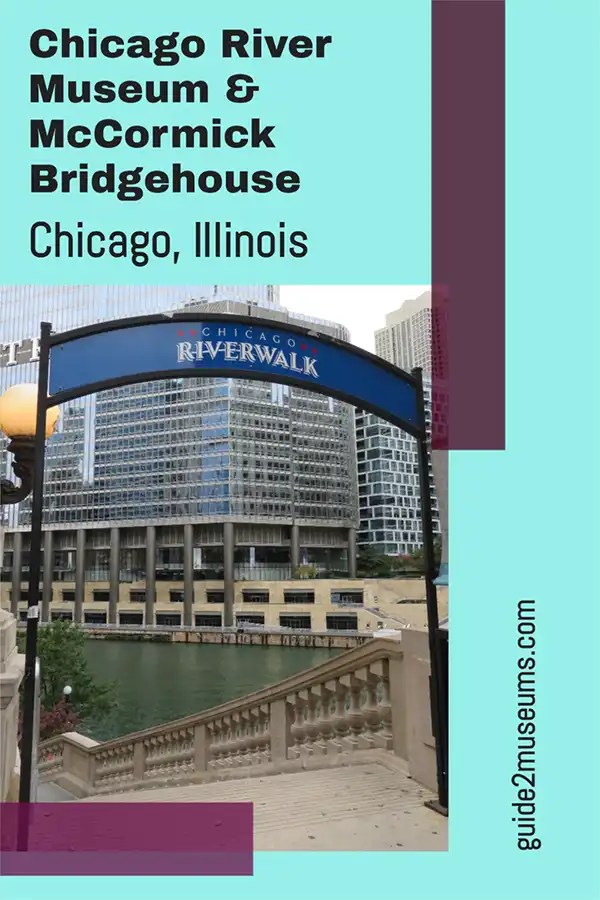
So, if you’re planning to walk this amazing outdoor attraction, do plan to start it at the museum as I did.
Fast Fact: The riverwalk in Chicago in 1.25 miles long. The river walk was constructed in phases.
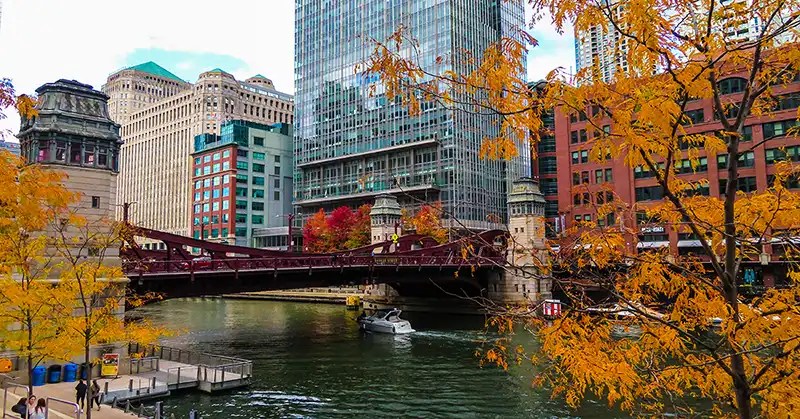
As you walk, you’ll see buildings designed by some of North America’s most famous architects. And if walking isn’t your thing, you can take an architecture tour Chicago River tour from numerous different companies.
Whether you’re out for the afternoon or an evening, there are lots of places on the Chicago riverwalk to eat and find a cocktail.
I also highly recommend you take the time to visit Chicago’s Natural History Field Museum. It was one of the best I’ve been at.
Who Should Visit the Chicago River Museum?
The McCormick Bridgehouse Museum Chicago is also often called the Chicago River Museum. It’s an interesting stop to learn more about the importance of the Chicago River to the city.
The attraction is small, so will only take half an hour or so to go through. However, if it’s busy as it was on my visit (I hit a free admission day), it’ll take longer as you’ll spend time in line-ups between the five floors.
Key things I took away were the impact of pollution and the effort it takes to clean up a mess. The museum did a great job of illustrating Chicago’s dedication to the environment and sustainability, so would present opportunities for parents to discuss the topics with kids.
Due to maintaining the historic integrity of the site, wheelchair access is only available on the first floor and gear room. If you plan to visit, check the Bridgehouse Museum accessibility information.
How Do You Visit the Bridgehouse Museum Chicago?
The McCormick Bridgehouse and Chicago River Museum are located in Chicago, Illinois, at 99 Chicago Riverwalk, on the Chicago Riverwalk.
Visit the Bridgehouse Museum on the Web to learn more about days and hours open (it’s a seasonal museum), as well as admission costs.
Get updates on what’s happening at the McCormick Bridgehouse and Chicago River Musem Facebook page.
Take a short virtual tour of the McCormick Bridgehouse and Chicago River Museum on YouTube.
Plan your visit to the Chicago River Museum with Google Maps.
Find More Museum Reviews for Illinois
Check out more reviews for museum attractions in Illinois on guide2museums.com.
Read More Technology Museum Reviews
- Texas Forestry Museum: Lufkin’s Hidden Gem

- Discover the Amazing Canada Science and Technology Museum

- EAA Aviation Museum in Oshkosh, Wisconsin: Airplanes from All Eras

- Medalta Museum: Ceramic Arts in Medicine Hat, Alberta

- Claybank Brick Plant National Historic Site: Claybank, Saskatchewan

- Ocean Star Offshore Drilling Rig & Museum: Galveston, Texas, Oil Drilling History

- McCormick Bridgehouse & Chicago River Museum: Chicago, Illinois

- Stafford Air & Space Museum: Space Shuttles to Rockets in Weatherford, Oklahoma

- Texas Energy Museum: Oil History in Beaumont, Texas
- Dr Pepper Museum: Great Tastes in Waco, Texas
- Museum of Clean: Pocatello, Idaho

- Alexander & Baldwin Sugar Museum: Puunene, Maui, Hawaii

- Idaho Potato Museum: Blackfoot, Idaho
- Manitoba Agricultural Museum: Rare Historic Farm Machines in Austin, Manitoba
Reference(s)
Chicago Loop Bridges. (2024). DuSable Bridge at Michigan Avenue. https://chicagoloopbridges.com/bridges12/MS12/MICH12-6.html
Bridgehouse Museum. Celebrating the Chicago River and its world-famous movable bridges. https://www.bridgehousemuseum.org/about-the-bridge






 guide2museums.com