The Strategic Air Command & Aerospace Museum in Ashland, Nebraska, started with just one military airplane back in 1959.
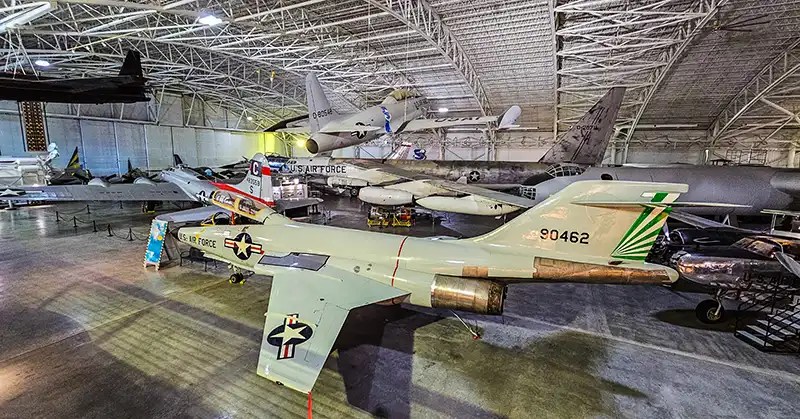
Today, the state-of-the art strategic air museum is a popular year-round tourist attraction. It’s considered one of the leading facilities of its kind in the nation.
What’s in the Strategic Air Command and Aerospace Museum?
The collection at the Strategic Air Command & Aerospace Museum focuses on the aircraft and nuclear missiles used during the Cold War. SAC (Strategic Air Command), as this part of the military was known, worked to deter a nuclear strike on the United States by Russia.

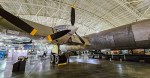
Covering a floor space of 300,000 square feet (28,000 square meters), the strategic air museum is an impressive building. There are two levels, plus an outdoor gallery.
Some of the lower level attractions include:
- 2D and 3D virtual reality flight simulators
- Drone soccer arena
- Doolittle’s raiders
- HIgh pressure Korea
- Missle control
- Space: the longest journey
- Space gallery including Clayton “Astro Clay” Anderson, Nebraska’s only NASA astronaut
- Berlin airlift
- Dynetics lunar lander
- Future Fun Lab interactive experience that lets players watch what they’ve drawn come to life
- Children’s learning center with interactive displays
The entrance to the strategic air command museum is into the upper level.
There, the first thing that catches your eye is the glass atrium. It’s made of 525 glass panels that encase a Lockheed SR-71 Blackbird on a pedestal.
Here, you’ll also find the women in aerospace gallery, volunteer curated gallery, nano miniature exhibit along with the theater entrance, gift store, and SAC lunch cafe.

Fast Fact: The Lockheed SR-71 Blackbird is the fastest and highest flying jet aircraft in history. The plane was developed in the 1960s for high flying reconnaissance. It flies three times the speed of sound (or around 2000 mph), which would make it fast enough to escape any weapon fired at it. The Blackbird world record for sustained altitude flight is 85,000 feet.
Tools of War
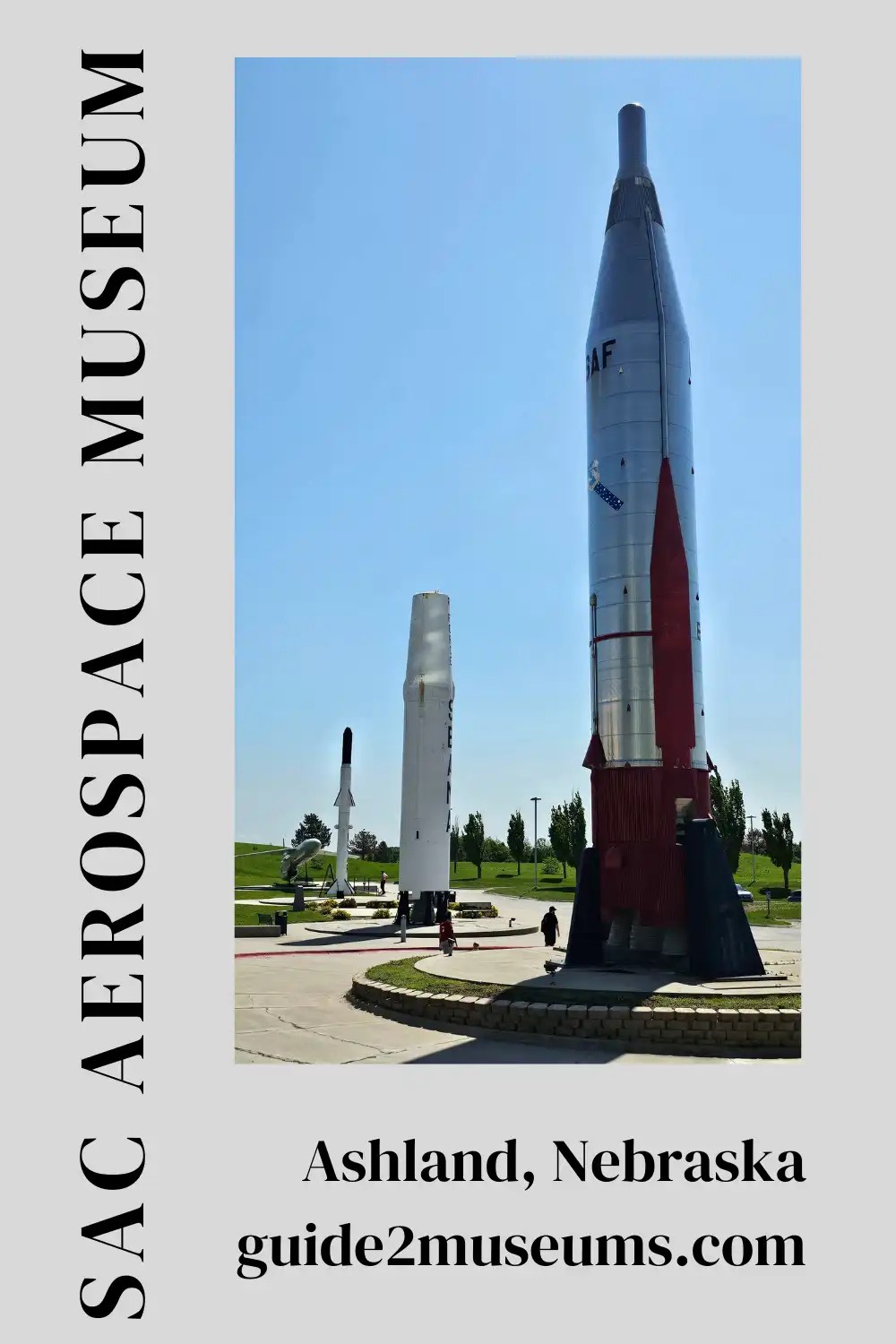
The exterior displays at the SAC museum include Minuteman, Atlast, and Titan missiles.
Indeed, they’re the first things you see when you enter the museum parking lot.
The SM-65 Atlas is one of the most impressive. It was the first operational intercontinental ballistic missile (ICBM) developed by the United States and the first member of the Atlas rocket family.
Likewise, the airplanes of the Cold War were nothing short of amazing.
Their purpose was to provide a threat of Mutual Assured Destruction (MAD). In other words, with a fleet of super airplanes flying the skies, the U.S. made it clear that if bombed, they’d retaliate and both sides would be destroyed.
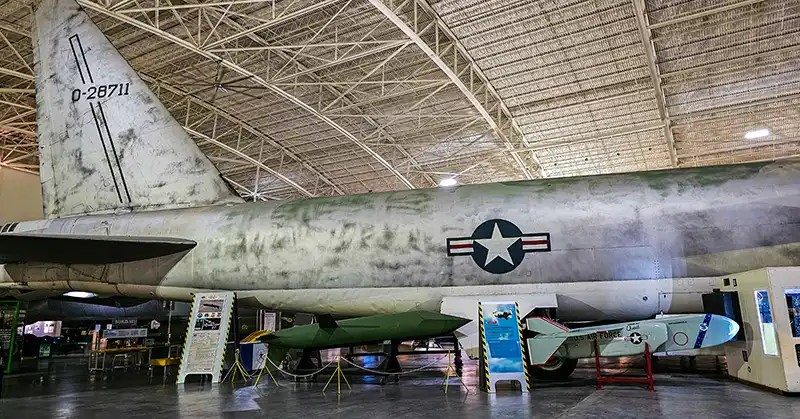
Some of the most notable planes include the B-17 Flying Fortress, B-36 Peacemaker, and B-52 Stratofortress.
Fast Fact: The B-36J Peacemaker (first flight 1946) is the largest production bomber every built. Pilots called it a "Magnesium Monster." It also held the greatest combt unrefueled radius. However, it never dropped a bomb in combat.
Indeed, one of the missions of the museum is to educate visitors about the history and technological evolution of military aviation.
More at the Strategic Air Command Museum
In addition to the planes, there’s also a lot to see and do. There are a number of interactive exhibits, including flight operations simulators and learning more about the mechanics of aviation.
The history of the Cold War, which lasted from 1947, immediately after World War I, until 1991, when the Soviet Union collapsed, is covered in various ways. Some of the displays include:
- Korean War
- Vietnam War
- Space Race
- Mrk-36 hydrogen bomb
- Control panels, rescue vehicles, ejection seats and more

The aerospace part of the museum includes various artifacts and information panels. There’s a great display on Black Holes that explains what they are. You’ll also see space suits, an Apollo boilerplate, even outerspace movie memorabilia.
Linda’s Pick of the Exhibits
I’m always in for a spy story and the SAC museum had a highly detailed one with lots of photos and newspaper clippings. The spy? Francis Gary Powers. The mission? The U-2 Spy Mission.
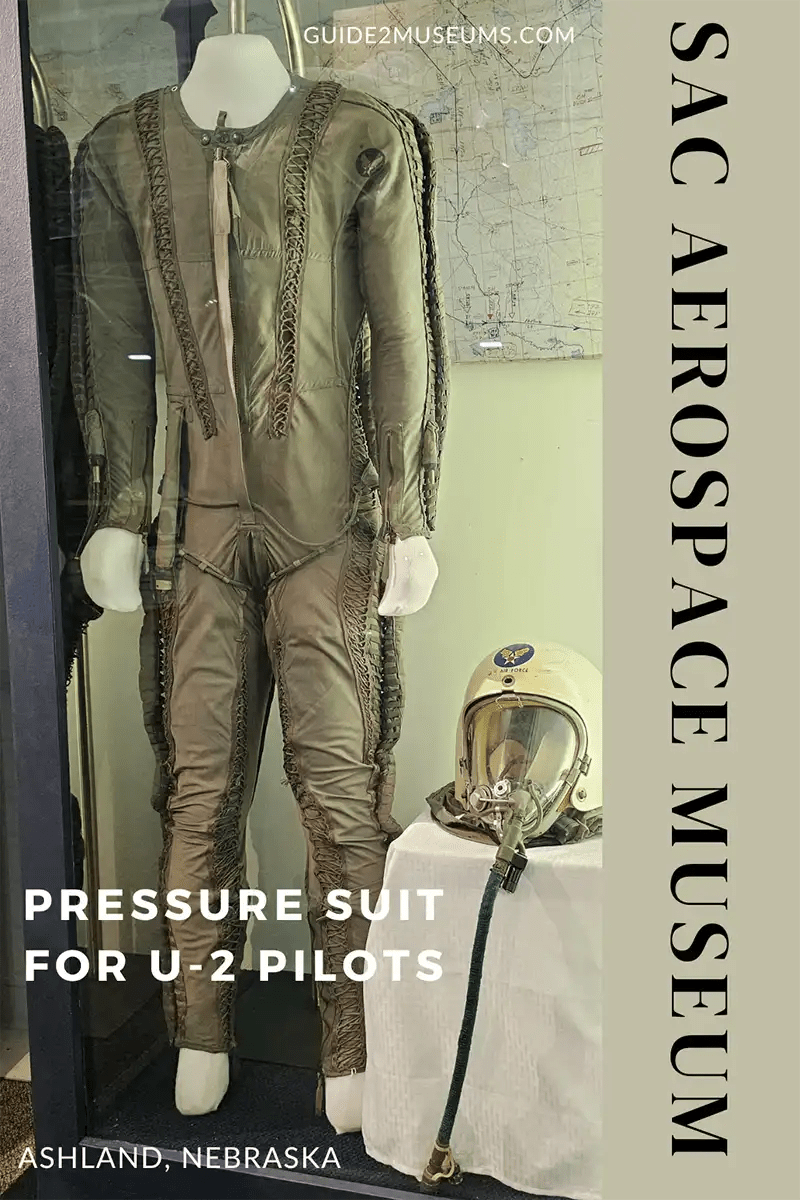
Francis flew a special U-2, single engine, high altitude aircraft used by the CIA. To fly the U-2, pilots had to be fitted for a specially designed pressure suit. Its purpose? To prevent the expansion of body fluids at low air pressure.
The CIA believed that neither a U-2 or its pilot could be captured by the Soviets. So President Eisenhower authorized an overflight to photograph Soviet military installations.
Unfortunately, the CIA was wrong.
How was Francis Powers captured and how long was he a prisoner?
Powers was the most experienced U-2 pilot, so he took off from Peshawar, Pakistan, May 1, 1960, to do a mission over Soviet territory. Four hours into the flight, a Soviet SA-2 anitaircraft missle detonated near Powers, causing tail section damage. Powers was sucked from the aircraft before he could hit its self-destruct mechanism. So Powers, along with the plane and its equipment were captured by the Soviets.
On May 7, 1960, Premier Khrushchev revealed that they’d captured a CIA agent in their airspace. President Eisenhower publicly assumed full responsibility for the flight. The Russians held the downed pilot as a spy.
Powers was taken to Moscow and put in Lubyanka Prison, at KGB Headquarters. After three months of questioning, he was eventually put on trail August 17, 1960, on his 31st birthday. He was found guilty of espionage and sentenced to ten years imprisonment.
After serving 21 months in the Russian prison, Powers was echanged for a Soviet spy–Colonel Rudolf Abel. He’d been arrested by the FBI in New York three years earlier, in 1957.
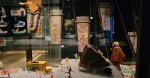
The museum display goes through a lot of detail about Powers time in prison, from the food he ate and the carpets he made with wool and needles to pass the time.
Who Should Visit the Strategic Air Museum?
The Strategic Air Command & Aerospace Museum is a fascinating visit for any interested in Cold War history — particularly from an military perspective. Likewise, anyone who loves airplanes will be blown away by the planes in this museum.

With a number of interactive exhibits, families will find the Strategic Air Museum fun to visit. There’s lots of space for kids to walk around and stare up at the undersides of the monstrous airplanes!
We spent a couple of hours and could easily have spent more, except we had time constraints.
Allow at least an hour to see the high points.
The museum entrance is baby stroller and wheelchair accessible with ramps and wide doors. As well, there’s an elevator between floors. For anyone needing a wheelchair, some are available for rent at the visitor services desk. Service animals are allowed in the museum.
For anyone visiting Omaha without a vehicle, transportation to the museum can be arranged. See the museum website for more details. The museum has ample free parking right in front.
How Do You Visit the Strategic Air Command & Aerospace Museum?
The Strategic Air Command & Aerospace Museum is located t 28210 W. Park-Hwy., outside Ashland, Nebraska. For those on I-80, take Exit 426, then it’s just half a mile north to the museum.

You can visit the museum year-round. Get details on hours and admission costs on the SAC museum website. Note that the museum also offers summer camp experiences for young people.
Keep up-to-date with what’s happening with the Strategic Air Command & Aerospace Museum Facebook page.
Take a virtual tour with the Strategic Air Command & Aerospace Museum YouTube page videos.
Plan your visit with Google Maps.
Find More Museum Reviews for Nebraska
Check out more reviews of museum attractions in Nebraska on guide2museums.com.
Read More Military & War Museum Reviews
- Canada Aviation and Space Museum: Iconic Civil & Military Airplanes
- Plains of Abraham Museum & Battlefield Park: Quebec City
- Canada’s Little-Known Cold War Museum: the Diefenbunker
- U.S. Army Museum of Hawaii Artillery Battery in Honolulu

- USS Lexington Museum: WWII Aircraft Carrier in Corpus Christi, Texas

- Regional Military Museum: Artifacts from all US Wars in Houma, Lousiana
- Strategic Air Command & Aerospace Museum: Ashland, Nebraska
- Vancouver Island Military Museum: Nanaimo, British Columbia

- National Museum of the Pacific War: Fredericksburg, Texas

- Hill Aerospace Museum: Military Aircraft at Hill AFB, Utah

- Battleship Memorial Park: 1942 Battleship & 1941 Submarine in Mobile, Alabama

- Fagen Fighters WWII Museum: Granite Falls, Minnesota

- Manhattan Project National Historical Park: WWII History in Hanford, Washington

- National World War II Museum: New Orleans, Louisiana

Reference(s)
Francis Gary Powers. (n.d.). Wikipedia. https://en.wikipedia.org/wiki/Francis_Gary_Powers
The Editors of Encyclopedia Britannica. (2024). Cold War. https://www.britannica.com/event/Cold-War




 guide2museums.com