Claybank Brick Plant National Historic Site is just an hour’s drive from Saskatchewan’s capital, Regina. History lovers and museum-goers will find the brick-making plant an attraction that’s little changed from when it opened in 1914.
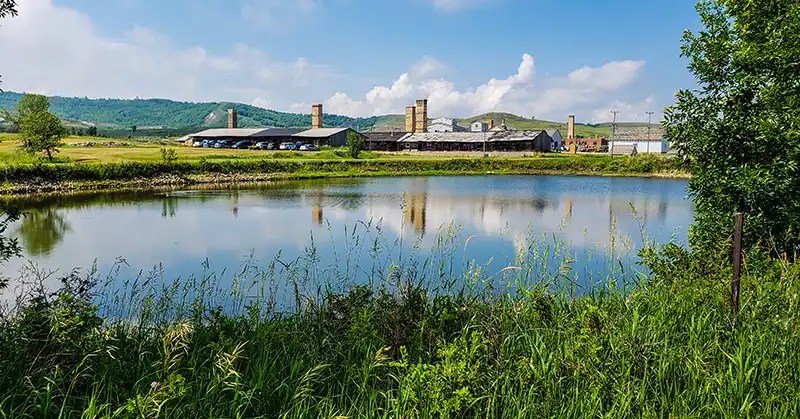
Indeed, stepping into the Brick Plant historic site is a trip back in time as there are still pallets of bricks wrapped for shipping! Hikers and wildlife enthusiasts will find an authentic Saskatchewan experience here. Indeed, the site’s 250 acres of land have been untouched since the glaciers receded some millennia ago.
Linda’s Pick of the Exhibits
My pick of the exhibits was riding the Lil’ Jigger railway car. While not alway in use, Lil’ Jigger is available all the time to check out.

Lil’ Jigger gives visitors a sample of what life was like decades ago. Back in the ‘day, the train transported workers back and forth to the nearby town of Claybank,
The brick plant, operating as it did without many technology innovations, required a lot of labor. While some men lived on site in the bunkhouse, others came from nearby farms and towns. Lil’ Jigger helped bring them.
As you may expect, Lil’ Jigger moves pretty slowly along the historic spur line into town. The ride though, only takes you part-way. On it, you’ll see a full view of the farmland that’s in between the brick plant and town.
What’s at the Claybank Brick Plant National Historic Site?
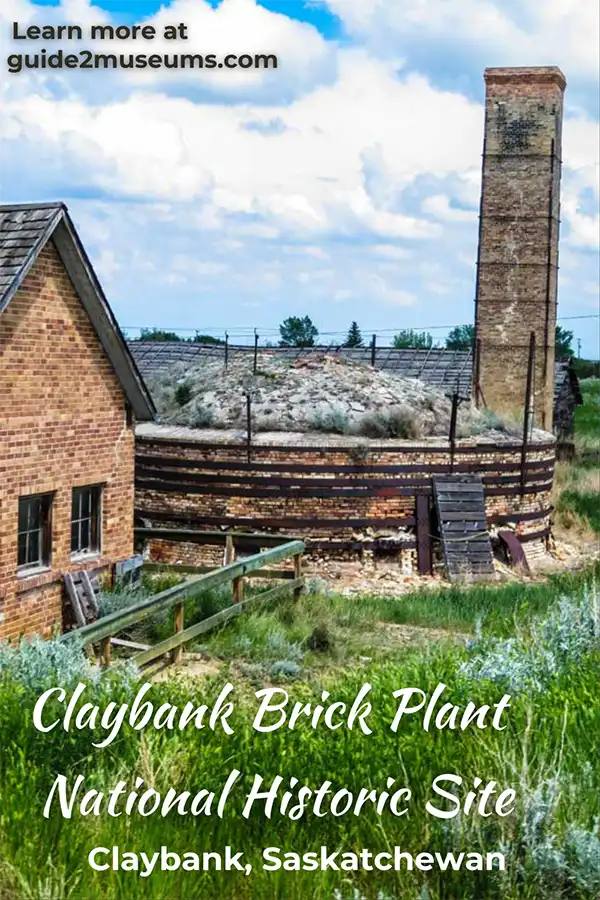
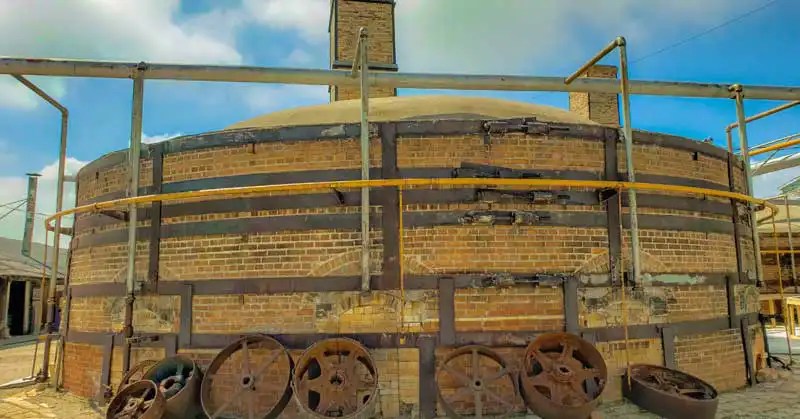
The Claybank Brick Plant National Historic Site is North America’s best-preserved brick-making site. The site has around 10 buildings as well as 10 historic kilns.

Covering 37 hectares, the Claybank Brick Plant buildings date from 1912 to 1937. The brick production process moved through this series of attached buildings from shaping to shipping and storage areas.
In its day, the Claybank Brick Plant provided a great example of efficiency.
The Claybrick Brick Plant is “…representative of the way in which functional requirements and efficiency were primary drivers in the design and construction of industrial facilities.”
~ Parks Canada
The buildings for the 10 kilns were some of the most fascinating areas. However, it’s hard to imagine how hot they would have been as the bricks were being baked.
The drying tunnels were also intriguing. Long carts with bricks laid out on them stretched back into blackness out of sight.

For visitors interested in innovations, the area where repairs and changes were made will likely be a favorite.
What’s the history of the Claybank Brick Plant?
Tom McWilliams, a homesteader, applied to the Federal government for a permit to mine clay from the area in 1886. However, before trains, clay was hauled by horse and wagon from the Claybank area to Moose Jaw, Saskatchewan. And that was around 50 km!
Things changed quickly with the arrival of the Canadian Northern Railroad in the area in 1910. In 1912, a new company, Saskatchewan Clay Products, which consisted of Moose Jaw business men, bought McWilliams’ property in order to produce bricks where the clay was situated. Plant construction was completed in 1914, but with the war and economic conditions, Saskatchewan Clay Products didn’t really get rolling.
So, the company reorganized and began again under the new name, Dominion Fire Brick and Pottery Company, in 1916. They focused on the unique high-refractory clay properties at Claybank. Word of their brick’s quality spread. S when the Chateau Frontenac was built in Quebec City, the central tower was faced with Claybank brick.
But times change. Reorganization of the brick market and changes in technology resulted in the decision by the owners at the time, A.P. Green Refractories Ltd., to close in 1989.
Hiking Massold Clay Canyon
The Massold Clay Canyon hasn’t changed since the end of the Wisconsin Glacial Age. Hikers see the same plant and wildlife today as it did millennia ago. Never broke up and used for grain crops, this landscape is remarkable.

Hikers can catch the scent of wild sage. Taste a tiny wild strawberry picked out of the grass. Or toss a cloud of dust-like spores from a puffball into the air with a shoe.
Fast Fact: The Claybank Brick Plant groomed trail is a 3.1 km loop that leaves from the historic site. It follows a wagon trail up into hills once mined for their clay. With an elevation gain of 77 meters — unless you decide to climb even higher — the trail is rated as moderate in difficulty by AllTrails.com.
Wild prairie grass covers everything but the mud pits themselves. If you look close, though, you’ll see wild flowers that have all but disappeared from the prairies peeking through.
You could even find sharp daggers of spear grass in your stockings or thorns from a prickly pear cactus. And if you keep your eyes and ears open you’ll hear lots of songbirds and see wild animals such as foxes and deer.
The Clay Pits
The clay at Claybank is part of Saskatchewan’s Whitemud formation. Formed during the cretaceous period, Claybank’s clay has specific properties that make it suited to heat and pressure-bearing purposes.
Fast Fact: Mud that's suited to heat is called high-refractory clay. It was used to make fire brick, insulating brick, and even fireboxes for steam engines.
As you walk along the trail out to the clay pits, you’ll find various pieces of old equipment. These items were used in the early clay mining operations.
Years ago, extracting clay was a tedious process. Workers dug the clay using plows and scrapers. Then, they loaded it into barrels on wagons that horses pulled back to the plant.

In the pits, you’ll see various layers — or striations — of mud uncovered by the mining process. Little grows in clay soils, since roots can’t penetrate it. So, you’ll only see plant growth where there’s some dirt or soil covering it.
What’s the historic importance of the clay pits?
Early settlers quickly discovered Saskatchewan’s clay resources, particularly in the Southern portions. Why? Well, without the forested areas common to Saskathewan’s central and northern regions, clay was an important building material.
In fact, Saskatchewan has a number of different types of clay. They include: bentonite, brick and ceramic clays and kaolinite. If you’ve ever wondered when you look at historical brick buildings around North America why they’re not the same color everywhere, it’s because of the clay. Bricks from bentonite clays range from white through cream, reddish brown and blue, turning yellow upon exposure to air.
As you might guess, China clay, or kaolin from the Kaolinite mineral, produces opaque white coloured bricks. It ranges a lot in composition and properties, so brick color may vary depending where the clay originated. Saskatchewan’s kaolin reserves have been estimated around 2 million tons!
In Saskatchewan, clay falls under mining regulations. So, by provincial law, when clay deposits are mined out today, the land must be reclaimed. That means the surface must be returned to its original, or better, condition. This process makes it suitable for plant and animal habitats.
On a rainy day, you’ll really know you’re walking on clay, not dirt! It’ll stick to your shoes and feel slippery beneath your feet. As you explore the clay in the pits, you’ll see large grooves and cracks. These were created on the formation’s side hills created by erosion.
Bunk House Cafe & Gift Shop at the Museum

The Bunk House looks much like a school from the early 1900s. Made of brick — of course! — it provided a place for workers to stay on site.
There’s still a sense that working men called this place home as you walk through the spacious, high-ceilinged rooms.
Now visitors, not workers, can pull up a chair and get a meal.
What can you eat at the Bunk House Cafe? The local cooks pride themselves on their saskatoon pie, so it’s always in season.
They also serve daily, home-cooked specials. Do make sure to sample the bread, baked in the original outdoor brick bread oven!
As well, be sure to check out the gift shop and its selection of Saskatchewan-made souvenirs and crafts. You never know what you’ll find.
Keeping the historic site open is challenging for fundraisers and every dollar you spend when you visit helps!
Linda’s Road Trip Tips
When we visited the Claybank Brick Plant we had lunch in the Bunkhouse Cafe. The neighbouring hamlet, Claybank, has no services.
However, Avonlea, just 16 km (10 miles) away, has a fuel stop and stores.
While you’re in the area, do check out the Sukanen Ship Museum. It’s an excellent open air museum just 50 km (31 miles) away, outside Saskatchewan’s fourth largest city, Moose Jaw.

Heading to Moose Jaw also takes you to the Trans-Canada Highway that crosses Canada.
Moose Jaw has lots of attractions to offer visitors. My top picks? Tours of its tunnels and the Temple Garden Hotel & Spa (I’ve stayed many times!), with its world-renowned geothermal mineral pools.
Who Should Visit the Claybank Brick Plant?
The Claybank Brick Plant is a fascinating site with lots of attractions to suit any visitor. There’s lots of room for the kids to spread out and run — or take a hike with their parents.
You’ll have two hiking options. The 3.5 km (2.2 miles) groomed trail or 8.5 km (5.3 miles) ungroomed trail. Day passes are required to enter the hiking areas.
When it comes to the brick plant, there are interpretive signs.
So, you’ll learn a lot about brick-making on a self-guided tour. The information is in-depth and provides starting points to explore more about this historic Saskatchewan industry.
Since this is a National Historic Site, no modifications have been for accessibility.
How Do You Visit Claybank Brick Plant National Historic Site?
The Claybank Brick Plant National Historic Site is 15 km West of Avonlea on Hwy 339, or 1 km East of Claybank on Hwy 339.
Typically, the site is only open for July and August. Visit the Claybank Brick Plant National Historic Site website for open days, hours, and admission costs.
Check out the Claybank Brick Plant National Historic Site Facebook page for the latest events.
Take a YouTube virtual tour of the brick plant and virtual hike of the Massold Clay Canyons.
More Places to See in Saskatchewan
Check out all of guide2museum.com’s reviews of museums in Saskatchewan.
Read More Reviews of National Historic Sites
- Chinatown in Montreal: A Fascinating Historic Site

- Canada’s Little-Known Cold War Museum: the Diefenbunker

- Discover the Mormon Handcart Historic Site & Devil’s Gate in Wyoming

- Historic Home of 1800s Governor in Lafayette, LA: Alexandre Mouton

- See 100 Miles Across Nebraska From Scotts Bluff National Monument

- Bishop’s Palace in Galveston, Texas: Victorian Era Castle

- Rip Van Winkle Gardens & Historic Mansion: Jefferson Island, Louisiana

- Robinson Roadhouse & Robinson Flag Station: Yukon Ghost Town

- USS Lexington Museum: WWII Aircraft Carrier in Corpus Christi, Texas

- Watson Lake Sign Post Forest Historic Site: Watson Lake, Yukon
- Medalta Museum: Ceramic Arts in Medicine Hat, Alberta

- Claybank Brick Plant National Historic Site: Claybank, Saskatchewan

- The Sheriff’s House Museum & Historic Site: A Hidden Gem in Devils Lake, North Dakota

- Soo Line Historical Museum & Historic Site: Weyburn, Saskatchewan

- Texas Seaport Museum: Gulf Coast History in Galveston, Texas

- Fred Light Museum: Battleford, Saskatchewan

- Frontier Prison Museum: Rawlins, Wyoming

- Toronto’s First Post Office Museum & National Historic Site: Ontario

- The Bastion: Designated Historic Place, Nanaimo, British Columbia

- Hearst Castle: National Historic Landmark in San Simeon, California

- Inglis Grain Elevators National Historic Site: Agricultural History in Inglis, Manitoba

References
Claybank Brick Plant National Historic Site. (n.d.) Parks Canada: Government of Canada. https://www.pc.gc.ca/apps/dfhd/page_nhs_eng.aspx?id=822 [Webpage provides all of the details used to determine the site’s status as a National Historic site.]
MacKenzie, J. (2003). Saskatchewan’s clay resources. Saskatchewan: Western Development Museum.








 guide2museums.com