The Crazy Horse Memorial is located at Crazy Horse in the Black Hills of South Dakota. Crazy Horse is also home to The Indian Museum of North America and The Native American Educational and Cultural Center.

Linda’s Pick of the Exhibits
Of course, my favorite exhibit was all of the information about the Crazy Horse Memorial in the Black Hills. I am, I must confess, a bit of a dreamer myself. So, the Mountain Carving Gallery, which featured the tools and story of the monument fascinated me.

The dream began in 1939 with a letter from Chief Standing Bear to Korczak Ziolkowski. The letter asked him to carve a head of the long-dead chief.
Who was Crazy Horse?
Crazy Horse was a great leader in the mid-1800s during the era of European settlement in the Dakotas. He was a member of the Oglala Lakota people who lived on Rapid Creek about 40 miles from what’s now known as Crazy Horse Mountain.
In 1876, Crazy Horse led a band of Lakota warriors against Custer’s Seventh U.S. Cavalry battalion. The battle is known by several names: Battle of the Little Bighorn, Custer’s Last Stand, and Battle of the Greasy Grass.
Little Big Horn may be one of the most remembered battles of the Frontier Wars. In it, the U.S. cavalry was defeated. Indeed, at the end of the fighting, Custer, 9 officers, and 280 soldiers all lay dead. Only 32 Indians were killed.
One of the things that made the battle so famous were Anheuser-Busch brewing company posters. They made prints called “Custer’s Last Fight” and had them hung in saloons across the nation.
Crazy Horse died in 1877 at Fort Robinson, Nebraska. He had gone to the Fort under a flag of truce to negotiate, however, things went wrong. Eyewitnesses blamed the translator for misinterpreting Crazy Horse. When guards attempted to put him in jail, he drew his knife and was mortally wounded in the fight.
It’s interesting to note that Crazy Horse refused to have his picture taken. So, the sculptor had to create his likeness based on descriptions.
Ziolkowski had worked briefly in 1939 on the Mount Rushmore National Memorial sculpture sixteen miles away.

Later that year, he won first prize at the New York World’s Fair for his marble portrait, Paderewski.
However, Ziolkowki didn’t complete the scale model of the Crazy Horse sculpture until 1946. Work began in 1948 on Thunderhead Mountain.
The Crazy Horse dream received a set-back in 1982 when Korczak passed away. However, prior to his death, Korczak had prepared three books of comprehensive measurements to guide the continuation of the sculpture.
Korczak’s wife, Ruth Ziolkowski, took over directing work until her death. Today, it’s managed by the Crazy Horse Memorial Foundation. That work is still ongoing with no specific completion date.
What’s in The Indian Museum of North America?
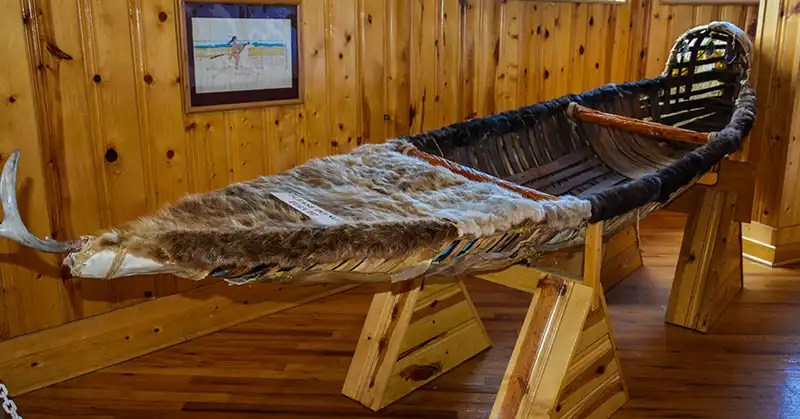
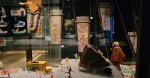
The Indian Museum of North America collection has artifacts and art from over 300 Native Nations. Six collections are currently housed in the building, built by Korczak and his family in 1972-73. A new wing was added to accommodate the growing collection in 1983-84.
Fast Fact: Crazy Horse died on September 6, 1877, and sculptor, Korcazk Ziolkowski was born on September 6, in 1908. The Battle of the Little Big Horn was fought on June 26, 1876, and Ruth Ziolkowski was born on June 26, 1926.
Along with the Mountain Carving Gallery, the collections include:
- American Bison Exhibit
- Paha Ska’s Tipi
- Tribal Flag
- Edward Curtis Prints
- David Humphreys Miller
- Steve & Molly Dancey
- Andrew Standing Soldier & Hobart Keith

As well as the museum and monument, you’ll also find the Native American Educational and Cultural Center® at the Black Hills complex. It provides visitors with opportunities to participate in a cultural exchange including artwork and walks into the Black Hills. There’s also a nightly summer light show along with other special events.
Fast Fact: For those who'd like to meet Crazy Horse face-to-face, there's a bus ride up the mountain (weather permitting).
Linda’s Road Trip Tips
When you visit the Memorial and museum, be sure to make time to visit the Laughing Water Restaurant®. I can highly recommend the Tatanka (Buffalo) stew.
Of course, when you’re in the Black Hills there’s always something to do!
The area is about 500 miles straight south of us in Saskatchewan, so we’ve visited a number of times.
You’ll find the Sturgis Motorcycle Rally provides three weeks of summer fun.
And Deadwood hosts one of our favorite snocross races every January.
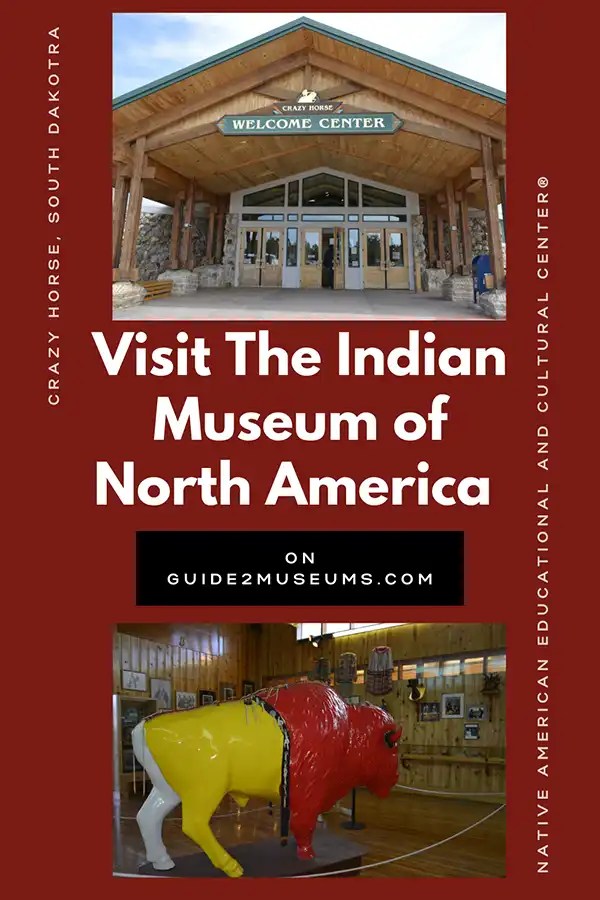
Of course, Mount Rushmore is one of the most important not-to-miss Black Hills attractions!
Who Should Visit the Black Hills Crazy Horse Memorial & Museums?
The Crazy Horse Memorial & associated museums are popular Black Hills attractions. If you’re interested in the settlement era of the midwest, you’ll find it gives a different perspective than most museums.

With its collection from so many different Native Nations, you’ll learn lots about the Indigenous peoples of North America.
Likewise, with the opportunity to experience various cultural exchange activities you’ll find insights into their lives.
We spent about an hour at the museum, but could certainly have spent longer.
Our visit was too early to take the bus ride up the mountain. Plan at least another half-hour if you’d like the experience.
How Do You Visit the Crazy Horse Memorial?
The Crazy Horse Memorial and associated museums are a great way to learn more about the history of the Black Hills.
Street Address: 12151 Avenue of the Chiefs, Crazy Horse, SD.
Parking: There's lots of free parking available for cars, as well as vans and motorhomes.
Check the days (they’re open year-round) and hours at the Crazy Horse Memorial website.
Get the latest news about The Indian Museum of North America at the Crazy Horse Memorial Facebook page.
Learn more about the Crazy Horse Memorial on YouTube with CNN.
Plan your visit with Google maps.
Find More Museum Reviews for South Dakota
Check out more reviews for museum attractions in South Dakota on guide2museums.com.
Discover More Heritage Museums
- Maple Creek’s Intriguing Jasper Cultural & Historical Centre

- Front Street Cowboy Museum: Ogallala, Nebraska

- Discover the Mormon Handcart Historic Site & Devil’s Gate in Wyoming

- See 100 Miles Across Nebraska From Scotts Bluff National Monument

- Standout Ranching History at the MonDak Heritage Center: Sidney, Montana

- New Iceland Heritage Museum: Gimli, Manitoba, Canada
- Crazy Horse Memorial & Museums: South Dakota’s Black Hills
- Myra Museum: Lustron House & More in Grand Forks, North Dakota
- Fort Cody Trading Post: Miniature Wild West Show in North Platte, Nebraska

- Miracle of America Museum: 40+ Buildings in Polson, Montana

- Sukanen Ship Pioneer Village & Museum: Moose Jaw, Saskatchewan

- Museum of Northern British Columbia: Indigenous Art & History in Prince Rupert, British Columbia
- Heritage Village: Museum in Weyburn, Saskatchewan
- Vermilionville: Living History Open Air Village in Lafayette, Louisiana

- Museum of the Southern Jewish Experience: New Orleans, Louisiana

- National Doukhobor Heritage Village: Veregin, Saskatchewan

- Bonanzaville: Open Air Pioneer Village Museum in Fargo, North Dakota
- Range Riders Museum: Old West Lives Again in Miles City, Montana





 guide2museums.com