The Minnesota Discovery Center is located in Chisholm, Minnesota, in the center of the Mesabi Iron Range. It aims to tell the story of iron mining including the land, the mines, the people and the work.

Linda’s Pick of the Exhibits
Some of my favorite exhibits were outside, as there’s a long walking trail through the grounds. It’s also interesting that the grounds are a pollinator habitat. What’s that? An area planted with pollinator-friendly flowers protected from pesticides to provide a bee habitat.
Various artifacts from the old days of mining are along the path. There are also buildings, including the Homestead outdoor exhibit and Northwoods Cabin outdoor exhibit.
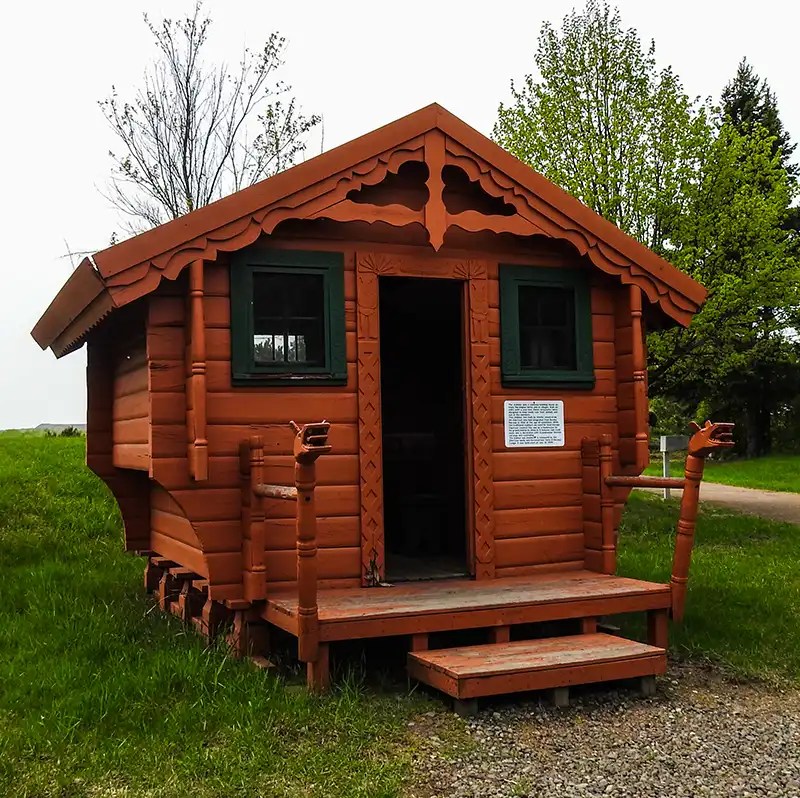
I found the stabbur, a food storage building, very interesting!
Fast Fact: Stabburs were common on Norwegian farms and villages. The stabbur at the museum was built by Alt Eilertson who immigrated from Norway in 1930. He used it as a bunkhouse for grandchildren, decorating it with Scandinavian theme carvings and rosemaling.
My favorite, though, was the Sami camp.
Who were the Sami? The Sami were a group of people from Sápmi. Today that includes the far north of Russia, and northern parts of Sweden, Finland and Norway. Many Sami ended up on the Iron Range as miners.
The museum’s Sami camp was the first to be built in North America. It was constructed in 1996 by a Finnish artisan who specialized in authentic Sami dwellings.

Inside, there are some Sami artifacts. That includes handmade reindeer boots, coffeepot on a handmade stone fireplace, and a separate food storage building.
How is the Sami camp built?
The Sami camp kuati has a frame made of small birch poles. They’re erected beside each other to form a tight wall. Once the frame is in place, the exterior is sheathed with birch bark. That layer, once finished, is covered with about 18 inches of earth.
The thick pieces of earth kept Sami people warm during frigid Arctic Circle winters. And of course, they also keep cool in the summer.
What’s at the Minnesota Discovery Center?
The Minnesota Discover Center is located in Chisholm, Minnesota. Originally called the Iron Range Interpretative Center, the center became a non-profit museum in 2007.
With a focus of discovery, there’s lots to see. The 660-acre campus is Minnesota’s largest museum outside of the Twin Cities. The museum itself is 33,000 square feet, with the Iron Range Research Center adding another 14,000 feet.
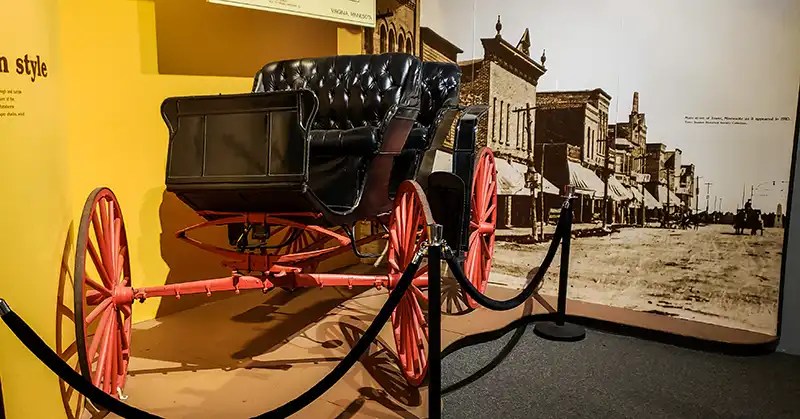
As well as providing a showcase for the iron range’s history, the Discovery Center is a sanctioned government records repository. So, the public can research genealogical data. They’re even tied into Ancestry.com and offer free public access.
Fast Fact: The Mesabi iron range is the U.S.'s largest iron range. With mountains 200-500 feet tall, the 110-mile-long mountain range has a high point of 2,000 feet. It's home to some of the world's largest open-pit iron ore mines.
Minnesota Timeline
The museum displays start in the time of the dinosaurs with research focusing on the Cretaceous period. There’s even a paleontologist on staff to help curate new fossil material.
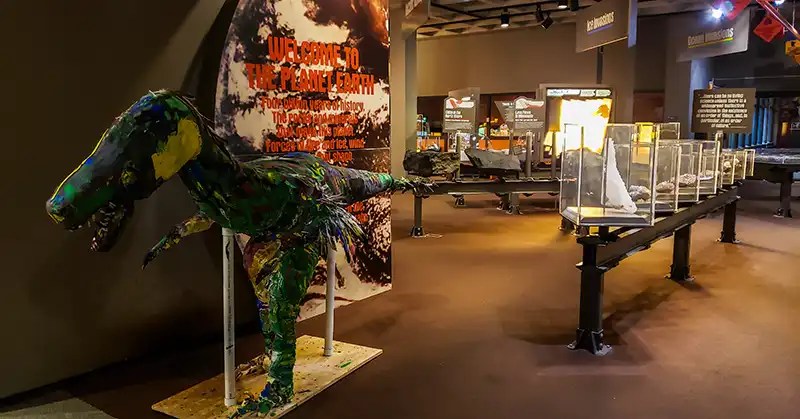
After dinosaurs, the museum moves forward in time to the first Minnesotans when mammoths roamed the area.
The Ojibwe seasonal cycle provides a fascinating look at their lifestlyes. I found the Wild Rice display particularly interesting. You’ll also see price lists for beaver pelts during the fur trade era.
Then, of course, comes immigration–43 different ethnic groups came to the Iron Range to mine and help build the nation.

Much of the area history focuses on the growth of mining and mining towns. Underground mining was key, along with the fight for safe working conditions. Indeed, union history displays provide a lot to think about.
Ghost Town Trolley Tour
Who can resist a ghost town? Not me! Especially when it’s an inexpensive add-on to the museum’s admission. And the narrated tour that sheds a lot of light on the area’s history is a real bonus.

Taking around an hour-and-a-half, the historic trolley takes passengers on a scenic ride through the Iron Range. You’ll view vistas of the forests and lakes and former open pit mining sites. Our guide, while young, had answers for all our questions, as well as lots of neat things to share.
Midway, there’s a stop with ample time to get out and investigate the now-deserted historic mining community of Glen Location.

When you get off the trolley at the historic station, you can walk through the furnished buildings.
- 1903 Location house
- 1903 Bunk house
- 1905 Finnish boarding house
Fast Fact: There were 42 boarders in the 19-room boarding house. Few had many belongings, so didn't need a lot of personal room. Three worker shifts, eight hours each, ran daily. So, three boarders used the same bed with the shiftwork. This was known as "hot sheeting" or "hot bedding" as one resident left the sheets hot for the next one!
Inside, you can almost imagine the workers will be rolling in at the end of their shifts.
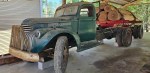
Outside, though, it’s apparent that you’re in a ghost town. Mining equipment sits abandoned, seemingly with no purpose other than decorating the grassy expanse of yard.
Fast Fact: Don’t miss the Iron Man statue located at the entrance to the Minnesota Discovery Center. (You can get good photos from the trolley.) The Iron Man is 36 ft tall and balances on a 49 ft steel structure. It’s a tribute to open pit miners.
Linda’s Road Trip Tips
We visited the Minnesota Discovery Center on a trip through Minnesota’s iron range. While you’re visiting, we highly recommend visiting these two other attractions that we enjoyed.
- Hull Rust Mahoning Open Pit Iron Mine at Hibbing (11 miles south)
- Lake Vermilion-Soudan Underground Mine State Park (45 miles north)
Fast Fact: The Greyhound Bus Museum is also in Hibbing. However, we missed it as we were too late in the day.
Food is important on every trip! And we found some interesting spots on this part of the Iron Range. Our first meal at the Village Inn Restaurant in Virginia, where we stayed, was lunch. I sampled — of course — their wild rice soup, which is a Minnesota favorite of mine.
Wild rice is Minnesota’s official grain and the soup, an unofficial, but should-be-official dish. While there are many variations to the recipe, Village Inn’s version used a traditional creamy chicken soup base.

However, the signs throughout the restaurant, declaring it the home of the best pie in America, intrigued us. So, when we went back for dinner we just ate pie: Hawaiian strawberry, French silk, and peanut butter. And I have to agree, each one was mouth-watering!
Who Should Visit the Minnesota Discovery Center?
The Minnesota Discovery Center has lots to see for anyone interested in iron mining. The coverage of underground mining is really fascinating, particularly from the worker perspective. It provides an opportunity for families (and schools) to consider how the conditions led to the growth of trade unions.

With lots to see inside and outside, the Discovery Center is a great family destination.
The trolley add-on will also interest anyone interested in seeing early mining equipment.
And of course, ghost towns like Glen Location, have a magic all their own.
The center does a great job of being accessible for those with mobility issues. Even the trolley is accessible for two wheelchairs at a time. Wheelchairs and strollers are available at no cost if required.
We spent about three hours at the museum, but double that would have been useful.
How Do You Visit the Minnesota Discovery Center?
The Minnesota Discovery Center provides in-depth coverage of the Mesabi iron range and iron mining.
Parking: There's plenty of free parking in a couple of lots. Getting to the right door to enter the Minnesota Discovery Center can be confusing though! Why? There are different winter and summer entrances. The summer entrance is to the far left side of the main building in the first large parking lot. That's where you'll also be able to see the trolley tracks.
Street Address: 1005 Discovery Drive, Chisholm, Minnesota, USA.
The Minnesota Discovery Center is open year-round. Get the days and hours on the museum’s website.
Keep up to date with what’s happening on the Minnesota Discovery Center Facebook page.
Follow the Minnesota Discovery Center on YouTube or take a quick virtual tour.
Plan your visit with Google maps.

Find More Museum Reviews for Minnesota
Check out more reviews for museum attractions for Minnesota on guide2museums.com.
Discover More General Museums
- Canadian Museum of History: National Museum in Gatineau, Quebec

- Finney County Historical Museum: 150 Years of Garden City, Kansas, History

- Adams Museum in Deadwood: Where Legends are Larger Than Life

- Minnesota Discovery Center: Iron Range Mining History Museum

- Museum of North Texas History: Wichita Falls

- Soo Line Historical Museum & Historic Site: Weyburn, Saskatchewan

- Pioneer Auto Show Museum: Cars & More in Murdo, South Dakota
- Fred Light Museum: Battleford, Saskatchewan

- Bishop Museum: Cultural Treasures in Honolulu, Hawaii

- Vilas Historical Museum: Snowmobiles to Paul Bunyan in a Wisconsin Museum
- Nanaimo Museum: Diverse History of Nanaimo, British Columbia

- Frontier Gateway Museum: Dinosaur Fossils & Glendive, Montana History

- Rosebud County Museum: Homesteader History in Forsythe, Montana




 guide2museums.com