The U.S. Army Museum of Hawaii is home to the former coastal artillery Battery Randolph. Part of the “Ring of Steel“, its purpose was to defend the Hawaiian island of O’ahu against a sea attack. Today, it’s another important stop for visitors exploring the history of Pearl Harbor.
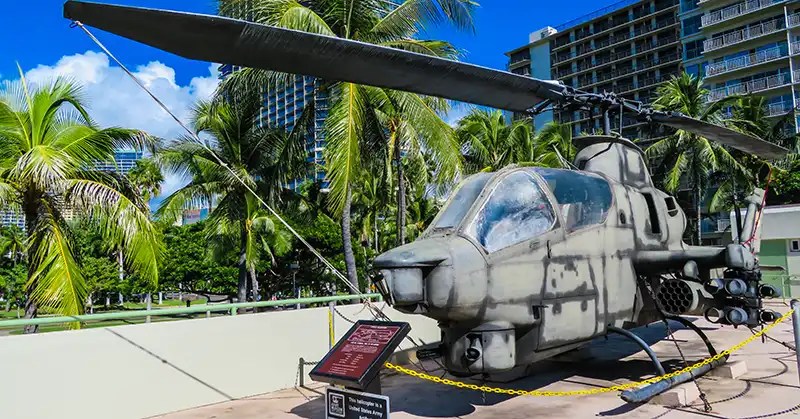
Linda’s Pick of the Exhibits
My favorite display was the pill box–or pillbox. And if you’re thinking this pillbox probably didn’t hold a drug prescription, you’re right.
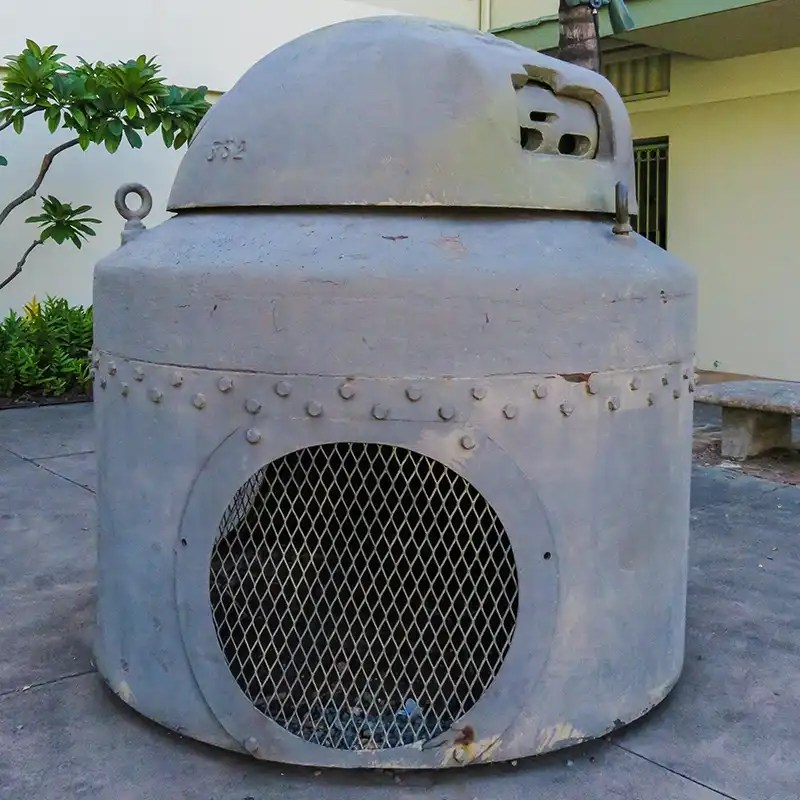
Pill boxes came in a variety of shapes and sizes. Ones like this were buried in position around the island. A crew of two men entered through culvert pipe openings at the base. Then, they operated light machine guns that were housed in the revolving turret on top.
Fast Fact: Pillboxes were first used in 1916 on the Western Front of WWI by the German army.
While pill boxes are typically made of concrete, the first ones were much smaller and lighter. Indeed, they provided little shelter for soldiers on the ground as they could tilt or roll over by nearby explosions.
By 1918, Sir Ernest William produced a design for portable concrete machine-gun pillboxes. These were assembled from a system of interlocking precast concrete blocks and had a steel roof. Around 1500 of them were sent to the Western Front.
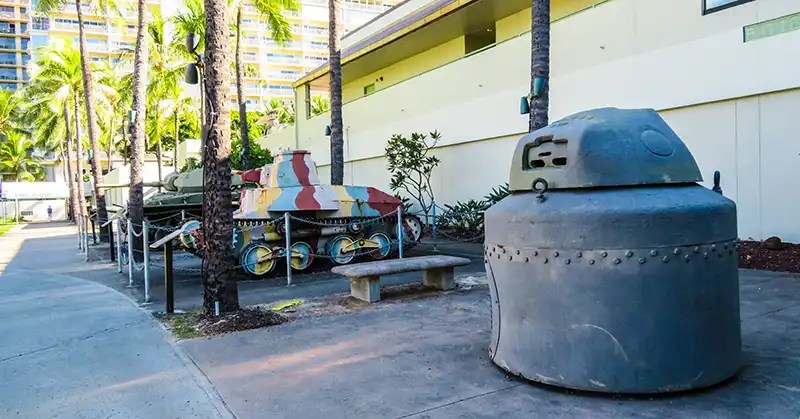
Pillboxes were also used in WWII. Later, from the 1960s to the 1980s, the Albanian government built 750,000 of them for Cold War protection. Much larger, many were eventually repurposed as everything from homes to nightclubs to a Bunk Art Museum in Tirana.
How do I learn more about Hawaiian pillboxes?
In addition to the WWII pill box, shown above, there are several other types of pillboxes on Oahu, Hawaii.
Learn more about Hawaiian pillboxes at this article from the Pillbox Study Group.
And who are the Pillbox Study Group? An open group of members currently from six countries. They’re committed to the study and preservation of pillboxes and other anti-invasion defenses.
You can learn more or join the group from their Pillbox Study Group website.
What’s at the U.S. Army Museum of Hawaii
The U.S. Army Museum of Hawaii is situated in Battery Randolph in the Waikiki area. It was constructed between 1909 and 1911 and equipped with guns until after WWII. When use as a warehouse was discontinued in 1969, efforts were made to demolish it.
Finally, due to the work of Maj. Gen. Herbert Wolff, the army designated it as a museum in 1976. The U.S. Army Museum of Hawaii is supported by a nonprofit organization called the Hawaiian Army Museum Society (HAMS).
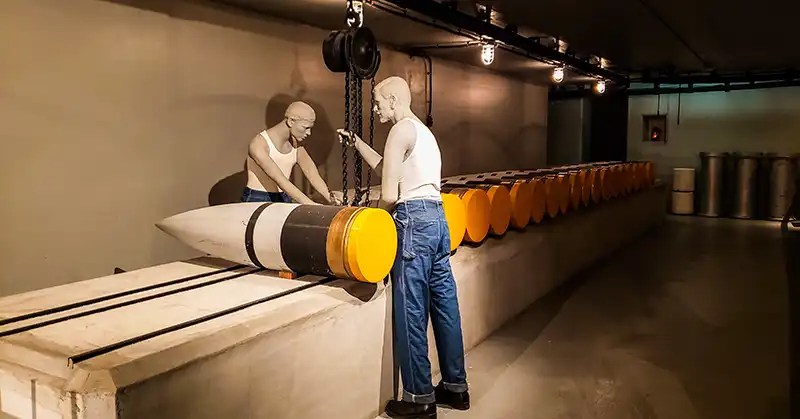
The museum stands on part of the 72 acres that make up the Armed Forces Recreation Center at Fort DeRussy. It shares space with the Regional Visitor Center of the US Army Corps of Engineers Pacific Division.
Exhibits at the Hawaii Army Museum
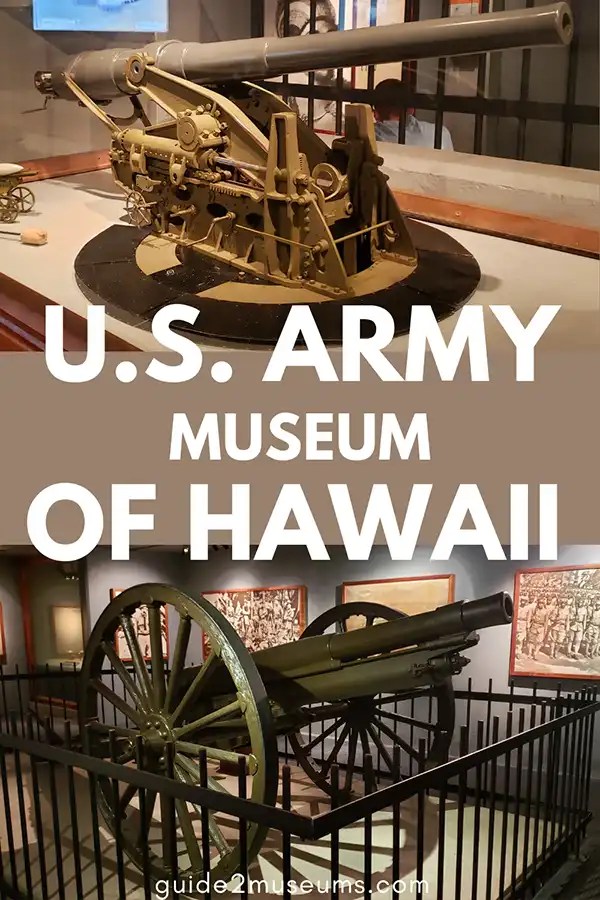
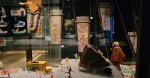
Various exhibits fill the 13,500 square feet of the museum. Displays are organized in rooms that contain photos, text, and artifacts such as weapons and military technology.
When you tour the museum, you can start or end with the outside exhibits. Inside, the tour begins in chronological order.
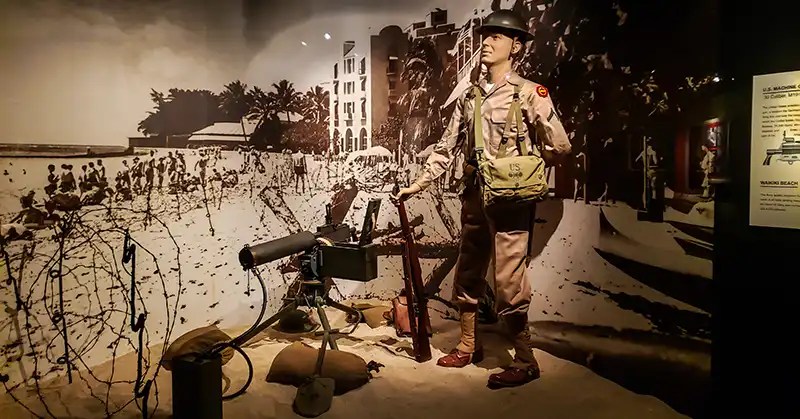
The time periods start with the early Hawaiian Warfare gallery and King Kamehameha’s introduction of western weapons.
Fast Fact: Captain James Cook was the first European to discover the Hawaiian Islands on January 18, 1778. He named the chain the Sandwich Islands in honor of John Montague, Earl of Sandwich, one of his patrons.
Other key galleries include:
- Hawaii on Defense: narrates the history of events that followed the December 7, 1941, attack on Pearl Harbor by the Japanese in WWII
- Gallery of Heroes: honors Hawai’i’s recipients of military awards of valor
- Hawaiʻi’s Japanese Americans: Focuses on the 100th Infantry Battalion and 442nd Regimental Combat Team, which were Japanese American units
- Korean and Vietnam Wars: artifacts and narratives related to Hawaii-based Army units
Fast Fact: Hawaii is remembered best as a Rest and Recuperation Center. Nearly a million servicemen and their dependents enjoyed a brief escape from the frustration and horror of combat. In just a few hours after leaving the steaming jungle behind, a GI was sucking up mai-tais in Waikiki's neon jungle, eating steak and lobster, sleeping on fresh sheets, and sharing closeness with his wife, sweetheart, or family.
~ U.S. Army Museum
Linda’s Road Trip Tips
What can I say except visitors really should take the time to visit Waikiki Beach when they’re in Honolulu! If you’re a fan of Elvis Presley, you may know it’s where Blue Hawaii, his 1961 movie was filmed.
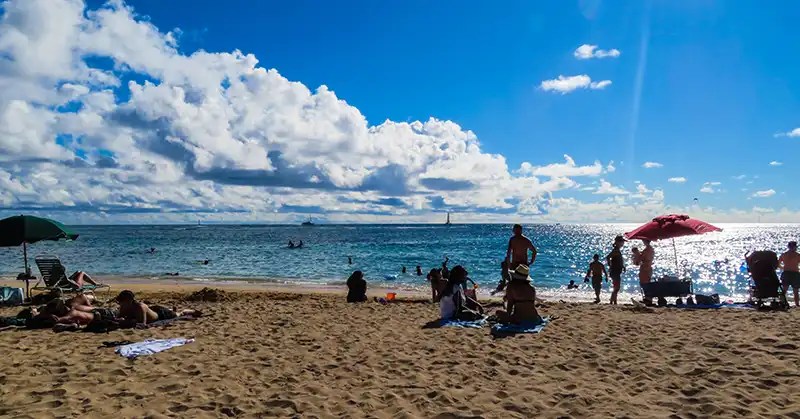
Indeed, it’s one of Hawaii’s most famous beaches.
Fast Fact: If you're a surfer, Waikiki Beach is best known for Duke Kahanamoku, a competition swimmer. Why? It's where he learned to surf and popularized the sport of surfing. Kahanamoku was a five-time Olympic medalist in swimming.
Of course, if you’re in Honolulu you’ll also be heading to the Pearl Harbor Historic Sites. They were the key reason we planned an extra day in Honolulu after our Hawaiian Island cruise. However, the Army Museum provides a lot of additional information that we found very interesting.
I’d also recommend a stop at the Bishop Museum in Honolulu as it covers centuries of island history. Do try some Spam Musubi at the Bishop Museum Café if you go!
Who Should Visit the U.S. Army Museum of Hawaii
Around 100,000 visitors typically visit the U.S. Army Museum of Hawaii. It’s a great stop in addition to all of the Pearl Harbor historic sites. We visited on an unseasonably hot day and found the temperatures in the battery great after being at Pearl Harbor.
There’s ample room for families to enjoy the well-organized exhibits. Hallways and exhibit areas are designed to allow easy movement for strollers, wheelchairs, and mobility devices.
While Battery Randolph is an historic structure, it has been adapted for accessibility. There are ramps and elevators to provide access to different floors. And if you get tired and want to relax a bit, there are benches and rest areas throughout the museum.
We spent a couple of hours going through the exhibit. History enthusiasts, particularly those interested in WWII and Vietnam, will likely need more time.
How Do You Visit the U.S. Army Museum of Hawaii?
The U.S. Army Museum is accessible by public transit, including TheBus. We used an Uber and found it wasn’t too pricey to get to Waikiki from Pearl Harbor.
Parking: Parking is available nearby at Fort DeRussy.
Street Address: 2131 Kalia Rd, Honolulu (sometimes written as Waikiki), Hawaii
The museum is open year-round and is free to visit. Check days and hours open, and to confirm admission costs, at the US Army Museum of Hawaii website.
Check what’s happening on the Hawai’i Army Museum Society Facebook page.
Take a virtual tour of the US Army Museum of Hawaii on YouTube.
Plan your visit with Google maps.

Find More Museums in Hawaii
Check out more museum reviews for museum attractions in Hawaii on guide2museums.com
Discover More Military Museums
- Plains of Abraham Museum & Battlefield Park: Quebec City
- Canada’s Little-Known Cold War Museum: the Diefenbunker
- U.S. Army Museum of Hawaii Artillery Battery in Honolulu

- USS Lexington Museum: WWII Aircraft Carrier in Corpus Christi, Texas

- Regional Military Museum: Artifacts from all US Wars in Houma, Lousiana
- Strategic Air Command & Aerospace Museum: Ashland, Nebraska
- Vancouver Island Military Museum: Nanaimo, British Columbia

- National Museum of the Pacific War: Fredericksburg, Texas

- Hill Aerospace Museum: Military Aircraft at Hill AFB, Utah

- Battleship Memorial Park: 1942 Battleship & 1941 Submarine in Mobile, Alabama

- Fagen Fighters WWII Museum: Granite Falls, Minnesota

- Manhattan Project National Historical Park: WWII History in Hanford, Washington

- National World War II Museum: New Orleans, Louisiana






 guide2museums.com