The Mormon Handcart Historic site at Martin’s Cove in Wyoming celebrates a group of 1856 pioneers. Unlike other pioneers, this group of people didn’t have covered wagons pulled by oxen. Instead, they loaded all their belongings into handcarts and pulled them across the country.
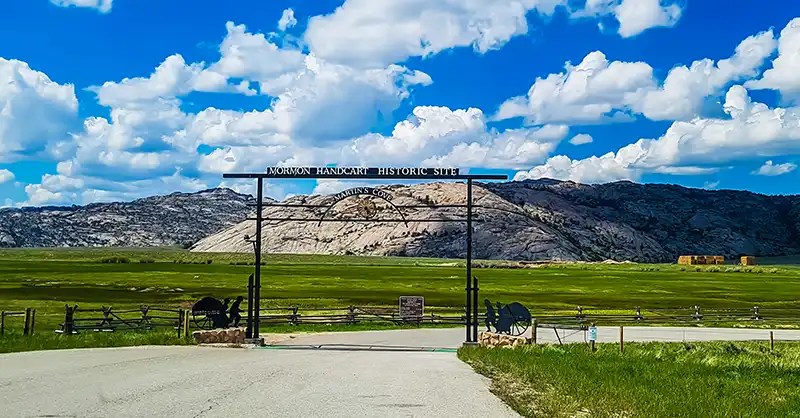
Linda’s Pick of the Exhibits
First let me say that Martin’s Cove is a fascinating site with various aspects to explore. However, what stood out for me was the handcarts.
Typically, pioneers had wagons, usually covered, that were pulled by teams of horses or oxen. The group of Mormon pioneers snowed in at Martin’s Cove didn’t.
These emigrants reached America by ship from Liverpool, England. Once in the U.S., they rode the Rock Island Railroad to the Iowa River.
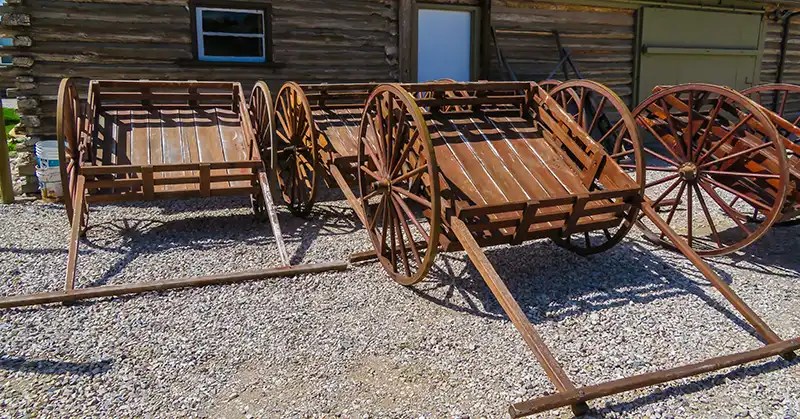
As fate would have it, builders were all out of lumber and parts when they arrived. So, they waited three weeks for handcarts to be built.
Fast Fact: A handcart is a small, wheeled vehicle that can be pulled or pushed. They were usually made completely of wood and measured six to seven feet in length. The boxes were three to four feet long and about eight inches high.
Who used handcarts? Pioneers who couldn’t afford wagons and oxen.
So, the Martin Handcart Company, led by Captain Edward Martin, left Iowa City on July 28, 1856. Five hundred and seventy-six people pulled 146 handcarts full of household goods. There were also six supply wagons, six mules and horses, and fifty cows and beef cattle.
Earlier, on July 15, 1856, Captain James G. Willie had left Iowa City with about 500 people and 120 handcarts.
As you can imagine, both groups faced severe hardship once November storms blew across Wyoming.
What’s at the Mormon Handcart Historic Site: Martin’s Cove & Devil’s Gate?
The Mormon Handcart Historic Site has many elements that help modern-day visitors understand the perilous 1856 handcart pioneer journey. A good starting point is the Devil’s Gate–Mormon Handcart Visitors’ Center.

- Start with a brief introductory history video and interactive kiosks.
- Go through the exhibits that tell the stories of the Martin and Willie handcart companies, the Hunt and Hodgett Wagon companies, and the broader Latter-day Saint migration west.
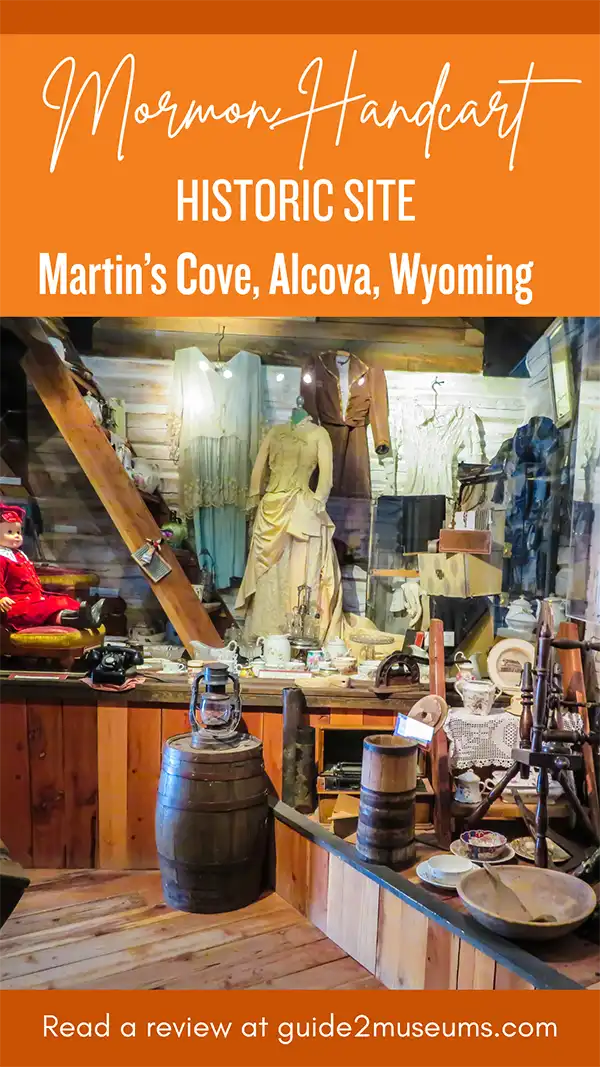
- Review the artwork and various household items brought by the pioneers.
Martin’s Cove was added to the National Register of Historic Places on March 8, 1977.
What happened to the emigrants?
The Martin Company group left Iowa City on July 28, 1856. They reached Fort Laramie, Wyoming, in early October. It was late in the year and no provisions were available. So, the company had to reduce rations for the next leg of the journey. They also had to lighten their handcart loads — so they discarded many essential items including clothing and blankets.
Fort Laramie to Martin’s Cove on the historic Mormon Trail was estimated at 170 to 180 miles (274 to 290 km).
When winter conditions in Wyoming worsened, Brigham Young organized a rescue effort. Supplies and rescuers left Salt Lake City in October. The first rescuers found the Willie Company at Sixth Crossing in the early snows of 1856.
The later group, stranded at Martin’s Cove by winter storms, were rescued in November. They reached Salt Lake City on November 30, 1856. More than 145 members died on the journey. Many survivors had suffered severe frostbite and needed amputations.
Their ordeal is a poignant chapter in pioneer history.
Martin’s Cove Trail
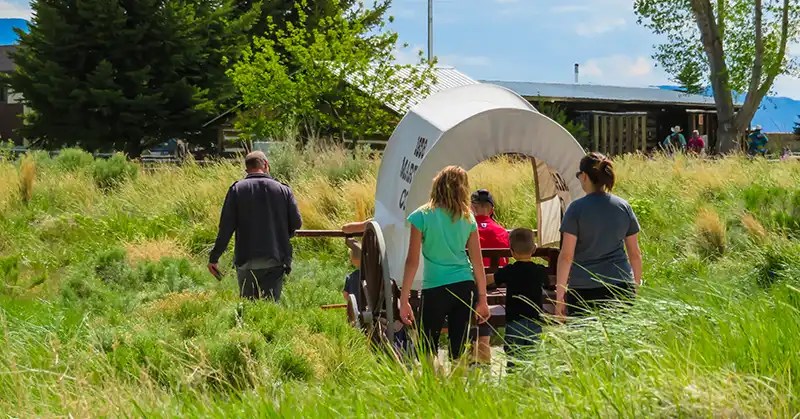
The Martin’s Cove Trail lets you experience Wyoming as the settlers did — pulling a handcart. Handcarts are free of charge to use. Just borrow one at the Visitor Center and head down the main trail. It’s a three to four mile round-trip.
There’s an optional one-mile round-trip side trail leading to Devil’s Gate.
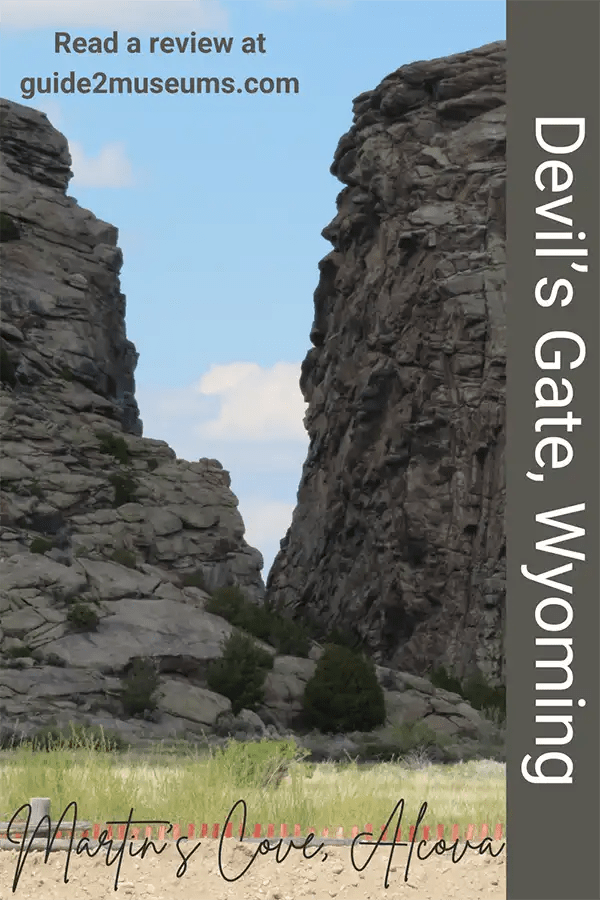
Fast Fact: Devil's Gate is a gorge carved into granite rock alongside the Sweetwater River. The gorge is 370 ft deep, 1,500 ft long, and just 50 ft wide.
Devil’s Gate was used as a landmark for emigrants on the Oregon, California, and Mormon Trails.
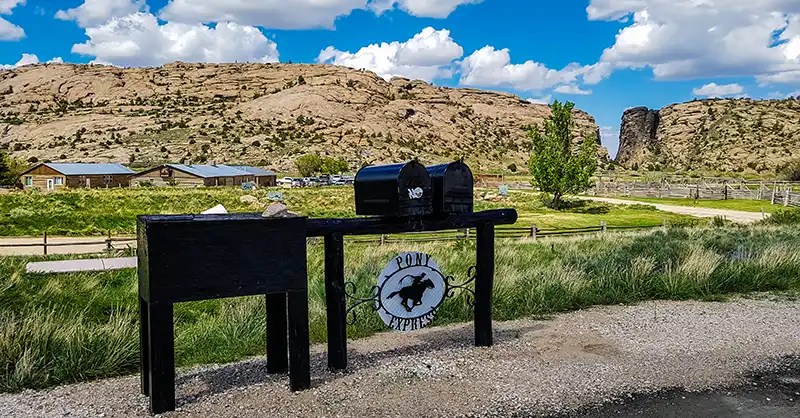
Pony Express riders also passed Devil’s Gate as they traveled between Independence Rock and Split Rock. Today, the Devil’s Gate Interpretive site has a hard-surfaced interpretive trail that’s ADA accessible.
Prairie Park
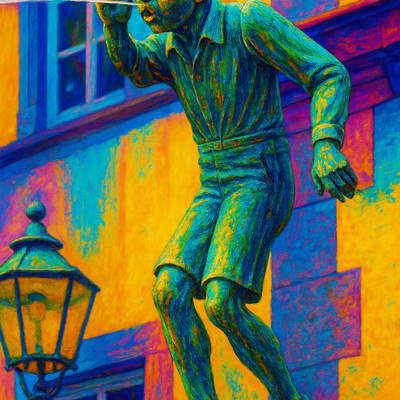
Prairie Park is situated next to the visitor’s center. It features sculptures by LeRoy Transfield. The sculptures show scenes from the 1856 handcart experiences.
There’s also a commemorative wagon listing the names of the handcart and wagon company pioneers and their rescuers.
Historic Sun Ranch Buildings
The Sun Ranch was established in the 1870s by a French-Canadian frontiersman named Tom Sun. It was designated as a National Historic Landmark on December 19, 1960.
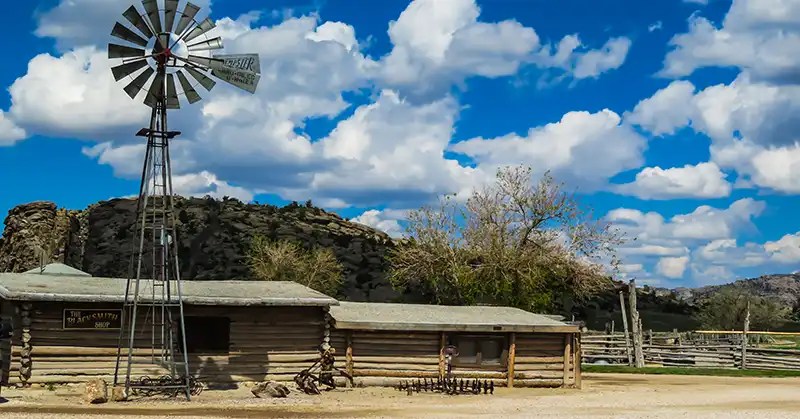
You’ll find original ranch buildings that have been preserved. These include a blacksmith shop, bunkhouse, and washhouse. An historic cabin houses the Peoples of the Sweetwater Museum. Displays in it include artifacts related to the Sun Ranch and pioneer trail.
Sixth Crossing and Rock Creek Hollow
The Church of Jesus Christ of Latter-day Saints operates these three related historic sites: Martin’s Cove, Sixth Crossing, and Rock Creek Hollow.
You’ll need to drive to Sixth Crossing and Rock Creek Hollow, but directions are provided at the visitors’ center. This site includes a visitors’ center with exhibits, art, and an interactive kiosk.
Fast Fact: Sixth Crossing is one of nine pioneer crossing points of the Sweetwater River. Rock Creek Hollow has several monuments and markers commemorating historic events.
Linda’s Road Trip Tips
This road trip was packed with amazing sights. We’d gone South through Montana into Idaho, then crossed Wyoming into South Dakota and North Dakota, then back to Canada.
Fifty-six miles south of the Mormon Handcart Historic site we’d visited the Wyoming Frontier Prison in Rawlins, Wyoming.
It’s an historic state penitentiary that housed some of the west’s most infamous outlaws. Around 13,500 inmates called it home between 1901 and 1981, when it closed.
Heading north, we enjoyed the amazing Frontier Auto Museum in Gillette, Wyoming.
I’ve never seen such a great collection of glitz outside of Las Vegas — their petroleum collectibles were amazing!
And if you’re looking for a fun place to stay in Wyoming, check out the Creekside Family Fun Center roadside stop of services in Buffalo. You’ll have a choice of hotels and places to eat. Buffalo is at the intersection of I-90 and I-25, as well as U.S. Route 16.
Who Should Visit the Mormon Handcart Historic Site?
The Mormon Handcart Historic Site is a great stop for anyone interested in the settlement era of the U.S.
I found this stop significant due to its handcart history.
While we usually consider various hardships endured by those who crossed the country before the trains, the handcarts bring a whole new perspective.
The availability of handcarts to use gives parents an opportunity to let kids experience life as it was 175 years ago.
Pushing or pulling a handcart isn’t easy! So, families can talk about what it would have been like to travel hundreds of miles with one.
And of course, for those interested in Mormon history and Brigham Young, the site is important.
The hiking trails provide an excellent opportunity to explore the Wyoming landscape and Sweetwater River.
How Do You Visit the Mormon Handcart Historic Site?
The Mormon Handcart Historic Site is located near the Sweetwater River off Wyoming Highway 220, close to Devil’s Gate.
Parking: There's lots of free parking at the historic site and museum.
Physical Address for the Mormon Handcart Historic Site: Martin’s Cove, 47600 West Hwy 220, Alcova, Wyoming
The Mormon Handcart Historic Site and Museum is free to visit. Check days open at the Discover Carbon County Wyoming website.
Learn more about visiting at The Church of Jesus Christ of Latter-Day Saints information on the Church’s Historic Sites in Wyoming.
Learn more about Mormon Handcart Pioneers on YouTube.
Plan your visit with Google maps.
More Things to See and Do in Wyoming
Read more museum reviews on guide2museums.ca for museum attractions in Wyoming.
Check Out More Historic Sites
- Chinatown in Montreal: A Fascinating Historic Site

- Canada’s Little-Known Cold War Museum: the Diefenbunker

- Discover the Mormon Handcart Historic Site & Devil’s Gate in Wyoming

- Historic Home of 1800s Governor in Lafayette, LA: Alexandre Mouton

- See 100 Miles Across Nebraska From Scotts Bluff National Monument

- Bishop’s Palace in Galveston, Texas: Victorian Era Castle

- Rip Van Winkle Gardens & Historic Mansion: Jefferson Island, Louisiana

- Robinson Roadhouse & Robinson Flag Station: Yukon Ghost Town

- USS Lexington Museum: WWII Aircraft Carrier in Corpus Christi, Texas

- Watson Lake Sign Post Forest Historic Site: Watson Lake, Yukon
- Medalta Museum: Ceramic Arts in Medicine Hat, Alberta

- Claybank Brick Plant National Historic Site: Claybank, Saskatchewan

- The Sheriff’s House Museum & Historic Site: A Hidden Gem in Devils Lake, North Dakota

- Soo Line Historical Museum & Historic Site: Weyburn, Saskatchewan

- Texas Seaport Museum: Gulf Coast History in Galveston, Texas

- Fred Light Museum: Battleford, Saskatchewan

- Frontier Prison Museum: Rawlins, Wyoming

- Toronto’s First Post Office Museum & National Historic Site: Ontario

- The Bastion: Designated Historic Place, Nanaimo, British Columbia

- Hearst Castle: National Historic Landmark in San Simeon, California

- Inglis Grain Elevators National Historic Site: Agricultural History in Inglis, Manitoba

- Evergreen Plantation: National Landmark Site in Edgard, Louisiana

- Cannington Manor Provincial Historic Park: Rich Lifestyles in 1880s Saskatchewan

- Mystic Seaport Museum: Historic Seafaring Village in Mystic, Connecticut









 guide2museums.com