Museum School™ (Fort Worth Museum of Science & History) in Fort Worth was founded in 1950. Its purpose? To introduce children to the wonders of the world around them through informal science and history education. However, it’s also a fascinating place to visit for everyone from preschoolers to grandparents!
Linda’s Pick of the Exhibits
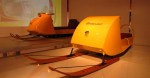
It was easy to see how parents, teachers, and students could spend a lot of time at the museum! I was particularly interested in the Energy Blast exhibit area. My favorite part? The Command Unit Truck.
What’s the purpose of a Command Unit truck? It’s the center that collects data for seismic mapping. Seismic mapping identifies oil, gas, and mineral deposits throughout the state.

While we’re all used to a variety of maps that show things like highways and rivers, seismic maps show what’s under the ground instead of on top.
Fast Fact: Seismic mapping is basically a rock concert! Why? Because vibe trucks transmit vibrations, or sound (a type of energy made by vibrations), far into the rock inside the earth.
How does seismic mapping work?
- The Command Unit truck computer equipment controls the huge amounts of data collected.
- Locations are pre-selected to “look” below the ground.
- Vibe trucks go to selected locations and set pads down.
- The Command Unit operator triggers the Vibe trucks to vibrate.
- Geophones record vibrations bouncing back from rock formations deep underground.
- Vibe trucks record vibrations at hundreds of locations until all the data needed is collected.

The sound is recorded by the instruments in the Command Unit. Finally, geophysicists create 3D images from the data.
What’s in the Fort Worth Museum of Science & History?
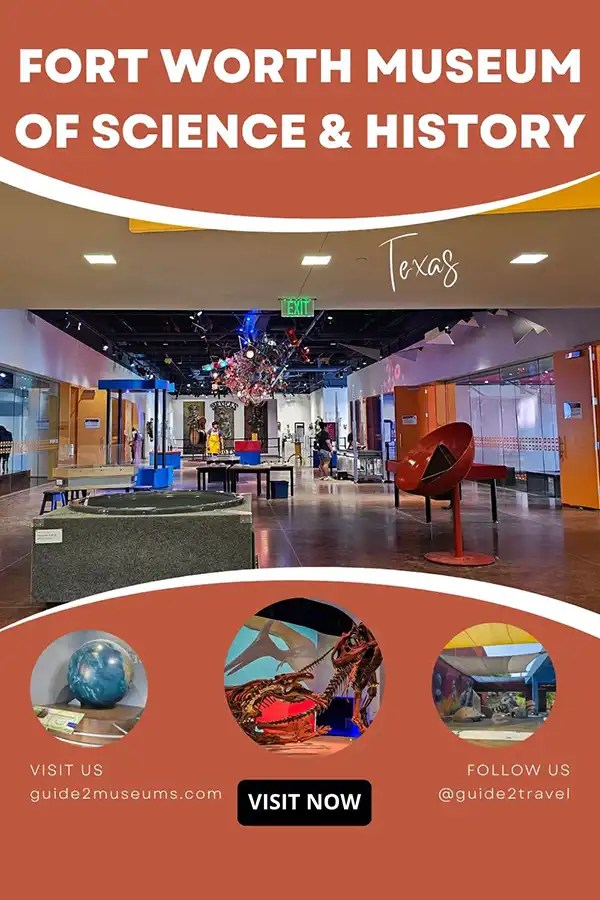
The Fort Worth Museum of Science and History is situated in the city’s Cultural District. The museum is integrated into a complex that contains several art museums, the Cattle Raisers Museum, the OmniTheater IMAX Dome, the Fort Worth Flyover, and the National Cowgirl Museum and Hall of Fame.
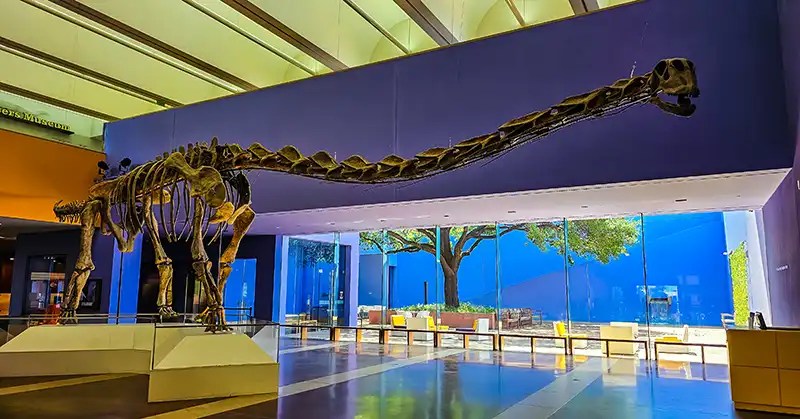
Paluxysaurus jonesi, the sauropod dinosaur, lives in the sun-filled atrium. He’s one of the main attractions.
How was Paluxysurus jonesi named?
The dinosaur’s name comes from the location of the dig site on the Jones Ranch in Hood County, Texas. Paluxy, on the Paluxy River, was nearby.
In 2009, Paluxysaurus jonesi became the official State Dinosaur by a bill passed in the Texas State Legislature.
Created to make science and history accessible, the museum is a very hands-on experience. In fact, the Innovation Studios area has five hands-on labs for young people. They include inventor, doodler, designer, imaginer, and explorer.
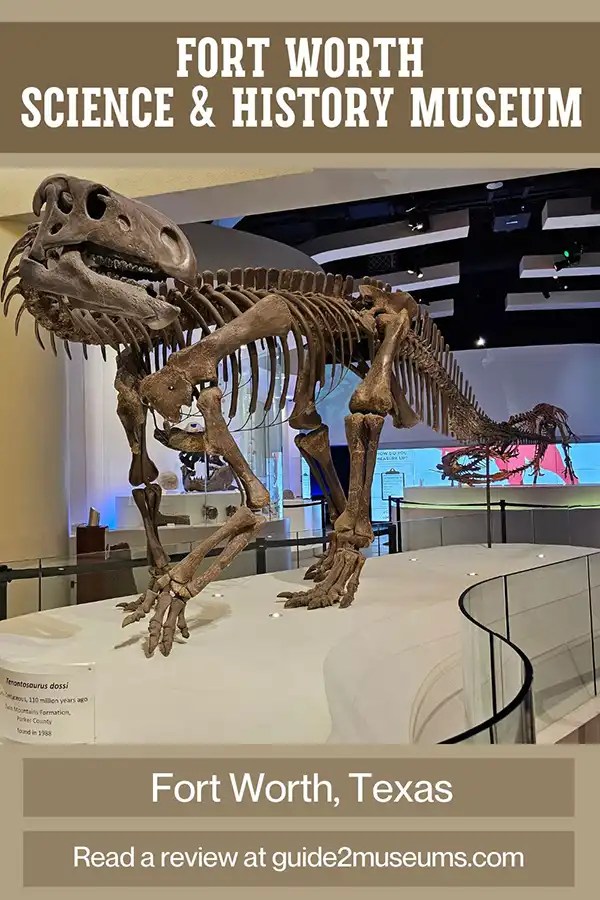
There’s also more to learn about dinosaurs in the Dinolabs exhibit.
Fast Fact: Fossils go through a process called permineralization to become stone. First, the body is buried. Second, ground water fills up all the empty spaces - including cells. Third, the water slowly dissolves the organic matter leaving minerals behind. After the process is complete, what was once bone is now rock!
~ Fort Worth Science and History Museum
Various types of fossils are displayed in Dinolabs, including a pterodactyl skeleton from the Mesozoic Era.
My favorite part of Dinolabs was the enormous cast of a dinosaur footprint.
Standing in it definitely made me wonder what it would be like to have lived in the time of the dinosaurs!
There’s also a replica paleontology site outdoors, so kids can dig for fossils themselves.

The Children’s Museum Exhibit is fun for the very young. It’s all about play, whether that’s shopping in the kid-sized grocery store or building a train.

There’s also a 9/11 Tribute featuring Column N-101, a beam from the North Tower of the World Trade Center. It’s one of the largest verified artifacts in Texas.
And for everyone who loves the night sky, the 80-seat Noble Planetarium and Gallery is a great way to give your feet a break!
Linda’s Road Trip Tips
The main reason for our stop in Fort Worth was to visit the National Cowgirl Hall of Fame and Museum — and it was worth the stop! So, it was a nice surprise to find the other museum attractions in the same complex.
However, we didn’t set aside enough time to see everything, so do plan for a full day or two.
Before our stop in Fort Worth, we’d had lunch at the Cracker Barrel in Wichita Falls, Texas, 125 miles away. It’s one of my favorite Southern chains!
And if you do stop in Wichita Falls, be sure to visit the Museum of North Texas History. With two halls and 15 additional display rooms, there’s lots to see there.
Don’t miss the 500 hats of (not Bartholomew Cubbins!) Nat Fleming.
Each hat is labeled with the name of the cowboy who owned it, then left it behind for a new one at The Cow Lot, Nat’s store.
After leaving Fort Worth, we headed into Waco for the night. The key attraction on our list of must-see places: the Dr Pepper Museum.
Who Should Visit the Fort Worth Museum of Science and History?
The Fort Worth Museum of Science and History is the perfect stop for families. For locals to road trippers, everyone will find something to enjoy.
We also found the introduction to the Texas Energy history and science good background for other stops later on our trip.
Since the exhibits are designed for educational purposes, they do a good job of breaking concepts down into fun, bite-sized pieces.
The museum is wheelchair and handicap accessible.
Exhibits are spacious, so there’s lots of room for children’s strollers and wheelchairs to get around. There are also some wheelchairs available on a first-come, first-served basis for guests.
As well as being accessible, the museum also is attentive to sensory needs. Families can use a Calming Room if required, and there are also sensory backpacks with items to help guests with sensory needs. Free Sensory Saturdays provide opportunities for anyone with autism and other developmental disabilities to explore the museum.
How Do You Visit the Fort Worth Science and History Museum?
The Fort Worth Science and History Museum is situated in the Fort Worth Cultural District. The district includes Dickies Arena, Will Rogers Memorial Center, the Fort Worth Botanic Garden and the top-rated Fort Worth Zoo.
Parking: Paid parking is available. The closest parking facility to the Fort Worth Museum of Science and History is the Harley Lot, located at the intersection of Harley Avenue & Montgomery Street.
Street address: 1600 Gendy Street, Fort Worth, Texas.
Check the Fort Worth Museum of Science and History website for days open and admission costs.
Keep up-to-date with what’s happening with the Fort Worth Museum of Science and History Facebook page.
Take a virtual tour of the Fort Worth Museum of Science and History in a Wikipedia Audio Article on YouTube.
Plan your visit with Google maps.
More Texas Museum Reviews
Check out more of our reviews for museums in Texas.
More Science Museums
- Tour The Biosphere: Montreal’s Environment Museum

- Discover the Amazing Canada Science and Technology Museum

- Fort Worth Museum of Science & History: Museum School™

- Lafayette Science Museum: From Dinosaurs to the Space Age in Louisiana

- McCormick Bridgehouse & Chicago River Museum: Chicago, Illinois

- Moody Gardens: Resort & Fun Attractions with Pyramids in Galveston, Texas

- Museum Of Illusions Toronto: Mind-Bending Exhibits

- Field Museum: Natural History Museum in Chicago, Illinois

- Audubon Insectarium: Natural Science Museum in New Orleans, Louisiana

- Glendive Dinosaur & Fossil Museum: 25+ Dinosaur Skeletons in Glendive, Montana









 guide2museums.com