Lufkin, Texas, is home to the standout tourist attraction, the Texas Forestry Museum. This hidden gem may be just a regional museum, but it’s got a lot to share about the history of forestry and sawmills in the historic lumber capital of Texas.
Linda’s Pick of the Exhibits
My favorite of the things I explored at the Texas Forestry Museum? The display with photos and descriptions of the roles of workers and what they did in a sawmill.
Back in the day, I remember my grandparents cutting firewood for the winter using a cordwood saw. Of course, kids weren’t allowed near the action, although I found it fascinating to watch the belt from the tractor turn the giant (to me anyway!) saw blade even from a distance.
But back to roles in a sawmill, as they were a lot more complicated.
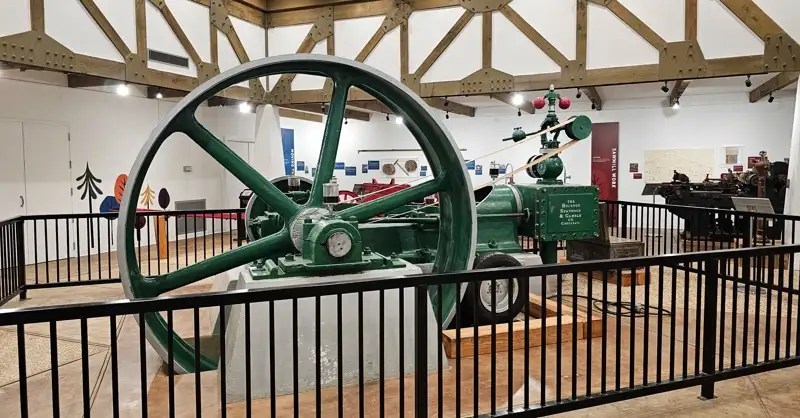
It all begins with the scalers. What did scalers do? They made the initial decision while the logs are traveling through the millpond into the sawmill on how to cut logs. They also did a safety check to make sure there weren’t any metal objects embedded in the logs. Why? Because metal could damage machinery or fly out and injure workers.
Fast Fact: A band saw blade used in a sawmill cost $300 in 1933. That's the equivalent of nearly $7,500 dollars today!
~ Initial cost identified by the Texas Forestry Museum
If you’ve ever chopped logs yourself, you know that finding the optimum place to chop makes a big difference to how easy the log splits. In the sawmill, this was the job of the block setter. They turned each log to the perfect cutting position.
The block setter worked with the sawyer to cut the logs into boards. Their goal? Produce the highest value lumber. However, unlike my grandparents, the sawyers had screened stalls to protect them from all those flying bits of wood and sawdust!
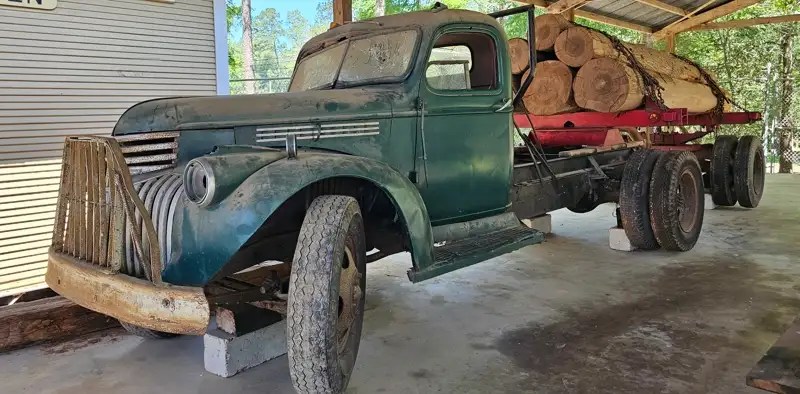
One of the clearest parts of my childhood memory is the noise of the tractor and the saw and the cutting process. Museum information signs made it clear this was a problem back in the day, too. And neither my grandparents or the sawmill workers would have had much in the way of noise cancellation devices.
Fast Fact: Various hand signals were used for communication due to the noise. Touching your finger to your nose indicated, "I don't know." While touching your finger to your ear meant, "I can't hear you."
Jobs also included:
- Edger – removing bark edges and cutting blocks into planks
- Trimmer – cut boards to final, precise dimensions
What’s in the Texas Forestry Museum?
The Texas Forestry Museum is operated by the Texas Forestry Association (TFA). This century-old nonprofit organization’s mission is to promote sustainable forestry history and education.
When it comes to the collection, there’s lots to see both indoors and outdoors. Indeed, there are more than 30,000 artifacts. Artifacts include everything from historic logging tools to photographs.
The museum’s featured exhibits include:
- Logging train
- Sawmill town
- Paper mill
- Money trees
- Fire tower
- Urban wildscape trail
Signage and information panels provide tons of information about sawmill operations and company towns.
Historic photos are displayed with many of the labels and signs, along with quotes from loggers and their families.
Exhibits include many interactive elements. Indoors, you’ll find a children’s wing designed to help kids imagine they live in the historic sawmill town. They can dress up in pioneer clothes and climb up a fire tower. There are also various games to help teach about logging and mills.
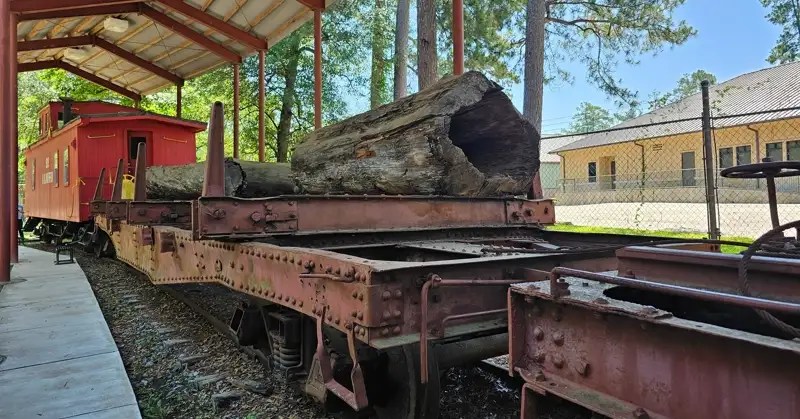
Outdoors, the nature playscape and oversized lawn games are popular. I even climbed on board the caboose to take a peek inside!
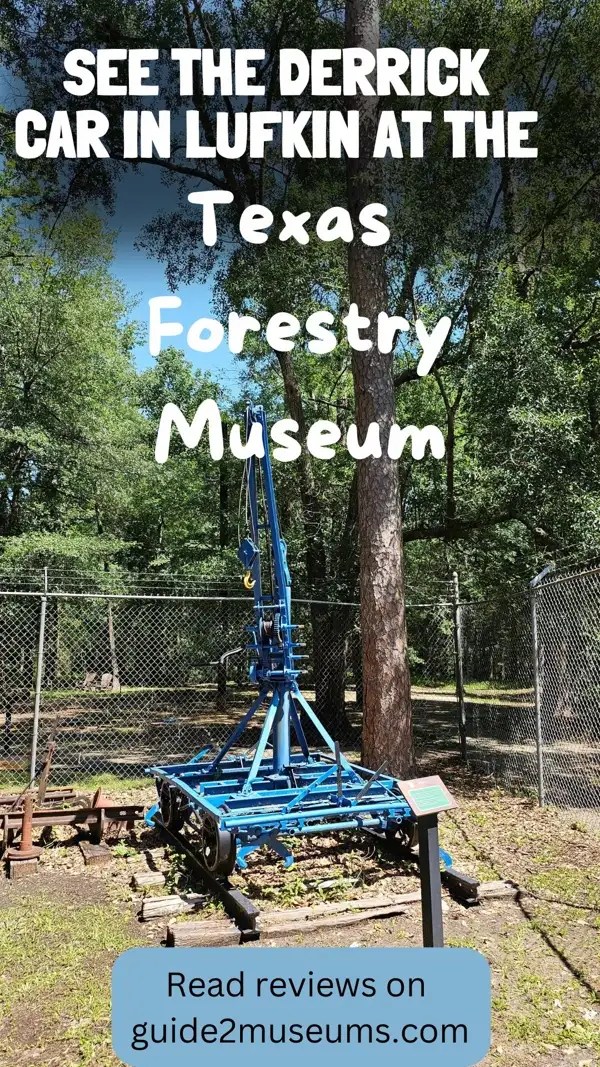
Fast Fact: The museum has a derrick car, also known as a railroad crane. Its uses? Large cranes mounted on full-size railroad flat cars moved wreck trains. Small cranes moved things in the rail yard. The derrick car on display was used by the Angelina & Neches River Railroad to hand bridge timbers.
Linda’s Road Trip Tips
We visited Lufkin on our drive home from the TBEX travel blogger conference in Galveston, Texas.
Our first stop out of Galveston was nearby Beaumont.
We highly recommend a visit to the Texas Energy Museum there.
The museum covers everything you might want to know about the past, present, and future of Texas’ oil industry.
There are two additional museums in the same complex as the Energy Museum: the Art Museum of Southeast Texas and the Beaumont Children’s Museum.
Both are good stops depending on your interests.
Lufkin is just a couple of hours north of Beaumont, and we were able to fit in the Naranjo Museum along with the Texas Forestry Museum while we were there. The Naranjo has lots to offer, from dinosaurs and fossils to rocks brought back on the Apollo 14 mission to the moon.
Who Should Visit the Texas Forestry Museum?
The Texas Forestry Museum is an essential stop to get a clear idea of the state’s history.
In fact, in the early 1900s, timber was Texas’ largest manufacturing industry and a leading economic engine.
By 1907, Texas was the third-largest lumber producer in the U.S.
One of the largest museums of its kind in the United States, there’s a lot to learn for anyone interested in forestry.
The extent of outdoor exhibits and activities make this the perfect stop for families.
At the time of our visit, admission was free, along with use of all of the facilities, making it even more important for those on a budget.
Picnic tables are available behind the museum, so it’s a good stop to relax over a packed lunch while the kids explore.
Indoor features are compliant with ADA accessibility standards. Exhibit areas are spacious, so there’s lots of room for wheelchairs and baby strollers.
There are also free sensory backpacks and a downloadable social story for visitors with sensory issues. Outdoors, the paved trail, ramps to the locomotive exhibit, and the children’s wing are also accessible.
How Do You Visit the Texas Forestry Museum?
The Texas Forestry Museum is in the lush Pineywoods of Lufkin, Texas.
Parking: There's lots of free parking right in front of the museum building. However, our GPS was rather confused getting there, so we had to make a couple of trips around the block.
Physical address: 1905 Atkinson Dr., Lufkin, Texas.
Check days and hours open on the Texas Forestry Museum website.
Take a virtual tour with the Texas Forestry Museum on YouTube.
Plan your visit with Google maps.
Read More Texas Museum Reviews
Check out all of guide2museum.com’s reviews of museums in Texas.
Discover More Technology Museums to Visit
- Texas Forestry Museum: Lufkin’s Hidden Gem
- Discover the Amazing Canada Science and Technology Museum

- EAA Aviation Museum in Oshkosh, Wisconsin: Airplanes from All Eras

- Medalta Museum: Ceramic Arts in Medicine Hat, Alberta

- Claybank Brick Plant National Historic Site: Claybank, Saskatchewan

- Ocean Star Offshore Drilling Rig & Museum: Galveston, Texas, Oil Drilling History

- McCormick Bridgehouse & Chicago River Museum: Chicago, Illinois

- Stafford Air & Space Museum: Space Shuttles to Rockets in Weatherford, Oklahoma

- Texas Energy Museum: Oil History in Beaumont, Texas

- Dr Pepper Museum: Great Tastes in Waco, Texas
- Museum of Clean: Pocatello, Idaho

- Alexander & Baldwin Sugar Museum: Puunene, Maui, Hawaii

- Idaho Potato Museum: Blackfoot, Idaho
- Manitoba Agricultural Museum: Rare Historic Farm Machines in Austin, Manitoba









 guide2museums.com