A visit to Louisville, Kentucky, isn’t complete without checking out the Kentucky Derby Museum. Even if you’ve never followed horse racing, you’ll find fascinating history going back nearly a century-and-a-half to the first running of the Kentucky Derby — the most exciting two minutes in sports.
Linda’s Pick of the Exhibits
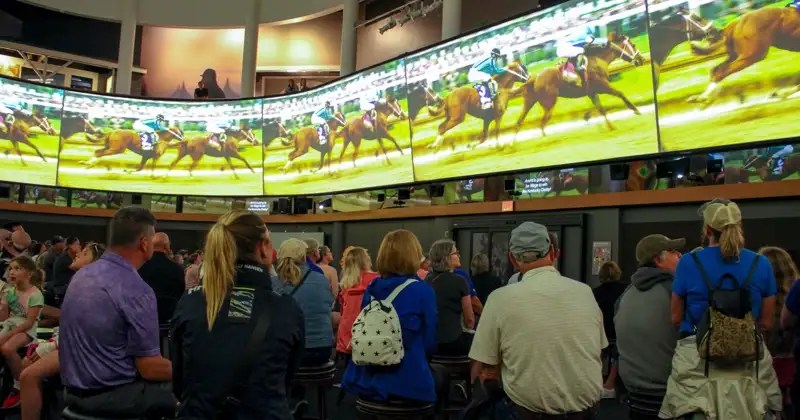
My favorite exhibit? Horses, Legends, and Time Machine. What’s that? Well, the Warner L. Jones Time Machine lets you watch any Kentucky Derby from 1918 to the present.
And what race did I hop through time to see? My all-time favorite run by the first Canadian horse to ever win the Kentucky Derby, Northern Dancer.
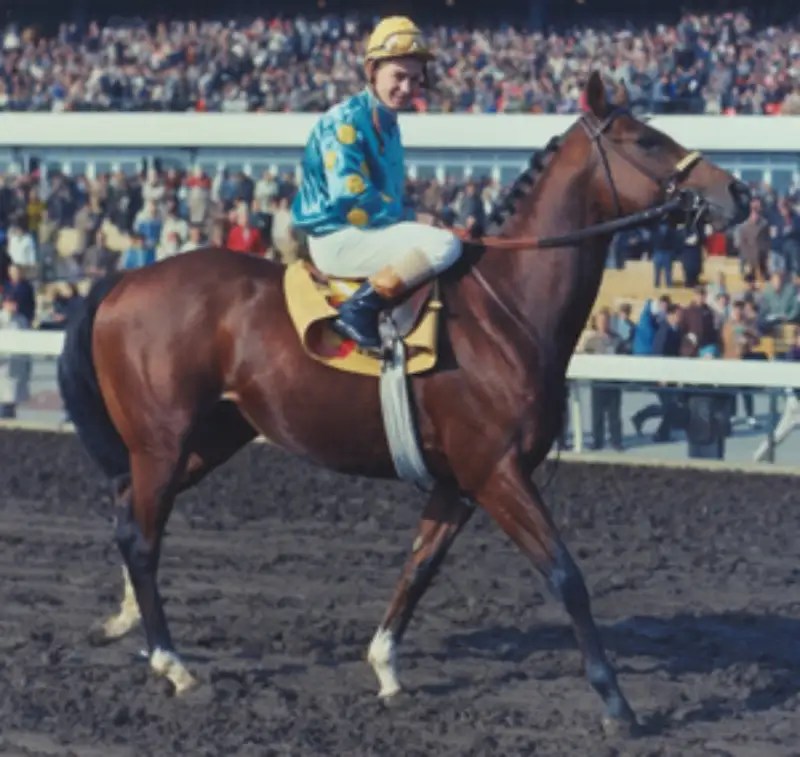
I remember the 1964 Run for the Roses (another popular name for the Kentucky Derby) well. It was May 2, 1964. I was as excited as the fans at the track while I watched our black-and-white television count down to race time. Even though he was a small horse, Northern Dancer was still a Derby favorite. He was second, after Hill Rise, in betting.
Northern Dancer had already won seven of nine starts when as a two-year-old. So, when his new Texan jockey, Bill Shoemaker, got him as a three-year-old, he was already an established winner. But Shoemaker didn’t ride him in the Derby. He rode Hill Rise, leaving Bill Hartack to become Northern Dancer’s permanent jockey.
The 1964 Derby Race
Northern Dancer started from post 7 in a field of 12. Hill Rise was in post 11.
Both Hartack and Shoemaker held their horses back at the start of the race. But Northern Dancer soon took the lead with Hill Rise hot on his heels.
Like millions of others, I couldn’t breathe.
The horses galloped down the stretch–each stride getting them closer to the finish line. Northern Dancer was out front, but Hill Rise had longer legs and a pro for a jockey. He gained fast!
As the finish line loomed, Hill Rise cut the margin with every stride. But Northern Dancer didn’t weaken. He won by neck!
Did Northern Dancer set any records?
Northern Dancer had what it took to become a champion. When the 1964 race ended, this Canadian horse had set a new track record. He finished the Kentucky Derby in two minutes flat.
The two-minute record stood until 1973, when it was broken by Secretariat at 1:59.40. Today, some of Secretariat’s records still stand and you’ll find a whole exhibit dedicated to this horse along with his race in the time machine.
While Secretariat also won the Triple Crown, Northern Dancer missed by a race.
These are some of the honors given to Northern Dancer:
- Voted the 1964 Canadian Athlete of the Year by Canada’s sportswriters — the first time ever for an animal.
- Given the Key to the City of Toronto by mayor Donal Dean Summerville in 1964.
- Inducted into Canada’s Sports Hall of Fame in 1965.
- Inducted with the inaugural class into the Canadian Horse Racing Hall of Fame in 1976.
- Inducted into the United States Racing Hall of Fame in 1976.
- Had a Canadian postage stamp created of him in 1999.
Fast Fact: The Kentucky Derby is the longest continuously running horse race in the US. It, along with the Belmont Stakes and Preakness Stakes make up the Triple Crown.
What’s in the Kentucky Derby Museum?
The Kentucky Derby Museum opened in 1985 through the vision of four Louisville businessmen. It has collected more than a century of thoroughbred racing history. Today, there are 20,000+ items in the museum’s permanent collection.
Fast Fact: The book, The History of the Kentucky Derby in 75 Objects, was published in 2024 by KDP.
In addition to what museum curators have gathered, the collection includes research archives from a number of others. Jim Bolus, author of seven books and a one-time curator of the museum, left his materials to the museum on his death in 1997. Industry participants, like trainer, D. Wayne Lukas and jockey, Bill Shoemaker, also contributed significantly.
The Jockeys & Trainers
The first Kentucky Derby ran on May 17, 1875. And the horse that won it? Aristides, which few outside the industry may know was ridden by Black jockey, Oliver Lewis. Ansel Williamson, renowned Black trainer, had trained Aristides.
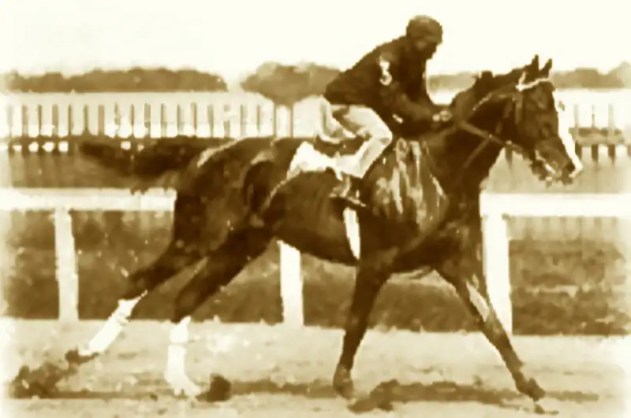
As you’ll learn in the Black Heritage in Racing exhibit, Black Americans dominated horse racing in the late 1800s, winning 15 of the first 28 Derbies and training six of the first 17 winners.
The exhibit, Right to Ride, tells the story of women breaking into the male-dominated sport of horse racing. Indeed, barriers started to come down in the 1960s when women jockeys were granted the right to race professionally.
Trailblazers from Panama to Puerto Rico are celebrated in the A Las Carreras exhibit. Presented in English and Spanish, it narrates the story of Latin and Central American Derby jockeys.
Jockey, Bill Shoemaker, is honored in the Larger than Life exhibit. Shoemaker had a 40-year riding career of 40,000 career rides. They include four Kentucky Derby wins (1955, 1959, 1965, and 1986). He was also a trainer in later years.
Fast Facts: Bill Shoemaker was the first jockey to win $100 million in career purses in 1985. The race that put him over the mark? Santa Anita Handicap in Arcadia, California, on Lord at War.
The D. Wayne Lukas: The Modern Trainer exhibit follows the life and career of one of horse racing’s important figures. It draws from the trainer’s personal collection of trophies, art, and artifacts.
Barn and Backside Tour
When I visited the Kentucky Derby Museum, tour guide, Miss Angie, took my group on the Barn and Backside Tour. It took us around the barns area, eventually letting us off to watch the horses practice from a vantage point right beside the track, rather than the stands.
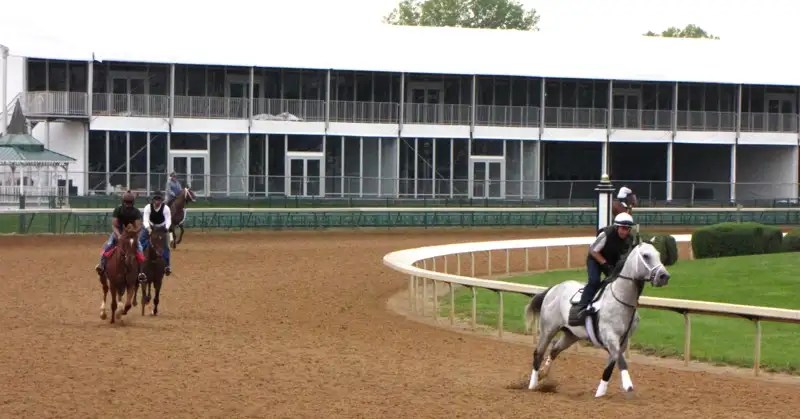
My visit was the week before the Derby, so I was lucky to see horses that were entered. However, Churchill Downs is busy during racing and training season. How busy? Around 1400 horses and people! You’ll see grooms bathing horses, cold walking horses before practice, and cooling horses out after running.
You can be sure you’ll get an insider’s view of what happens in the stables before horses get to the finish line.
I also took the Walking Tour through the Jockeys’ Quarters, Millionaires’ Row, the Press Box and other areas of Churchill Downs.
Try the Kentucky Derby Simulation Race
The Rider’s Up simulation at the Kentucky Derby Museum is popular with young and old alike! You get to select from three types of horses: frontrunner, stalker and closer. What’s the difference? Well, each horse has its own particular “style” on the track, from jumping into the lead right out of the starter’s gate to finding a huge burst of energy near the end of the race to come from behind.
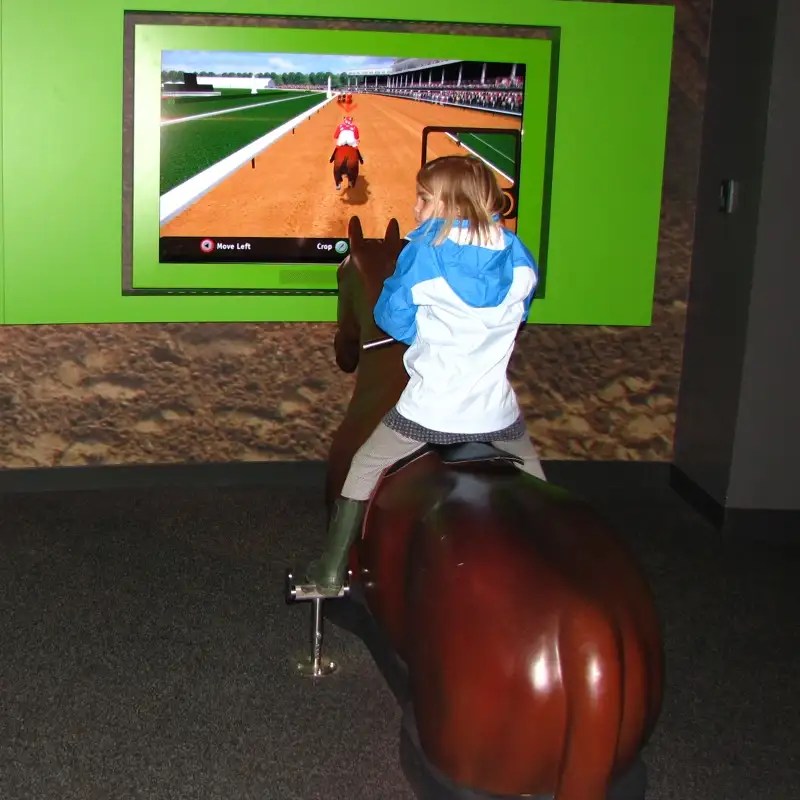
But no matter what type of racehorse you pick, the simulation is fun for all ages! The trick? Maintain your stance riding like a jockey in a crouching position. You’ll likely find, as I did, that it’s a lot tougher than it looks!
There’s also a 360-degree movie theater that feels like you’re racing if you’re not up to the simulator!
Derby Horses
As you’d expect, Secretariat is a featured horse. You’ll learn all about him in the permanent exhibit, Secretariat: America’s Horse.
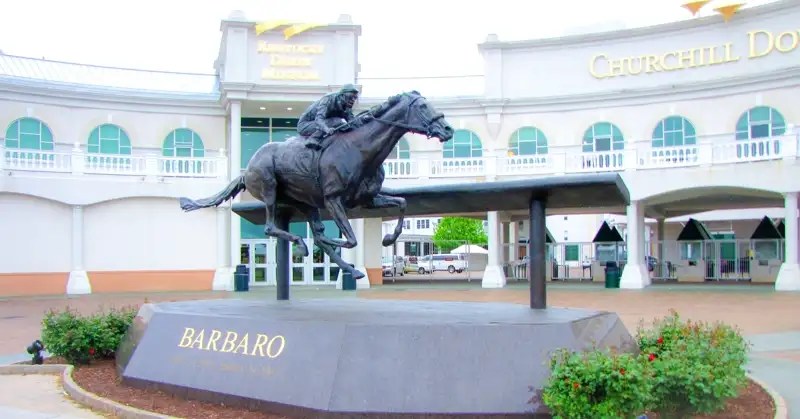
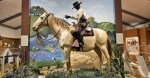
Not all dreams come true in horse racing and the statue of Barbaro at the museum entrance memorializes one that didn’t. Barbaro won the Kentucky Derby by six-and-a-half lengths in 2006, but had a catastrophic accident in the Preakness.
He was deemed all right after a false start, but fractured three bones around the fetlock of his right hind leg just out of the Preakness gate by the grandstand. Although given a series of surgeries, his owners had to euthanize him in January of 2007.
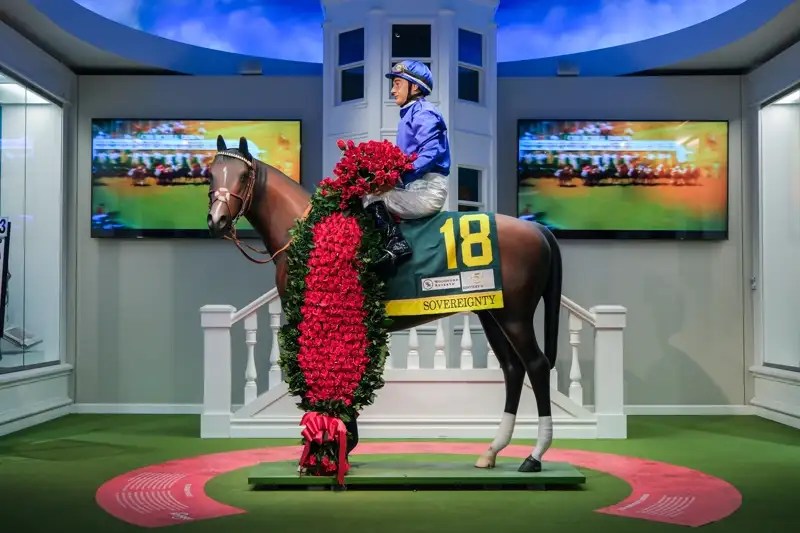
Various other Kentucky Derby winners are featured throughout the exhibits.
Linda’s Road Trip Tips
The museum’s Derby Cafe has some great Kentucky Classics on its menu. Try some Burgoo–what’s that?
A thick, savory stew that originated in Kentucky. It features three or more meats along with a variety of vegetables. You can’t beat it for a stew lover like me.
Before you leave the Kentucky Derby Museum, be sure to stop in at the KDM Bourbon Bar.
A stop on the official Urban Bourbon Trail®, you’ll find a selection of 170+ bourbons.
Not a fan? (I’m not!) You can taste the Kentucky Derby traditional Mint Julep or choose from a list of cocktails and mocktails.
Who Should Visit the Kentucky Derby Museum?
Horse lovers from all walks of life will enjoy the Kentucky Derby Museum. While I grew up on an Appaloosa horse ranch and participated in Western riding events, race horses still fascinate me.
History lovers of all ages will find lots of interesting facts about thoroughbred racing and the Triple Crown of Racing.
For those who aren’t familiar with horses, the barns provide a great opportunity to learn about the sport and participants.
The museum is fully accessible. It offers wheelchairs to visitors on a first-come, first-served basis.
Those watching the “Greatest Race” film will find closed captioning and induction loops.
Interested in the Riders Up! exhibit? There’s even a handicap-accessible horse there.
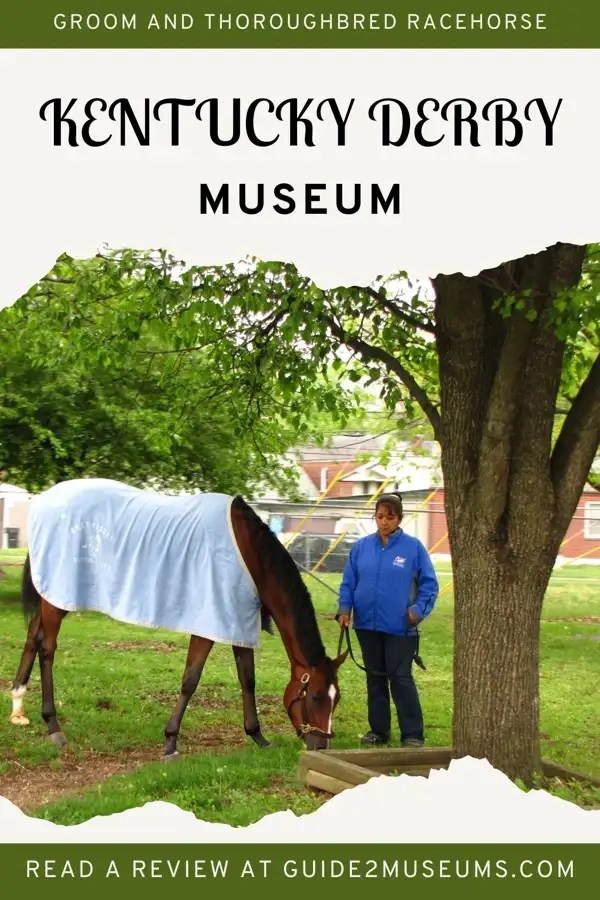
Visitors with mobility issues can be dropped off directly in front of the museum at the Barbaro auto-court. The guided walking track tours are also accessible.
How Do You Visit the Kentucky Derby Museum?
The Kentucky Derby Museum is located in Louisville, Kentucky. It’s directly attached to Churchill Downs Racetrack.
Parking: Museum visitors get free parking in a parking lot shared with Churchill Downs. Options vary for race and non-race days, so check the race schedule to plan your visit.
Physical Address: 704 Central Avenue, Louisville, Kentucky.
The museum is open year-round, but hours vary by season. Check days and hours on the Derby Museum website.
Keep up-to-date with what’s happening at the museum with the Kentucky Derby Museum Facebook page.
Check out the Kentucky Derby Museum channel on YouTube.
Plan your visit with Google maps.
More Places to See in Kentucky
Check out all of guide2museum.com’s reviews of museums in Kentucky.
Read More Reviews of Sports Museums
- Horse Racing’s Favorite Museum: Kentucky Derby Museum in Louisville, KY
- 16 Top Snowmobile Museums
- Manitoba Baseball Hall of Fame Museum Review

- National Fresh Water Fishing Hall of Fame & Museum: Hayward, Wisconsin
- Hockey Hall of Fame: Museum of Ice Hockey History in Toronto, Ontario

- Curb Motorsports Museum: Kannapolis, North Carolina

- NASCAR Hall of Fame: Charlotte, North Carolina
- World Snowmobile Headquarters Museum: Eagle River, Wisconsin
- Polaris Experience Center: Polaris Snowmobile Museum in Roseau, Minnesota
- Snowmobile Hall of Fame and Museum: St. Germain, Wisconsin

Acknowledgements
I visited Louisville on a FAM tour as a guest of the city of Louisville, Kentucky. My experience and review are entirely my own, based on what I learned and felt during my visit.


 guide2museums.com