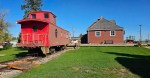
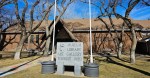
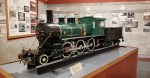
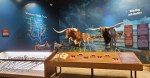
Garden City, Kansas, is a small city on the popular north-south U.S. Route 83 highway. However, visitors enjoy a wide range of activities from hunting and fishing to the diverse mix of Mexican, Southeast Asian, and other international cuisines. When it comes to attractions, the Finney County Historical Museum tops the list.
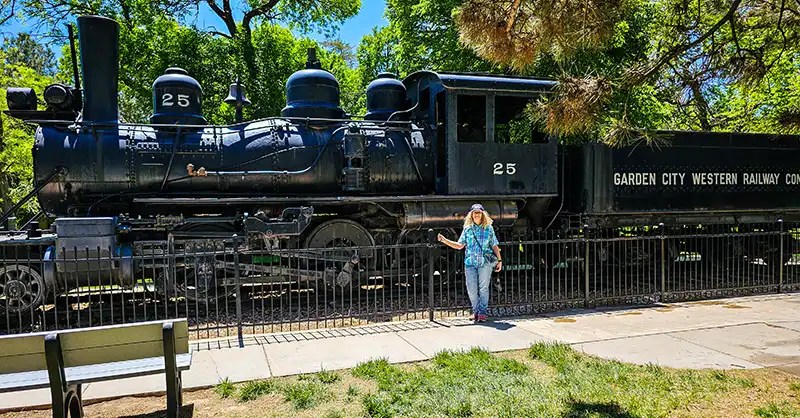
Linda’s Pick of the Exhibits
My favorite exhibit in the Finney County Historical Museum was about the Santa Fe Trail. I always find it fascinating to hear the stories of the courageous men and women who trekked across the country. And the Santa Fe Trail was a major route from 1821 to 1880.
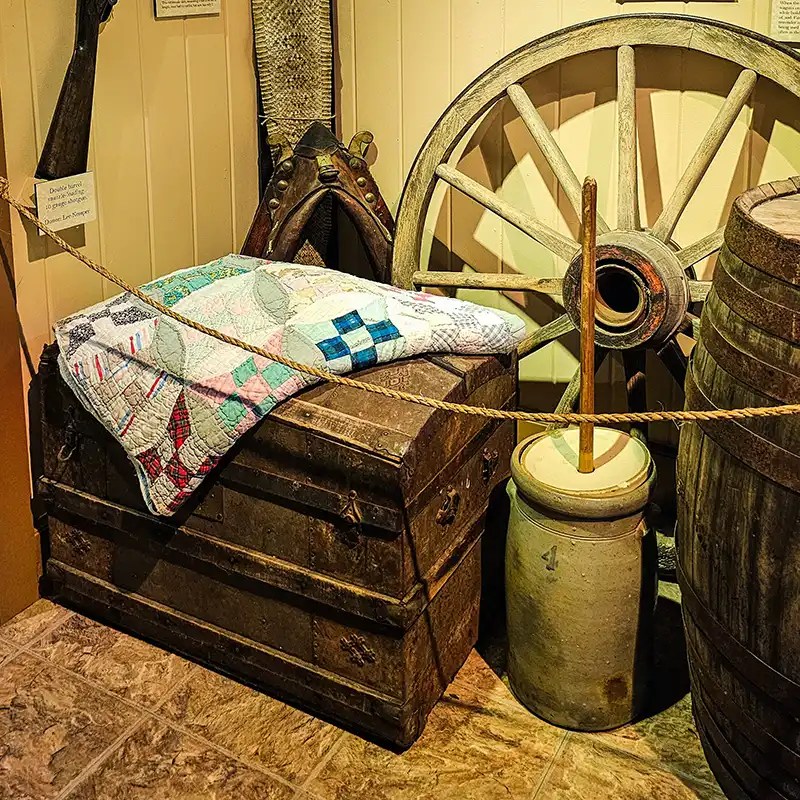
Today, you can still follow the general route of the old Santa Fe Trail by using U.S. Route 50. Designated as a National Historic Trail in 1987, the highway runs east to west from Missouri to New Mexico. The trail has set up 30 Passport Stamp locations that are historically relevant for you to stop in.
Fast Fact: With harsh weather, limited water, and the Cheyenne and Arapaho defining their lands, the trail was tough. Indeed, the Santa Fe Trail has been called the most forbidding and dangerous major pioneer route in American history.
After looking through the photos, you can almost see the caravans of ox-drawn wagons plodding over the prairie. Garden City was a key stop, since the Arkansas River runs through it.
Garden City was part of the Cimarron Route, which was the shorter–but riskier–branch of the Santa Fe Trail. It shortened the trip by about 10 days, which could make a big difference if winter came early!
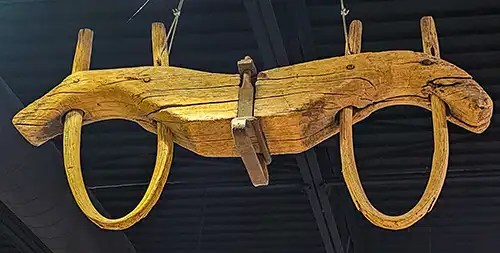
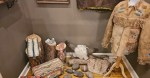
The museum’s display includes artifacts along with historical photos. There’s a great map to show where the trail ran.
What’s in the Finney County Museum?
The Finney County Museum collection archives over 140 years of local history. It covers the major decades, starting with the first peoples, pioneer life and early agriculture.
Back in the 1960s, the Finney County Historical Society established the museum. Originally, the artifacts were displayed around town in various businesses. But in 1975, the artifacts were relocated to the brick current location in Finnup Park.
One of the city’s founding members, George Finnup, donated the land and resources for it and the Lee Richardson Zoo.
The museum is a 10,000 square-foot facility, with lots of exhibit space for its multiple galleries. It also includes the Leola Howard Blanchard Library, which is an expanding research center. You’ll find lots of primary sources on the history of Finney County and local genealogy.
Main Galleries in the Finney County Museum
The museum is organized chronologically, so you move through time getting an idea for how the county grew.

Some of the long-term exhibits in the Main Exhibit Hall include:
- Take Stock in Finney County. This exhibit focuses on the cattle industry. As well as ranching, the exhibit covers the development of its beef packing industry.
- C.J. “Buffalo” Jones: Last of the Plainsmen. He’s definitely someone you might describe as a character! You’ll see that in this display that shows his life and community contributions.
- 19th-Century Kitchen. If you’ve ever had questions about cooking in the late 1800s, here are some answers. These artifacts make it clear that women’s work was no walk in the park in those days.
- Finney County Agriculture. While Finney County has a semi-arid climate, irrigation from the Arkansas River helped farmers expand their options. In the late 1800s, sugar beets became a profitable crop. A sugar processing plan was built in Garden City.
You’ll also find the Spirit of the Plains Gallery provides insights into the history of the Southwest Kansas plains. Weather even gets some headlines with the Big Blizzard of 1957.
Fast Fact: The weather forecast for March 24, 1957, was up to two inches of snow for Garden City. What fell was five-inches of sloppy snowball-snow in a furious storm that paralyzed the area. Nothing moved for three days. Power went out. Homes and businesses were cut off.
When it comes to popularity, the Clutter Family Murders exhibit typically tops most visitor lists. In 1959, Richard Hickock and Perry Smith set out rob Herb Clutter in nearby Holcomb, who they believed to be rich. In the end, the two murdered four people to get roughly $50, a pair of binoculars, and a transistor radio.
Truman Capote made the tragedy widely known in his book, In Cold Blood. Indeed, the book has been called the most famous true crime novel of all time!
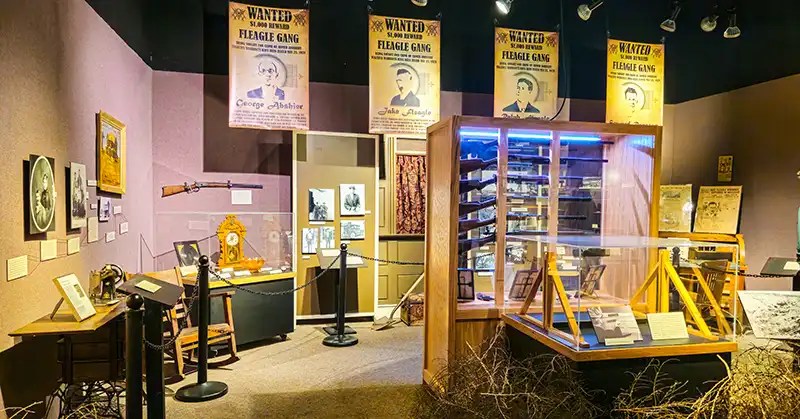
There’s also a Front Door Gallery with smaller cases and exhibits that change a number of times through the year.
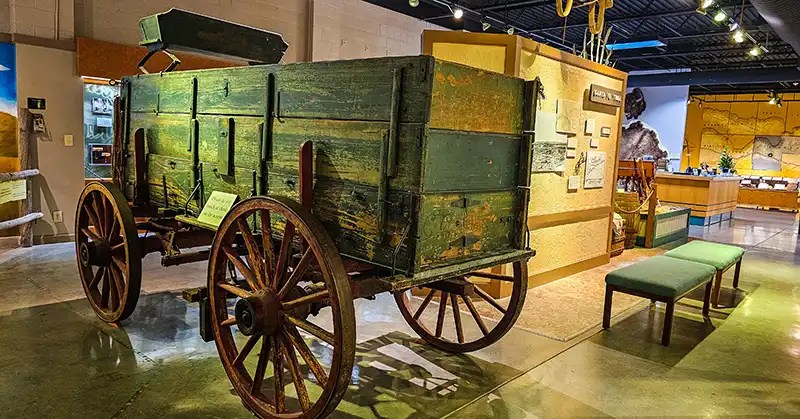
Fast Fact: Settlers reaching Garden City came by covered wagon or prairie schooner. Each wagon held about 2,000 pounds of provisions and household supplies. That meant the majority of settlers walked all the way beside their wagons--some as far as 2000 miles.
The Temporary Gallery is dedicated to rotating exhibits that change every few years. And, if you have children with you, the Dress-Up Room is an interactive space for trying on period clothing and taking selfies.
Linda’s Road Trip Tips
We packed a lot of miles and museums into our itinerary the day we visited the Finney County Museum. We started with the Fick Fossil & History Museum in Oakley — do check out the artwork made with fossils!
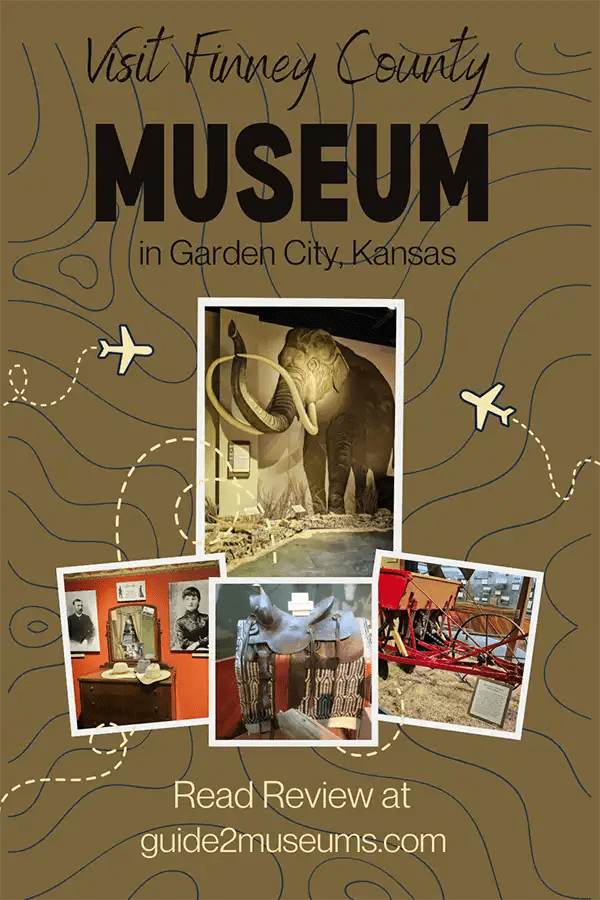
The museum is right next to the Lee Richardson Zoo, which gave us an excellent reason to do some walking.
That’s something we often miss when traveling.
Since the zoo is the largest one in western Kansas, it’s very popular.
However, if you’re not into walking you can also take your own vehicle on a driving tour.
And we ended our day in Dodge City at the Boot Hill Museum. It’s another excellent choice, especially if you find the old west fascinating!
On the recommendation of a local in the Long Branch Saloon in the museum, we ate and stayed overnight at the Dodge House. It was a great choice.
Who Should Visit the Finney County Museum?
The Finney County Museum is a great stop for all ages. On our visit, there were a hundred or so students just ending a visit to the museum and zoo.
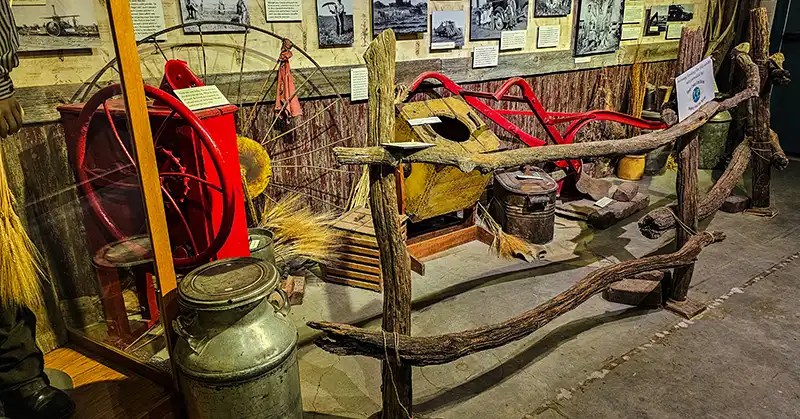
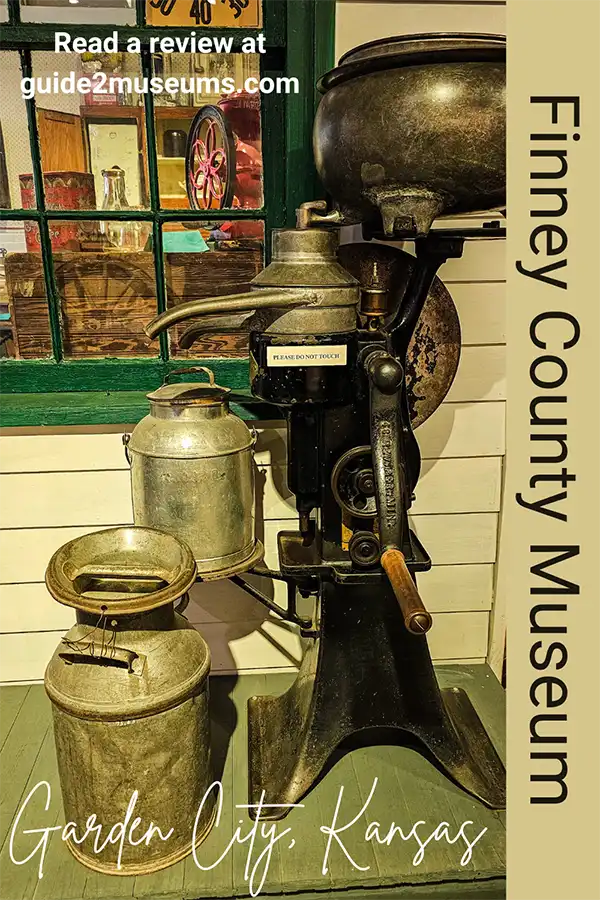
When it comes to agricultural history, we found some unique pieces of equipment that would be new to many museum-goers outside Kansas.
Something we hadn’t seen before was information about the sugar beet industry, so that was a nice addition.
One of the strengths we noted was that the museum was well-curated. There’s lots of information about each artifact, so you won’t be left wondering what something is.
As well, the lay-out wasn’t crowded so you can see everything on display. That also makes it ideal for strollers and wheelchairs to get around.
How Do You Visit Finney County Museum?
Garden City is located on north-south U.S. Highway 83, which runs from Canada to Mexico. Connecting to U.S. Highways 50 and 400, there are great regional connections for visitors.
Parking: There's lots of free parking directly in front of the museum.
Street Address: 403 S. fourth Street, Garden City, Kansas
The museum and zoo are both free, but do check days and hours open (and for any changes in admission) on the Finney County website.
Keep up to date with what’s happening with the Finney County Historical Museum Facebook page.
Explore the True Crime Exhibit at the Finney County Historical Museum with Good Day Kansas on YouTube.
Plan your visit with Google maps.
Find More Museums to Visit in Kansas
Check out all of guide2museum.com’s reviews of museums in Kansas.
Discover More General Museums
- Canadian Museum of History: National Museum in Gatineau, Quebec

- Finney County Historical Museum: 150 Years of Garden City, Kansas, History

- Adams Museum in Deadwood: Where Legends are Larger Than Life

- Minnesota Discovery Center: Iron Range Mining History Museum

- Museum of North Texas History: Wichita Falls

- Soo Line Historical Museum & Historic Site: Weyburn, Saskatchewan

- Pioneer Auto Show Museum: Cars & More in Murdo, South Dakota
- Fred Light Museum: Battleford, Saskatchewan

- Bishop Museum: Cultural Treasures in Honolulu, Hawaii

- Vilas Historical Museum: Snowmobiles to Paul Bunyan in a Wisconsin Museum

- Nanaimo Museum: Diverse History of Nanaimo, British Columbia

- Frontier Gateway Museum: Dinosaur Fossils & Glendive, Montana History

- Rosebud County Museum: Homesteader History in Forsythe, Montana