Visit Fort Worth, Texas, to explore all aspects of raising cattle in the Southwest United States. The Cattle Raisers Museum, located in Fort Worth’s Cultural District, shows how cattle ranching shaped the economy, culture, and landscapes of Texas and at least 20 other states.
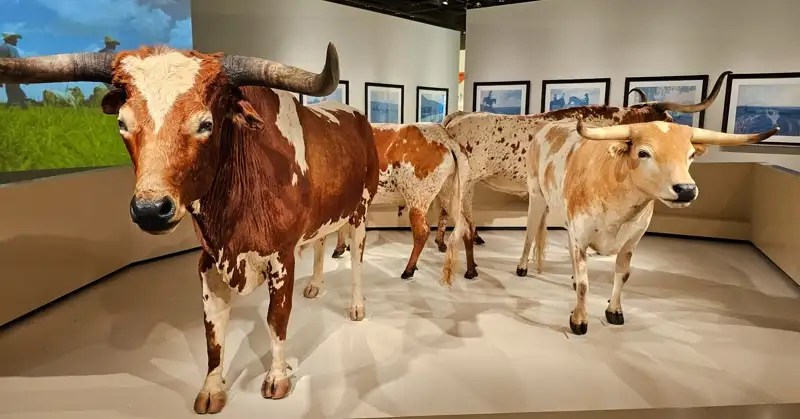
Linda’s Pick of the Exhibits
I lived on a cattle ranch for many years — in fact, a few of my books for YA readers are about driving cattle in the old west.
So, I found all the history interesting — but the I’m in What display jumped out as my favorite. It was full of fascinating pieces of information!
Beef at the grocery store, of course, is the main thing we get from cattle. Its essential nutrients include protein, iron, B-vitamins and others. More than 2/3 of beef at the store meets government guidelines for lean.
However, there’s a lot more as I learned. Uses can be edible by-products or inedible by-products or medical by-products. How many by-product uses can you name?
What are some important by-products of beef?
Beef by-products are found in hospitals and drug stores. Where? Collagen from beef hides is used in medical applications for such things as wound dressings, burn ointments, surgical sutures, and tissue regeneration. Ground beef-derived materials are also used for biomedical research, dental fillings, and some orthopedic products like bone screws. Wow! Who knew?
As well, medical by-products include more than 100 individual drugs!
Got allergies or are diabetic? Insulin, vaccines, and allergy medications have traditionally used beef by-products. Indeed, it takes the pancreases from 26 cattle to provide enough insulin to keep one diabetic person alive for a year.
Beef by-products are also used in firecrackers! Indeed, beef collagen-based casings or binders can replace or supplement traditional materials like white clay or paper tubes. Why? They provide moisture resistance and durability, so they protect the firecracker’s explosive powders until ignition.
When you’re washing your face, you may be using another important beef by-product. It’s called beef tallow, which is rendered from beef fat. This ingredient moisturizes and nourishes the skin with natural vitamins like A, D, E, and K. It also contains natural antimicrobial and antibacterial properties that reduce skin irritation and promote clearer skin.
Beef fats yield oleo stock and oleo oil used for margarine and shortening. Oleo stearin is used in making chewing gum and some candies.
Gelatin produced from bones and skins is used in marshmallows, ice cream, canned meats, and gelatin desserts!
And here are a few more uses:
- Stearick acid, used in making rubber for tires that are more durable, is derived from beef tallow
- Beef tallow contributes to producing lubricants found in hydraulic brake fluids and antifreeze
- Beef tallow is converted into sodium tallowate and used in many traditional laundry soaps and detergents
- Leather from the hide of cattle is used to make many types of sporting goods from footballs to ball gloves
- Collagen is used in various sports strings and bindings, like tennis racket strings and bowstrings, due to their strong and flexible properties
- Products such as adhesives and greases derived from beef fat may be used in equipment maintenance or assembly
- Camel hair artists’ brushes are actually made from the fine hair found in the ears and tails of beef cattle
- Bones, horns, and hooves are used to produce buttons, bone china, piano keys, glues, fertilizer, gelatin for photographic film, paper, wallpaper, sandpaper, combs, toothbrushes and violin string
How many uses did you list? This is just a starter list, so you may have found lots of the additional ones listed on this PDF from Iowa State Extension and Outreach.

What’s in the Cattle Raisers Museum?
The Cattle Raisers Museum occupies around 10,000 square feet. It’s located on the second floor of the Fort Worth Museum of Science and History in the Cultural District.
Fast Fact: Four out of every five people in the Southwest U.S. live in cities occupying 15% of the land. Of the remaining 85% of land in Texas, New Mexico, and Oklahoma, more than half is used for raising nearly 18 million cattle. ~ Cattle Raisers Museum
Visitors explore history in three main chronological sections:
- 1690 to 1890: Origins of Texas ranching and the first cattle drives of the 1850s. This section includes how cattle were introduced by Spanish settlers and era of vaqueros (cowboy or cattle herder)
- 1890 to 1950: The gradual end of raising cattle on the open range due to barbed wire fences, railroads, and Ft. Worth’s transformation into a cattle market and meatpacking center
- 1950 to the present: Modern ranching practices and technologies
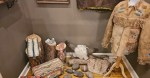
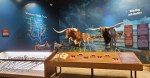
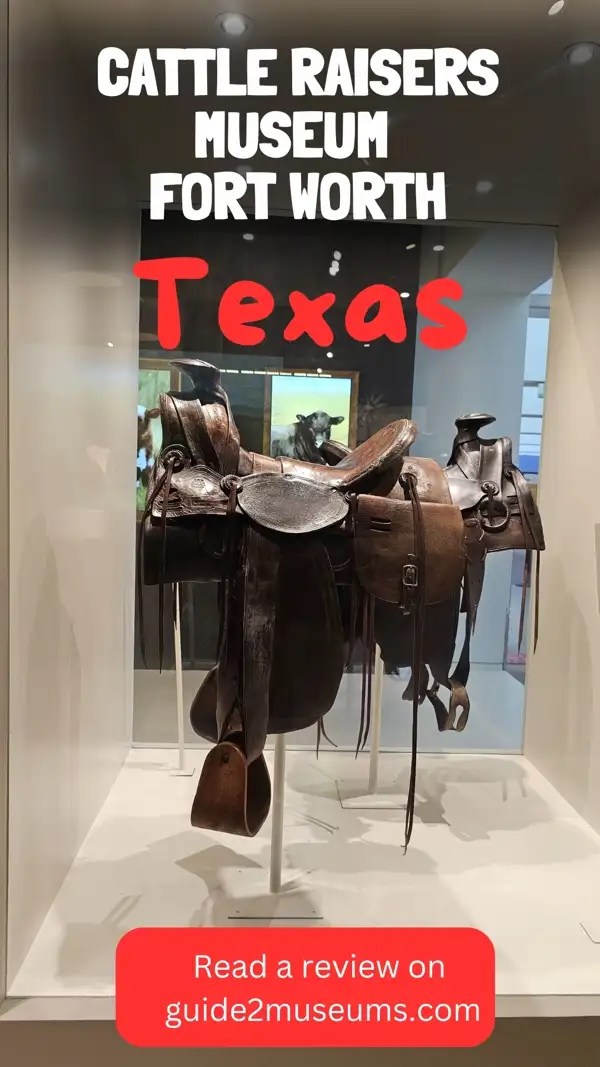
There are interactive galleries with video storytelling and holograms that I found very engaging. After all, I haven’t met many animated talking cattle! Artifacts include things like saddles, spurs, western hats, tools, and rare photographs. Floor-to-ceiling informational panels provide tons of information.

Linda’s Road Trip Tips
When you visit the Cattle Raisers Museum, try to leave enough time to visit the other travel attractions in Fort Worth’s Cultural District.
- Four additional world renowned museums including the National Cowgirl Museum & Hall of Fame, Fort Worth Museum of Science and History, Modern Art Museum of Fort Worth, and the Amon Carer Museum of American Art
- Will Rogers Memorial Center: Historic home to the annual Fort Worth Stock Show & Rodeo, as well as other events
- Fort Worth Botanic Garden
- Fort Work Zoo
We did the Cowgirl Museum and the Science and History Museum, which gave us a discount for doing both on the same day.
If you want to rest your feet between visiting the museums, stop at the Exhibit Cafe in the Fort Worth Museum of Science and History. The Texas 2 Step plate was tasty!
Who Should Visit the Cattle Raisers Museum?
The Cattle Raisers Museum will be of interest to anyone involved in ranching or farming, past or present. It’s also a great place to get an understanding of how the cattle industry has impacted the history of the Southwest.
Fast Fact: Ranching and doing cattle drives wasn't just the domain of men in the southwest. For example, in 1873, a widow, Margaret Borland, drove her herd of 2,500 head up the Chisholm Trai from Victoria, Texas, to Kansas. In 1888, Willie Matthews, 19, disguised herself as a boy and worked the trail to Colorado for four months undetected. During the Civil War, small ranches were maintained by the wives and daughers of absent soldiers. ~ Cattle Raisers Museum
We spent an hour going through the museum, but I was already familiar with a lot of the history. If it’s your first Texas visit or if you know little about ranching, allow at least double that time.

While there are some fun interactives, kids 10+ will likely find the museum more interesting than younger children.
The museum is wheelchair and handicapped accessible. There are some wheelchairs available for guests on a first-come, first-served basis.
How Do You Visit the Cattle Raisers Museum?
The Cattle Raisers Museum is easy to find in Fort Worth’s Cultural District.
Parking: There's lots of paid parking available in the Cultural District. Closest parking is in the Museum Lot located at the northeast corner of Montgomery Street and Harley Avenue, adjacent to the Fort Worth Museum of Science and History.
Street Address: 1600 Gendy Street, Fort Worth, Texas, on the 2nd Floor of the Fort Worth Museum of Science and History.
The museum is open year-round, but you can check days and hours open on the Cattle Raisers Museum website.
Keep up-to-date with what’s happening at the museum with the Cattle Raisers Museum Facebook page.
Take a virtual tour with this Cattle Raisers Museum video on YouTube.
Plan your visit with Google maps.

More Texas Museum Reviews
Check out more of our reviews for museums in Texas.
More History Museums
- Musée de la civilisation: Quebec’s Museum of Civilization
- Inside the Cattle Raisers Museum: Fort Worth, Texas
- Plains of Abraham Museum & Battlefield Park: Quebec City
- Royal Ontario Museum in Toronto Review
- Amazing Giant Bison, Beaver, Mammoths & More: Yukon Beringia Museum in Whitehorse

- Royal Saskatchewan Museum & World’s Largest T-Rex Dinosaur

- Fick Fossil & History Museum: Buffalo Bill to Prehistoric Fish in Oakley, Kansas
- Ronald Reagan Presidential Library & Museum: Simi Valley, California

- Morro Bay Maritime Museum: Morro Bay, California

- National Cowgirl Museum & Hall of Fame: Cowgirl history in Fort Worth, Texas
- Bell Barn Museum: Historic Round Barn in Indian Head, Saskatchewan

- Naranjo Museum: Dinosaurs & Fossils in Lufkin, Texas

- Texas Seaport Museum: Gulf Coast History in Galveston, Texas
- Levine Museum of the New South: Charlotte, North Carolina

- Jefferson Historical Museum in Big Cypress Bayou: Jefferson, Texas
- Museum of the Fur Trade: Chadron, Nebraska

- Mystic Seaport Museum: Historic Seafaring Village in Mystic, Connecticut