Dodge City, Kansas, started out as a cowtown way back in the 1870s. Indeed, it was often called the “Queen of the Cowtowns.” Today, visitors to Dodge City can step into that past by spending a few hours at the Boot Hill Museum.
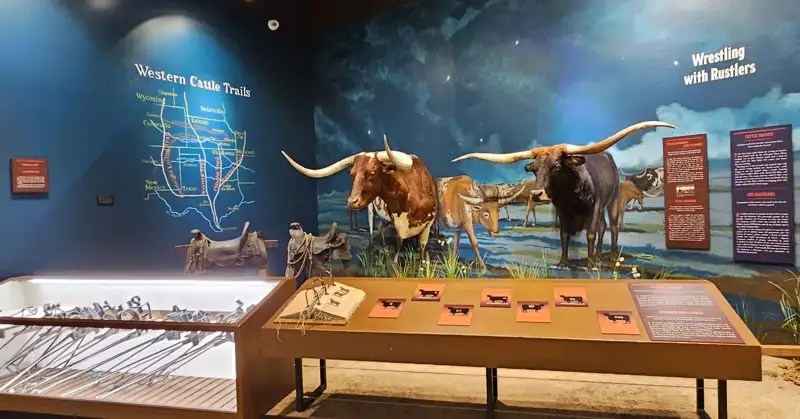
Linda’s Pick of the Exhibits
If you’ve ever told someone it was time to “Get out of Dodge,” you probably watched the western series, Gunsmoke. I know I sure did–every Sunday night at 8 p.m. the whole family huddled around the tv waiting for the latest cowboy story.
What’s the history of the phrase “Get out of Dodge?”
Marshal Matt Dillon was the main character on the tv series, Gunsmoke. His role, as with all sheriffs in old west shows, was to keep the peace and run the bad guys out of town. And the town was Dodge City. Why?
The real Dodge had a long-standing reputation as a rough cowtown. It was a symbol of the untamed west, famous for saloons, gunfighters, and brothels. And of course, authenticity was what producers were looking for to create dramatic tension.
Real figures like Bat Masterson and Wyatt Earp had actually been lawmen in Dodge City. So, making Marshal Matt Dillon a lawman there linked fiction with fact. Viewers interested in westerns could readily associate gunfighters and rough justice with the show.
And getting out of dodge? In both the tv and radio series, Matt Dillon was shown as a stern, but fair marshal who only used his gun if there was no other choice. Shows frequently showed his remorse on the number of outlaws he had to shoot.
So, within the Gunsmoke world, most outlaws were run “out of Dodge” rather than ending up in gunfights.
As a side note, Gunsmoke wasn’t actually filmed in Dodge City, Kansas. The set was a purpose-built Hollywood western town with additional soundstages in California and Utah. Indeed, the show’s first seasons filmed most outdoor scenes on Gene Autry’s Melody Ranch in Placerita Canyon, California.
Today, the expression, get out of Dodge, still means to leave a bad situation behind you.
And the Gunsmoke series is what made visiting Boot Hill Museum important to me. After all, Matt Dillon and Miss Kitty were two of my favorite television characters.
So, my favorite exhibit was titled, Hollywood and the Wild West. It includes, of course, the history of Gunsmoke’s popularity in homes.
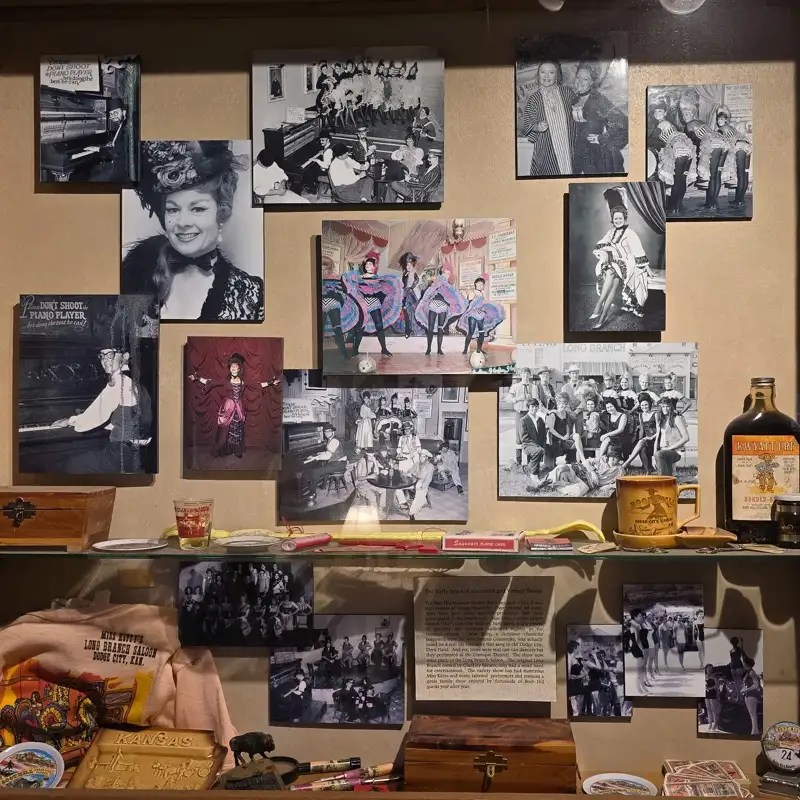
The Gunsmoke radio show began in April, 1952, taking writer, John Meston’s passion for the old west to listeners using a location already known for its rough past. In June, 1961, the final radio episode was aired.
CBS started producing the tv series in 1955. The show starred James Arness as U.S. Marshal Matt Dillon, and Amanda Blake as saloon owner, Miss Kitty Russell. It ran for 20 seasons with a total of 635 episodes!
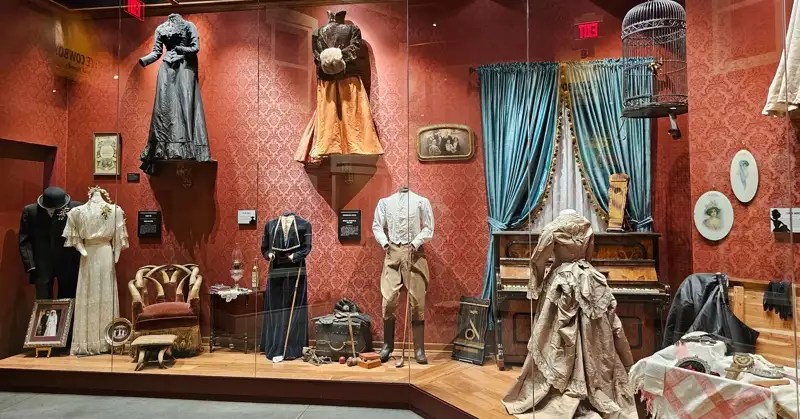
Fast Fact: While wealthy women didn't have to worry about working in a saloon like Miss Kitty, they had to deal with up to 40 pounds of restrictive undergarments! Corsets were worn for centuries, but the styles for Victorian women took them to the extreme. Women weren't born with that hourglass shape, they were shaped into it by lacing rigid whalebone-ribbed undergarments ever tighter!
When you visit the Boot Hill Museum you can settle down in a 1960s living room to watch Gunsmoke clips. The room is filled with memorabilia donated by former cast members, so you can immerse yourself in the time period. I found a few clips of my favorite moments–you may too!
What’s in the Boot Hill Museum?
The Boot Hill Museum sits on the original site of Dodge City’s Boot Hill Cemetery. Indeed, the museum was first housed in a building beside the cemetery starting in 1947.
Over the years various additions were made, including:
- 1885 Fort Dodge Jail was acquired in the 1950s
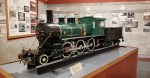
- Train engine moved to the site in the 1950s
- Historic Front Street with some replica buildings and some original buildings in 1958 1964, and 1970
- Beeson Museum collection moved to the museum in 1964
- 2004 a Catholic Church was moved to the museum from Bucklin
- 2006 constructed a Cowboy Hall of Fame exhibit
With over 60,000 artifacts, the Boot Hill Museum collection is amazing. Many significant artifacts are from the city’s early years from the 1870s to 1920s. So, many parts of the collection actually belonged to the original inhabitants.
Fast Fact: In 1872, Dodge City businesses revolved around the buffalo trade. Businesses cured meat and tanned hides that were sent on Eastbound trains to be made into robes, rugs, gloves, and more. By 1874, when the vast buffalo herds had been decimated, locals gathered the buffalo bones to ship back east to be made into china and fertilizer.
Front Street
Front Street is the open-air part of the museum. Unlike tv sets, though, the buildings on Front Street are furnished with original artifacts as if the businesses were still operating.
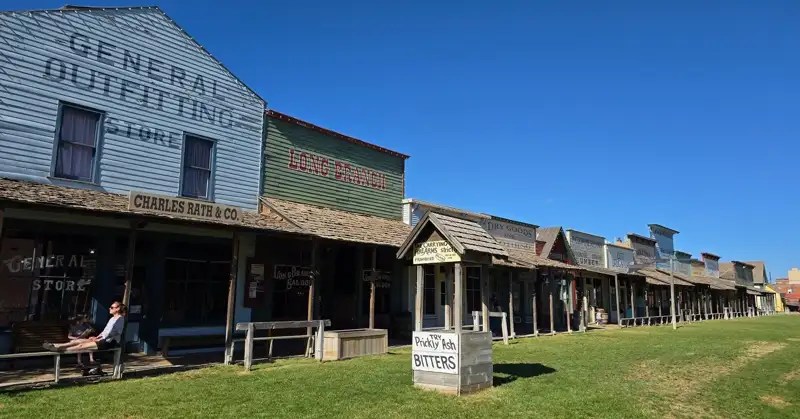
Behind the façades, you’ll find linked buildings that form one continuous exhibit that you can enter or exit in several places.
On our visit, we bellied up to the bar in the Long Branch Saloon. While we didn’t meet Miss Kitty, we did find a costumed interpreter happy to serve us some sarsaparilla soda.
Fast Fact: Sarsaparilla drinks have been popular for centuries. Back in the day, the Sarsaparilla roots was used to make tea that claimed to cure everything from skin problems to tummy problems. Eventually, the root was also used in sodas. Indeed, it's said that many wild west outlaws used sarsaparilla to cure hangovers and settle stomachs.
As well as Front Street, there are also historic outbuildings, a Santa Fe Railway Depot, and the train.
People of the Plains
The People of the Plains Gallery covers a long span of time, from first peoples to the Hollywood and the Wild West exhibit.
Fast Fact: Early settlers in Dodge City often lived in soddies, or houses made of buffalo grass covered sod cut into "bricks." To make the bricks a farmer plowed straight strips a few inches thick and a foot wide, then cut them to brick-size. Windows and door frames were made of wood, as well as a ridge pole and crutches to support the walls.
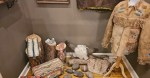
In between, you’ll find forts and railroads, buffalo hunters and cattle drives, the Santa Fe Trail and Victorian clothing. It’s a great mix with tons of fun things to see.
Guns, Outlaws, and Law and Order
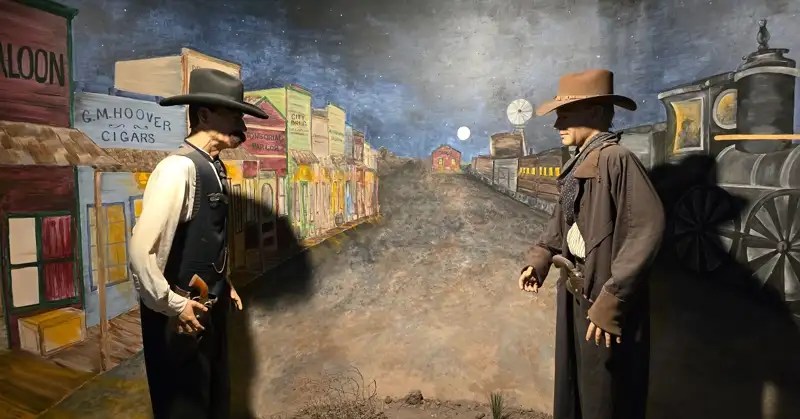
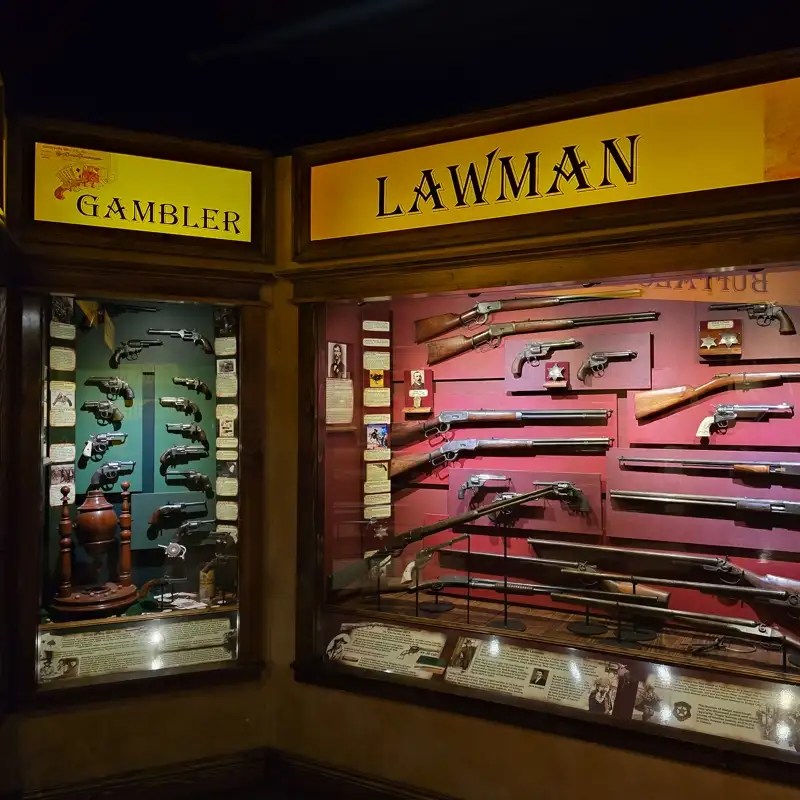
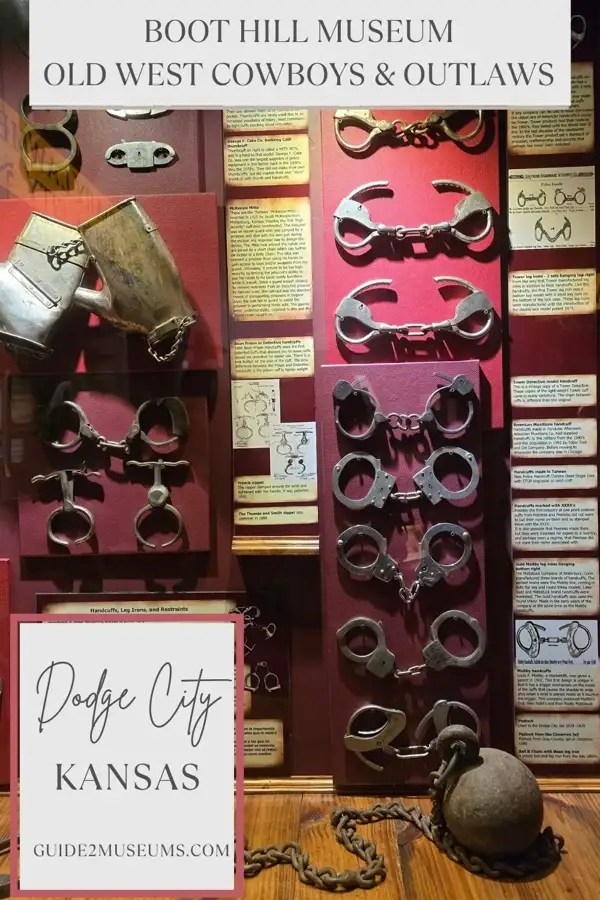
The Guns That Won the West is one of the most popular exhibit in this gallery. It features more than 200 firearms and related artifacts.
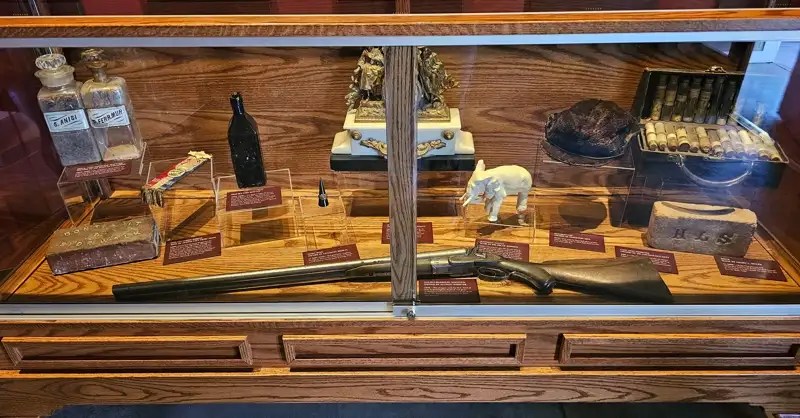
This is also where you’ll learn about gunfights, outlaws, and law enforcement through the decades.
Kansas Cowboy Hall of Fame
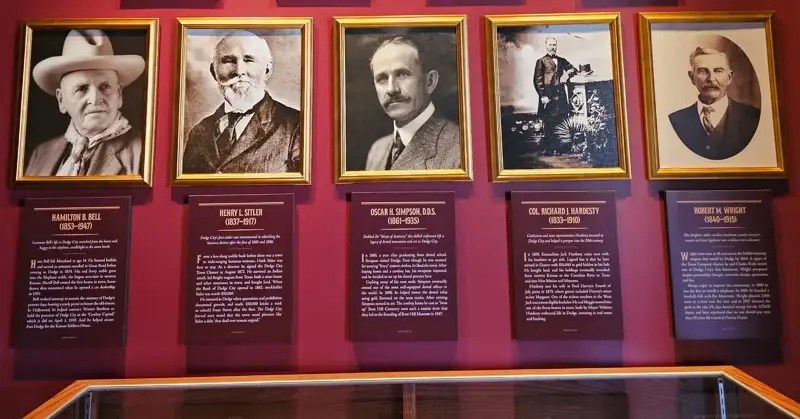
The Kansas Cowboy Hall of Fame takes visitors right up to the present by honoring today’s working cowboys and Western figures. Here, you’ll find photos, biographies, and artifacts from inductees.
Boot Hill Cemetery
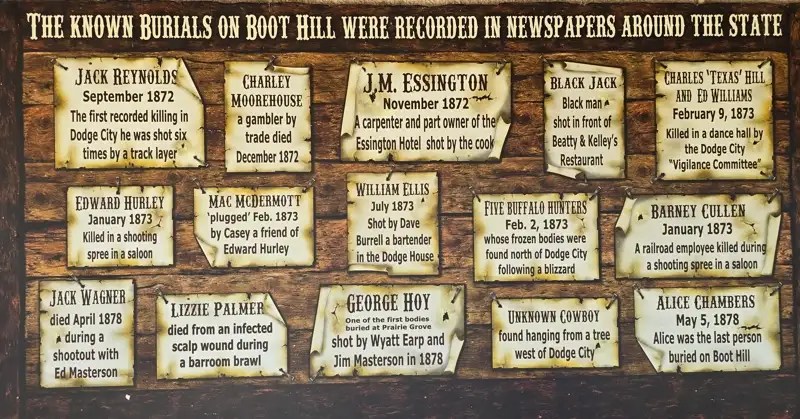
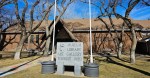
The Boot Hill Cemetery is a preserved portion of the original cemetery on the hill above the museum. It served as the final resting place for those “who died with their boots on.”
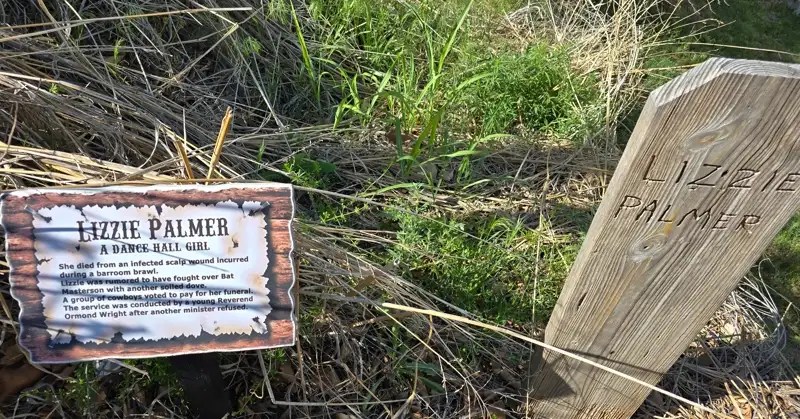
Like the “get out of Dodge” expression, the idiom about dying with your boots on came from the Old West. While it originally described someone died in action or on the job, frontier cemeteries used the boots-on description for people killed in gunfights, lynchings, or other violent encounters.
Linda’s Road Trip Tips
During our visit to Dodge City, we stayed at the historic Dodge House, which carried the plaque, Wild West Home of the Cowboy. Indeed, it’s been serving the city for a century.
Our stay was comfortable–and well within the budget. We also found it convenient to have a licensed dining room, Marcy’s Roundup Cafe, on the premises.
It’s always nice after a long day to just walk from your room to the restaurant, so we don’t have to drive.
While we stopped specifically for the Boot Hill Museum, there’s lots more to do in Dodge City.
From summer entertainment like the Roundup Rodeo and car races at Raceway Park to the Dodge City Brewing microbrewery and Boot Hill Casino, there’s something for everyone.
You can even see the world-famous Boot Hill Museum Gunfighters at high noon or 6 pm during the summer season!
Who Should Visit the Boot Hill Museum?
The Boot Hill Museum is a great attraction for anyone looking for Old West history and culture. Situated in the heart of the Old West, the museum captures the area’s lived history.
Don’t get me wrong, though. This isn’t a dry, text-heavy museum.
Families with children of all ages will enjoy the interactive exhibits and costumed interpreters.
Summer is the perfect time to plan your visit so you can take in the gunfight reenactment and Long Branch Variety Show.
Of course, the Boot Hill Museum is the perfect spot for anyone interested in outlaws or researching them (I’m always on the lookout for more stories to go with my old west novels).
The Boot Hill Museum is generally accessible, although the actual cemetery is indeed on a hill, so elevation changes may present problems.
Some of the historic buildings and boardwalks may also be challenging to anyone with physical disabilities. There are several wheelchairs available at no charge on a first-come, first-served basis.
How Do You Visit the Boot Hill Museum?
The Boot Hill Museum is located on Wyatt Earp Boulevard, which is the main east–west road through Dodge City and also carries the business route for US‑50/400 into town.
Parking: There's free parking in front of Boot Hill Museum near the train and depot, with additional parking on the northeast corner of the complex.
Physical Address: 500 W. Wyatt Earp Blvd., Dodge City, Kansas.
The museum is open year-round with days and hours listed on the Boot Hill Museum website.
Keep up-to-date with what’s happening with the Boot Hill Museum Facebook page.
Take a virtual tour of the museum with Kansas Tourism on YouTube.
Plan your trip with Google Maps.
Find More Museums to Visit in Kansas
Check out all of guide2museum.com’s reviews of museums in Kansas.
Discover More History Museums
- Musée de la civilisation: Quebec’s Museum of Civilization
- Inside the Cattle Raisers Museum: Fort Worth, Texas
- Plains of Abraham Museum & Battlefield Park: Quebec City
- Royal Ontario Museum in Toronto Review
- Amazing Giant Bison, Beaver, Mammoths & More: Yukon Beringia Museum in Whitehorse

- Royal Saskatchewan Museum & World’s Largest T-Rex Dinosaur

- Fick Fossil & History Museum: Buffalo Bill to Prehistoric Fish in Oakley, Kansas
- Ronald Reagan Presidential Library & Museum: Simi Valley, California

- Morro Bay Maritime Museum: Morro Bay, California

- National Cowgirl Museum & Hall of Fame: Cowgirl history in Fort Worth, Texas
- Bell Barn Museum: Historic Round Barn in Indian Head, Saskatchewan

- Naranjo Museum: Dinosaurs & Fossils in Lufkin, Texas

- Texas Seaport Museum: Gulf Coast History in Galveston, Texas

- Levine Museum of the New South: Charlotte, North Carolina

- Jefferson Historical Museum in Big Cypress Bayou: Jefferson, Texas
- Museum of the Fur Trade: Chadron, Nebraska

- Mystic Seaport Museum: Historic Seafaring Village in Mystic, Connecticut



 guide2museums.com