Miami–the Manitoba, Canada edition–is a small town just 100 km southwest of Winnipeg. Like its Florida counterpart, the town has a lot of local charm and a well-known regional identity. While the Florida version features world-famous beaches, cruise ships, watersports, and more, Miami, Manitoba, is home to fields of canola and wheat, cattle herds, and an annual rodeo.
What you might not expect to find in Miami, Manitoba, though, is a fascinating National Historic Site & museum with important links to railroad and Cold War history.
Linda’s Pick of the Exhibits
The Cold War fascinates me. Whether it’s from those vivid memories of “duck and cover” getting under a desk at school, or nightmares about a bomb flying overhead, I always look for history from this era. And the fact that I’m working on a cozy mystery book series about a Cold War bunker museum makes it even more fascinating.
So, what’s at a train station that’s related to the Cold War?
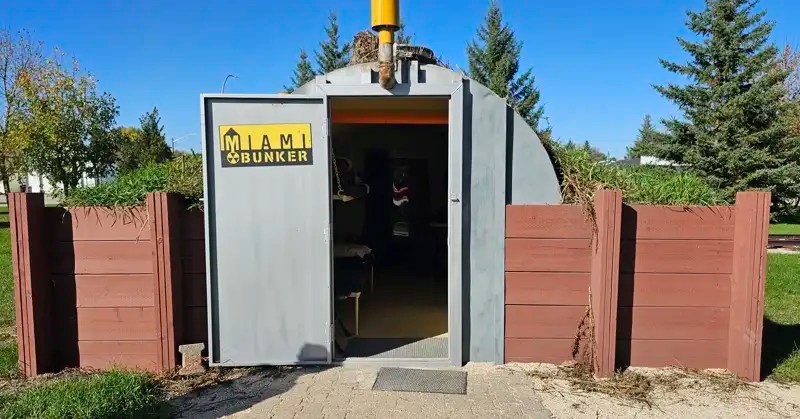
The Miami Railway Station is home to the Fallout Reporting Post (FRP) #34. And if you’re not sure what that is, join the crowd. Most of my Cold War research has been in the US, and FRPs were strictly Canadian.
Fast Fact: FRPs were part of the Nuclear Detonation and Fallout Reporting System (NDFRS), a network of thousands of small fallout shelters built across Canada at the height of the Cold War.
~ Miama Railway Station Museum
And the purpose of the NDFRS? Basically, around 2,000 small FRPs across Canada detected any nuclear attacks and tracked the fallout.
How did an FRP work?
The coast-to-coast program used volunteers from the RCMP, Post Office, Railroads, and other organizations. In Miami, the task fell to Canadian Pacific station agent Howard Lynds (Miami Railway Museum).
If an attack alert was received, the agent would enter the FRP. While the Miami bunker is currently above-ground, during the Cold War it was buried several meters below ground to cut gamma radiation fallout.
Essential communication and electrical cables ran through a vertical decontamination airlock. What about rain and fallout? Metal caps and fibreglass filters took care of that! And fresh air? That was supplied through two ventilation shafts and an air pump. Two weeks’ worth of food and water supplies for two people were stored in the bunker.
The big question, of course, is how did the reporting work?
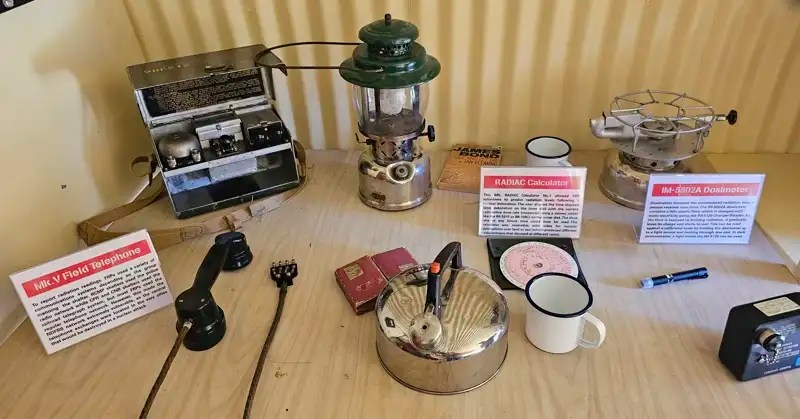
The agent used an IM-2015 remote monitoring RADIAC meter to measure and record outside radiation from inside the bunker. The readings were initially transferred every half hour by telephone or radio to civil defence headquarters. For the Miami agent that would have been to Winnipeg.
And so what happened with the NDFRS system and FRPs? Built between 1959 and 1963, much of the system became operational in the spring of 1962. However, Cold War politics began to shift in 1963 after the Cuban Missile Crisis.
So, the Canadian government canceled NDFRS. One of the reasons given was that it became clear the system had design flaws since a nuclear attack would likely destroy the regular telephone network. And it was essential to the plan. The FRPs were transferred to others, such as local emergency measures organizations.

What’s in the Miami Railway Station Museum?
The Miami Station was put up for sale by the Canadian National Railways in 1974. Locals, who wanted to preserve their history, bought the property for $250.00. So, the Midwestern Rail Association was created on Feb. 7, 1975, to accept the keys.
Restored to its original appearance from 1889, the Miami Station Museum opened in 1976.
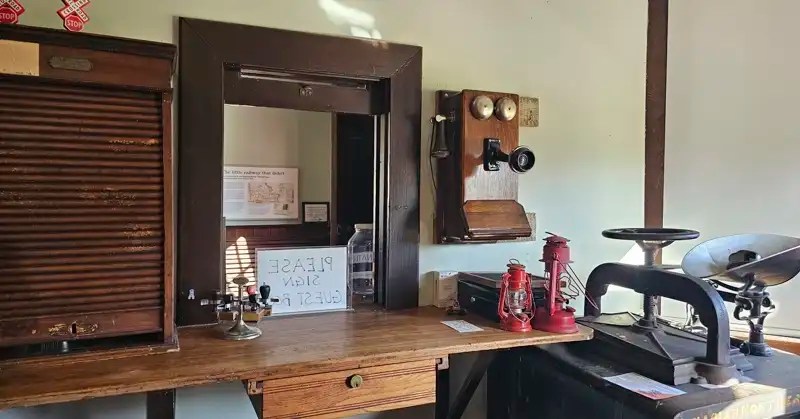
The Miami Railway Station Museum consists of three main components:
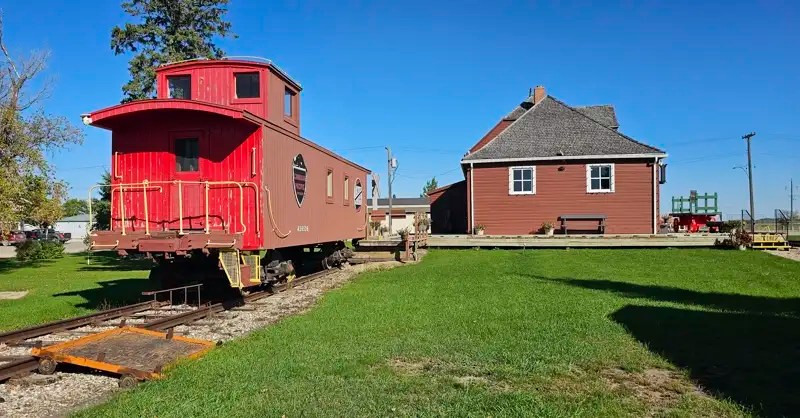
- Miami Railway station built in 1889 by the Canadian Northern Railroad
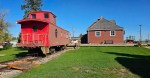
- 1914 Canadian Pacific Railway Caboose built in the Angus Yards in Montreal, Quebec
- Type B Fallout Reporting Post (FRP) moved from Moose Lake in southeast, Manitoba — it was the same type as Miami’s original one that had been demolished
It also has a train shed with tools and maintenance equipment.
Inside the Train Station
The train station is fully equipped with everything from luggage scale to C.N.R. ice block tongs to a C.P.R. switch lantern.
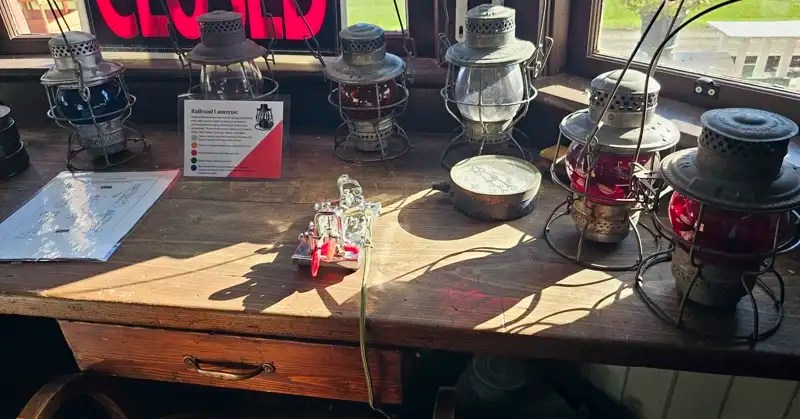
The great part is that everything is clearly labelled and has information sheets attached.
Fast Fact: An "order fork" on display in the station was a tool used in the early 1900s for station workers to get paperwork to the train crew while it was moving. Order forks were made of a long bamboo or wood handle with V arms strung with cord at the top that held a spring clip or hook. Platform crew held the order fork out for the train crew to grab as they passed.
A wall map of The Canadian Pacific Railway route, along with paintings and photography of the original site, help set the time period. There’s also a model train that includes town frontage.
The second story of the station building was home to the station agent and his family. It’s fully furnished with everything from a hand ice-cream maker, to a wooden wringer-washing machine, to a collection of CPR collector plates.
Inside the Caboose
The caboose of the train was used by the rear train crew. Their job had many elements. An important one was to watch for overheated axels, called “hot boxes”–so they could be found and fixed quickly. Why? Broken axles could derail a train.

As well, the rear brakeman had to uncouple cars manually and close the switch on the siding tracks after they were unhooked. Of course that left the train driving away. So, the brakeman had to run alongside the tracks to get back on the train. Definitely not a job for me!
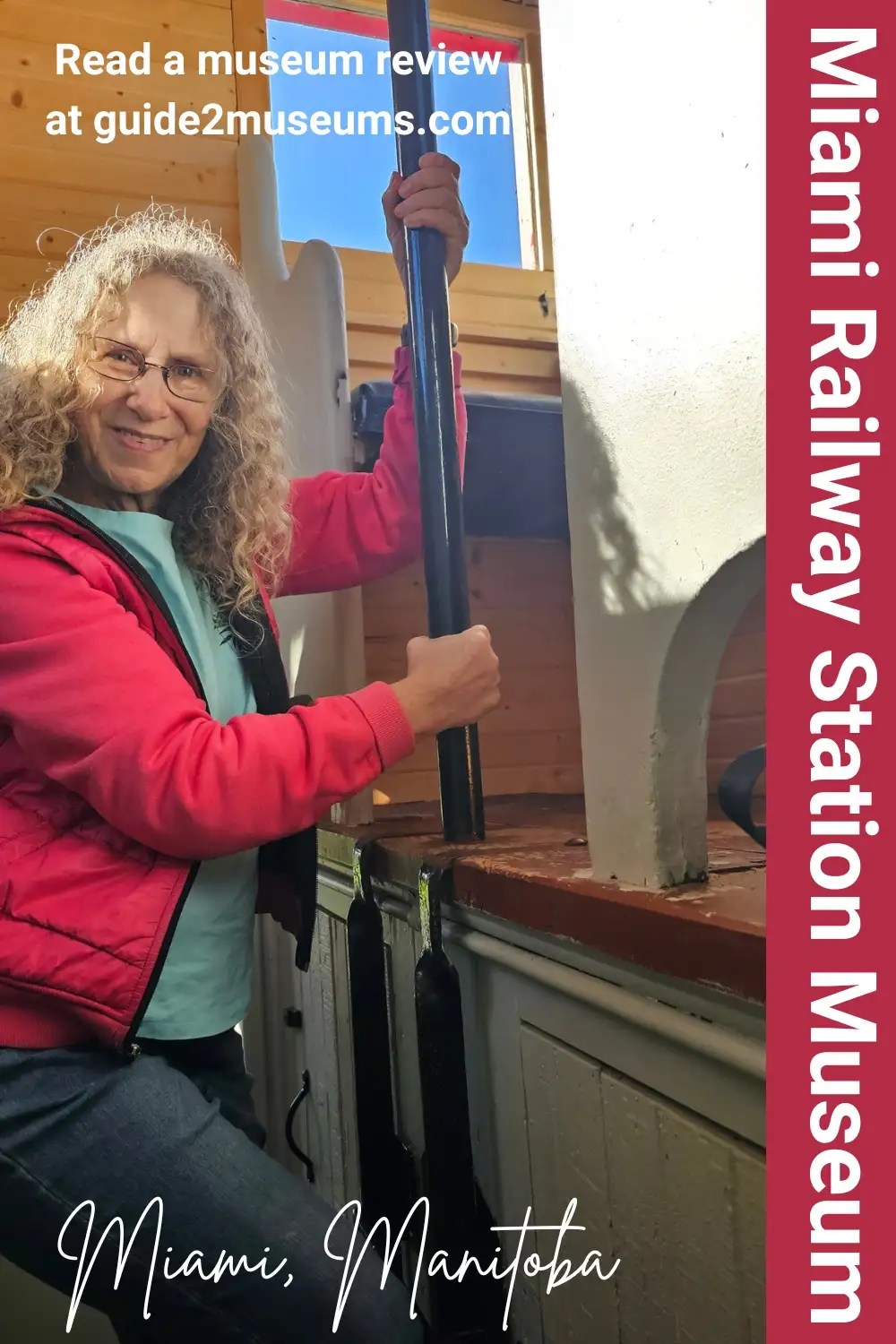
The cupola made it easy for the caboose crew to keep watch on freight cars ahead of them. What’s a cupola? A windowed box on top of the caboose.
Fast Fact: The stove in the caboose had a metal ring around the top. Its purpose? To keep pots and pans from sliding off during rough movements of the train.
Rear train crew basically lived in the caboose. The caboose was stocked with furnishings to cook meals and sleep between their duties.
Linda’s Road Trip Tips
Miami, Manitoba, is a fun little town to visit! We enjoyed lunch at The Station Bar & Grill, right across the street. My shrimp were delicious, as was David’s fish and chips.
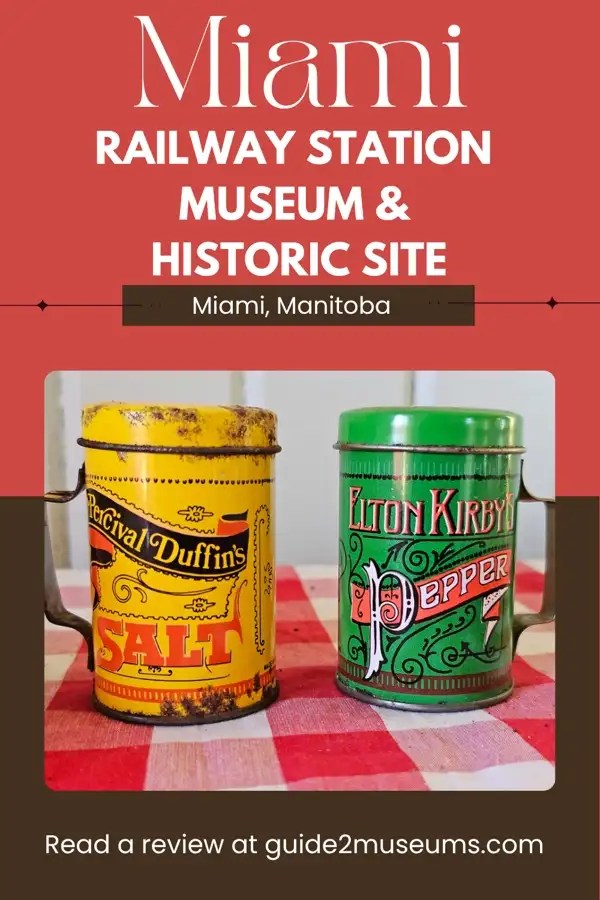
Then, at the owner’s suggestion, we popped into the Miami Variety Store that had everything from gifts to baking to cold beer.
For me it was a flashback to the old general stores from my childhood!
We spent the night 30 km (19 miles) away, at the Morden Motor Inn.
Morden is home to both the Canadian Fossil Discovery Centre and the Manitoba Baseball Hall of Fame and Museum.
We’d also planned to drive the additional hour to tour the Stanley Mickelson Safeguard Complex in Cavalier, North Dakota. It’s another Cold War site–unfortunately, we had to put it on our itinerary for our next trip in that direction.
Who Should Visit the Miami Railway Station Museum?
The Miami Railway Station Museum is a great destination for train enthusiasts, particularly those interested in the history of the Canadian Northern Railroad.
However, even if you know nothing about trains and train stations, it’s a great stop.
I can guarantee you’ll know a lot about how the trains that helped develop Canada worked before you finish your tour.
And of course, there’s the Cold War bunker.
While I’ve been researching the era for a decade or more, I’d never heard of an FRP.
So, the museum does a great job of preserving a little-known, fascinating part of Canadian Cold War history.
While you may not be able to get to The Diefenbunker–the bunker built outside Ottawa to protect government members and military command–the Miami Railway Station Museum provides some good insights on the period.
We spent an hour-and-a-half at the museum, but I was focused on research for my upcoming book series. Depending on your depth of interest, you may need less time.
Since this is a national historic site, some parts of the museum may be difficult to access.
How Do You Visit the Miami Railway Station Museum?
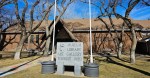
The Miami Railway Station Museum is easy to find at the southern edge of town beside the former railway right-of-way in its original location.
Parking: There's lots of free parking on streets around the museum.
Location: 500 Norton Avenue, Miami, Manitoba.
Open seasonally, so check days, hours, and admission costs on the Miami Railway Station Museum website.
Keep up to date with what’s happening on the Miami Railway Station Museum Facebook page.
Take a YouTube virtual tour of with SawDog 204.
Plan your visit with Google maps.
More Things to See and Do in Manitoba
Read more museum reviews on guide2museums.ca for museum attractions in Manitoba.
Discover More Transportation Museums
- Miami Railway Station Museum & Miama Cold War Bunker: Manitoba
- Livingston Depot Center: Museum in the Heart of the Historic District
- Canada Aviation and Space Museum: Iconic Civil & Military Airplanes
- 16 Top Snowmobile Museums
- Little Known Saskatchewan Transportation History: Moose Jaw WDM Museum

- EAA Aviation Museum in Oshkosh, Wisconsin: Airplanes from All Eras

- Yukon Transportation Museum: Whitehorse, Yukon
- Oklahoma Route 66 Museum: Clinton, Oklahoma, Exploring the Mother Road History

- Museum of the Yellowstone: 150 Years of Travel In Yellowstone National Park
- Pioneer Auto Show Museum: Cars & More in Murdo, South Dakota
- Frontier Auto Museum: Classic Cars & Collectibles in Gillette, Wyoming
- Polaris Experience Center: Polaris Snowmobile Museum in Roseau, Minnesota
- Museum of Ingenuity: Ski-Doo Snowmobile Museum in Valcourt, Quebec
- Legends Motorcycle Museum: Harleys to Merkels in Springville, Utah
- Top of the Lake Snowmobile Museum: Naubinway, Michigan