Love science and technology museums? Here’s one of the best! The Keystone Truck & Tractor Museum in Colonial Heights, Virginia, has an antique farm tractor, vintage road truck, old fire engine, and classic car collection that’s unrivaled.
Linda’s Pick of the Exhibits
They always say you can take the girl out of the country, but you can’t take the country out of the girl. And my walk through the Keystone Truck & Tractor Museum proves it!
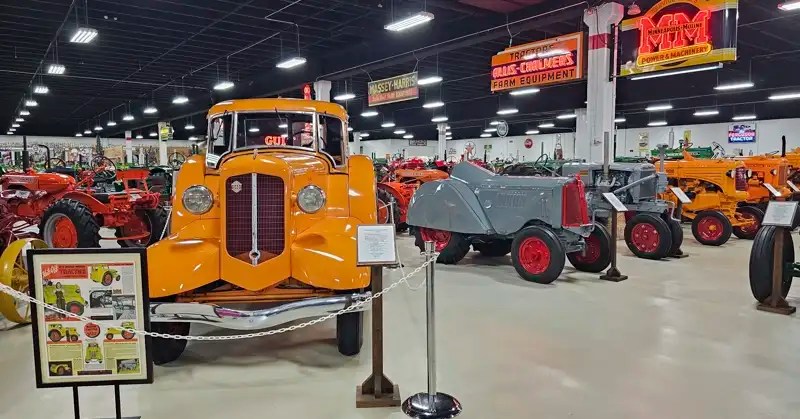
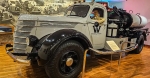
I loved the tractors, but have to admit it was the Yellow Transit Freight Lines truck–a 1939 MACK Model BM–that I kept walking back to. Maybe it was the color (I am, after all, a Ski-Doo lover and vintage snowmobile restorations use “Marigold” color [orangish yellow] paint as it’s a near-perfect match for the sleds), or maybe it was the whole idea of living on the road driving a tractor-trailer unit.
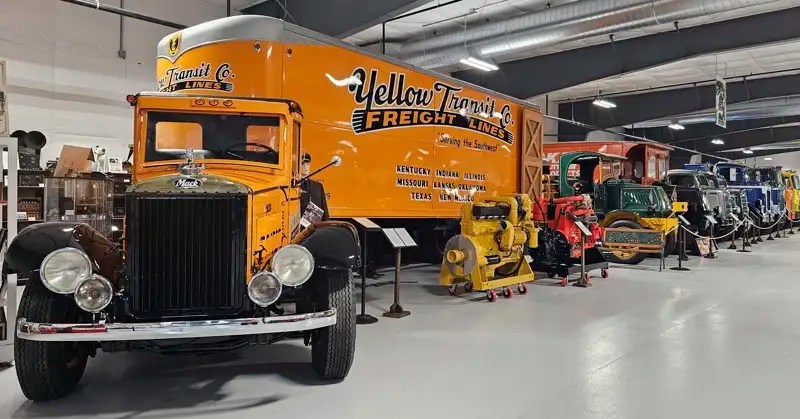
But really, my interest was about a lot more than the truck itself. One of the most fascinating parts of a good museum collection is the story of the artifact, whatever it may have been. And the Keystone didn’t disappoint.
This restored truck and trailer was acquired from the Yellow Roadway Corp. (YRC) in Overland, Kansas, headquarters during a renovation.
Fast Fact: Michigan native, August Fruehauf, well known blacksmith and wagon maker, with partner Otto Neumann, invented the semi-trailer in 1914 for a local lumber tycoon, hitching it to a modified Ford Model-T roadster and founding an industry that would have a major impact on world commerce to this day.
~ Keystone Truck & Tractor Museum information sheet
And what about the color of this 1939 MACK?
In 1929, A.J. Harrell determined the color of the Swamp Holly Orange would be most visible from the greatest distance. So, Swamp Holly Orange became the color used on all company tractors of the Yellow Transit Co.
How did tractor-trailers become popular?
Nothing changes overnight. Rather, it takes time for an invention to become part of everyday use. That took hold around 1934 when the Stokely-Van Camp company of Indianapolis bought a tractor-trailer to haul their canned fruits and vegetables.
They quickly realized that trailers would enable them to double their sales territory from each distribution point.
Why?
Well, it’s all about the bottom line–the profit. A big truck takes a lot of fuel, while a smaller truck can carry the same load as a big truck using a trailer. And the small truck uses way less fuel. So, the company was able to turn unprofitable trips into profitable ones simply by adopting new technology.
Indeed, Stokely-Van Camp developed a fleet of 12-ton Fruehauf Trailers pulled by economical 3-ton trucks. The trailers carried produce to, and canned goods from, their 41 plants across the United States!
The company went even further, adopting a shuttle system. What was that?
Assigning three trailers to one truck, so the truck never sat still waiting for a load.
~ from a Fruehauf Trailers newspaper ad reproduced at the museum
What’s in the Keystone Truck & Tractor Museum?
The Keystone Truck & Tractor Museum is the prized collection of Keith Jones. With 1000+ artifacts, all restored to their original glory, and displayed in 130,000 sq. ft., the museum is a premium destination for visitors to the greater Richmond area.
And it all began with Keith’s acquisition and restoration of his uncle’s old farm tractor.
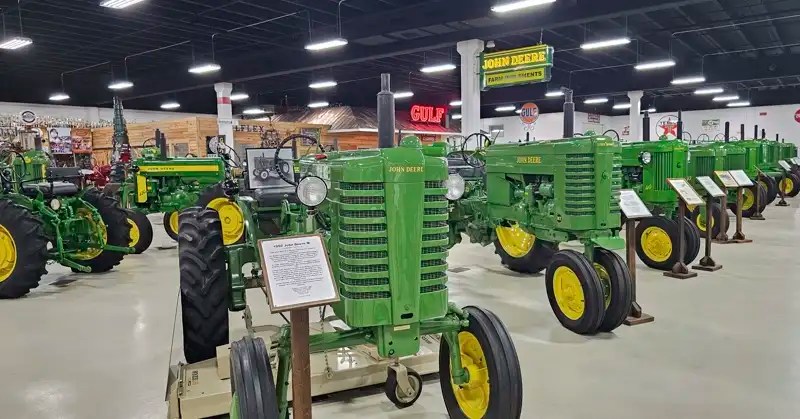
The collection is ordered with a librarian’s attention to detail. You’ll find row upon row of green John Deere tractors followed by Massey Harris, Allis Chalmers, International Harvester and other brands. Each machine is also carefully described, so you learn the model and year.
Dating back to 1917, the tractors show the evolution of agriculture through their technology. Indeed, you can almost hear the “putt-putt” of these vintage machines echo through the building. (Dare I say I remember them from childhood!)
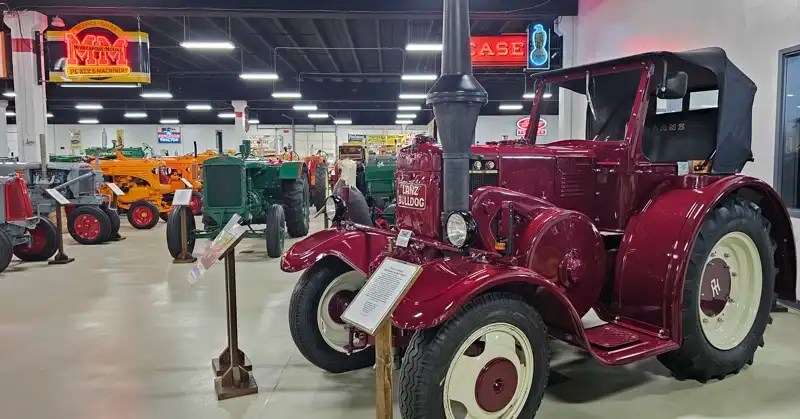
Fast Fact: The Bulldog moniker had its origins in the likeness of the hot bulb located on the head of the cylinder to the British breed of dog. To start the tractor the bulb needs to be heated with a blowtorch and cranked with the detachable steering wheel to turn the flywheel. This fires the single cylinder two stroke engine which relies on heat, rather than compression, for combustion. The engine can run on less refined fuels such as used automotive oils, cooking oil, crude oil, creosote, mixed with diesel.
~ Keystone Truck & Tractor Museum information sheet
As well as farm field tractors and highway-bound tractor-trailers, the collection includes vintage fire trucks, Porsches and Lamborghinis, and all kinds of special displays.
Some of my favorite Americana niche displays included:
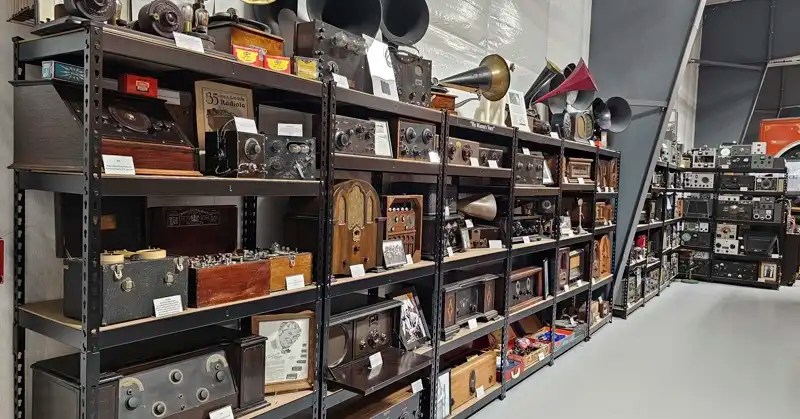
- Early transmitter/receiver electronics from short wave radios, to radios, to Hallicrafters (ham radios), to console radios
- Tobacco and cigarette advertisements and containers
- Toy tractors and farm equipment
- Early household washing machines
- Logging tools and Beam tools
Fast Fact: The spark gap transmitter was one of the first devices used to send radio signals through the air. It worked by creating a high-voltage spark between two metal points. This spark produced bursts of radio waves that could be picked up by receivers miles away.
~ Keystone Truck & Tractor Museum
Linda’s Road Trip Tips
I visited the Keystone Truck & Tractor Museum as a very packed day trip with the TBEX travel bloggers’ conference. Our morning stop was at the Violet Bank Museum in Colonial Heights. As you might expect, it’s an historic home museum. However, what you might not expect is a giant cucumber tree!
For lunch, we headed to the Keystone Grill at the museum. With a breakfast and lunch menu, it’s a great stop when your feet get tired going through the exhibits! I enjoyed a grilled cheese (cheddar and provolone) sandwich, along with sweet tea.
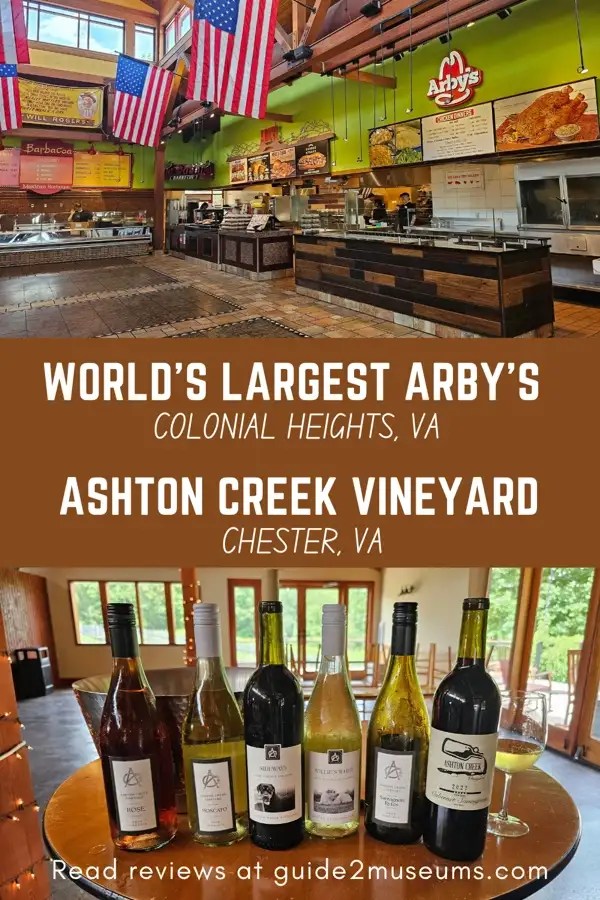
From the museum, it was on the world’s largest Arby’s in Colonial Heights for a Peach Cobbler Roll dessert.
Yum!
And yes, the location is huge–roughly three times larger than a standard location.
The interior vaulted ceilings and wooden beams turn a fast food atmosphere into one a lot more western feel.
And of course, after dessert, what’s nicer than a fine glass of Ashton Creek Moscato wine?
I sampled Ashton Creek Vineyard’s great collection in its tasting room in Chester, Virginia, south of Richmond.
To finish off the day, I headed over to listen to stock cars running full throttle on the Richmond Raceway. Not quite as thrilling as the braap! of a snowmobile race, but still fun!
Dinner was food trucks, local microbreweries, and the Midway Fan Zone on the concourse. It was the perfect way to end my first full day in Virginia!
Who Should Visit the Keystone Truck & Tractor Museum?
It goes without saying that the museum is the perfect destination for truck and tractor enthusiasts. With machines covering more than a century of history, there’s bound to be something new for every museum-goer. I know I certainly saw lots of unique things.
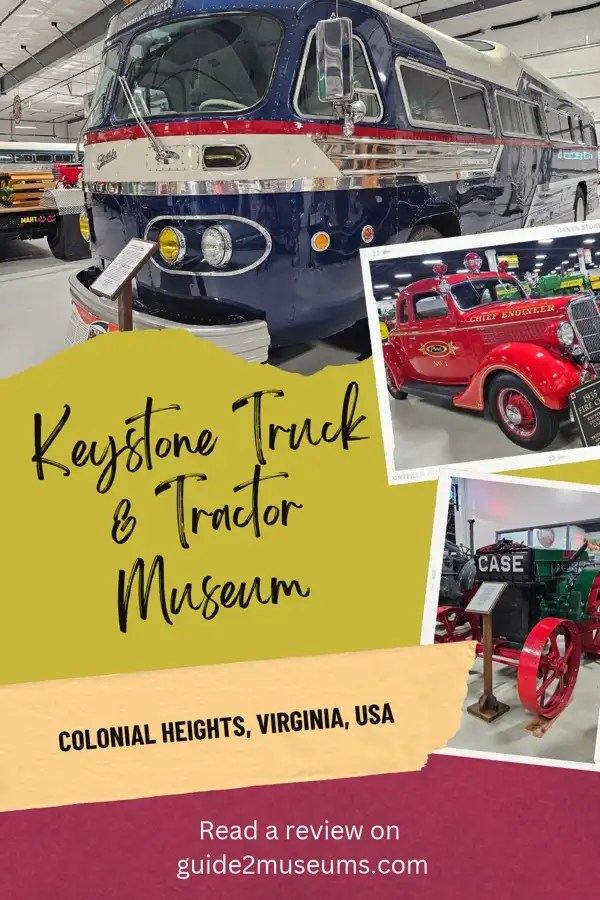
I especially enjoy seeing agricultural machines when I travel, as I find they provide history along with cultural aspects of a destination. And the Keystone is unbeatable in this area!
Kids of all ages (and their grandparents) will love the museum. So, it’s a perfect multi-generational visit.
Everything is indoors making it a day trip not tied to the weather for holidayers.
The museum is wheelchair accessible, plus has three wheelchairs available.
Accessible parking is available near the front and rear of the building for those with appropriate license plates or tags.
The wide aisles between exhibits make it easy for strollers and wheelchairs to access everything.
As an extra, the museum also offers overnight truck and RV parking. There are water hookups, 50 amp electricity, Wi-Fi, and picnic tables.
I spent about an hour and a half going through the museum, but could easily have spent longer!
How Do You Visit the Keystone Truck & Tractor Museum?
The Keystone Truck & Tractor Museum is located in Colonial Heights, at Exit 53 off of I-95 in Virginia.
Parking: Free parking is available right outside the museum for cars, buses, RVs, large rigs, and trailers.
Street Address: 880 W Roslyn Road, Colonial Heights, Virginia
The museum is open year-round, typically only closing for Thanksgiving and Christmas. Confirm days and hours open with the Keystone Truck & Tractor Museum website.
Keep up to date with special events at the Keystone Antique Truck & Tractor Museum Facebook page.
Take a virtual tour on YouTube with Classic Tractor Fever.
Plan our visit with Google maps.
Read More Virginia Museum Reviews
Check out all these museum reviews for the state of Virginia, USA.
Read More Technology Museum Reviews
- Keystone Truck & Tractor Museum: Colonial Heights, Virginia Treasure
- North Pacific Cannery National Historic Site – BC’s Mighty Salmon Runs

- Texas Forestry Museum: Lufkin’s Hidden Gem
- Discover the Amazing Canada Science and Technology Museum

- EAA Aviation Museum in Oshkosh, Wisconsin: Airplanes from All Eras

- Medalta Museum: Ceramic Arts in Medicine Hat, Alberta

- Claybank Brick Plant National Historic Site: Claybank, Saskatchewan

- Ocean Star Offshore Drilling Rig & Museum: Galveston, Texas, Oil Drilling History

- McCormick Bridgehouse & Chicago River Museum: Chicago, Illinois

- Stafford Air & Space Museum: Space Shuttles to Rockets in Weatherford, Oklahoma

- Texas Energy Museum: Oil History in Beaumont, Texas
- Dr Pepper Museum: Great Tastes in Waco, Texas
- Museum of Clean: Pocatello, Idaho

- Alexander & Baldwin Sugar Museum: Puunene, Maui, Hawaii

- Idaho Potato Museum: Blackfoot, Idaho
- Manitoba Agricultural Museum: Rare Historic Farm Machines in Austin, Manitoba