Back in the 1800s, writer, Edgar Allan Poe transformed the horror genre from monsters outside to the terror within. Now, visitors to Richmond, Virginia, get a chance to glimpse inside Poe’s mind and history with a visit to the Edgar Allan Poe Museum. Indeed, the museum stands out as one of Richmond’s highest-rated cultural stops.
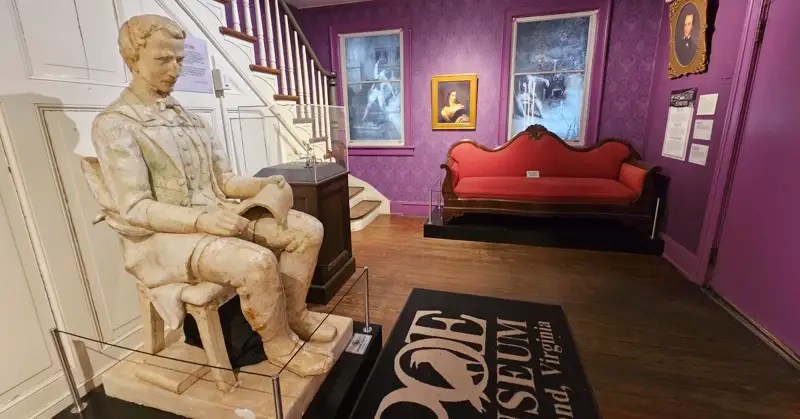
Linda’s Pick of the Exhibits
As a child, I spent time watching stories inspired by Poe on The Twilight Zone with a blanket pulled up over my eyes, too scared to look but unable to stop listening. As a teen, I read his stories and mulled over their meanings. As a writer, I study their construction to improve my own craft. So, visiting the Poe Museum was an absolute MUST DO when I attended the TBEX Conference in Richmond, Virginia.
My favorite part? Poe’s works–an exhibit on the second floor of the Elizabeth Arnold Poe Memorial Building.
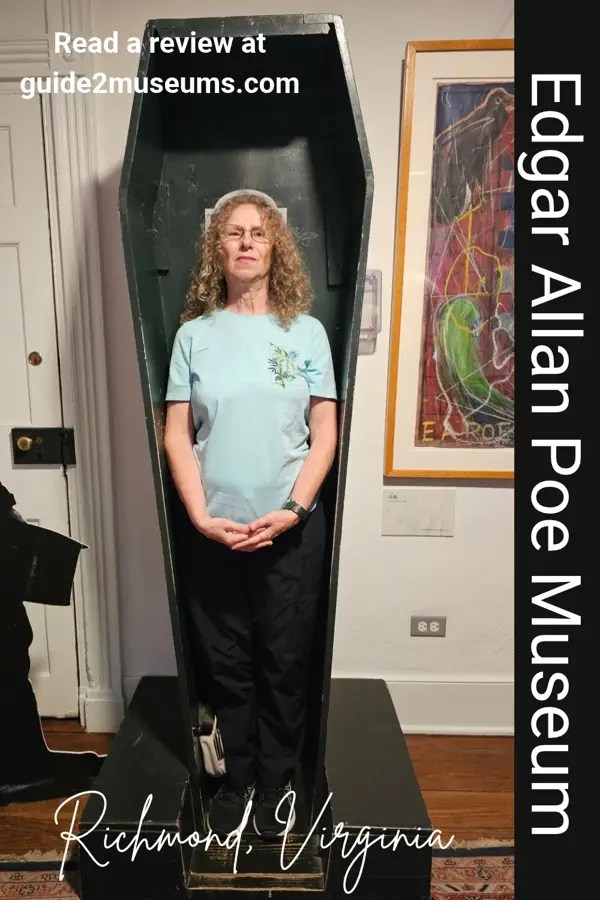
Mind you, what could possibly make more of an impact than a life-size coffin I could stand in (that’s me on the pin!)?
This section: Get Buried Alive with Poe, explored his fascination with premature burial.
There’s also an actual piece of the mahogany coffin where Poe was originally buried in 1849 in Baltimore.
Later, in 1875, as Poe’s literary stature continued to grow, funds were raised to erect a monument there.
However, since his original coffin had deteriorated, his body was moved to a new one in a more prominent position in the cemetery.
This coffin fragment became part of the museum collection in 2022.
In terms of artifacts that Poe actually touched, the staircase between the first and second floors here is from Poe’s childhood home a few blocks away in Richmond.
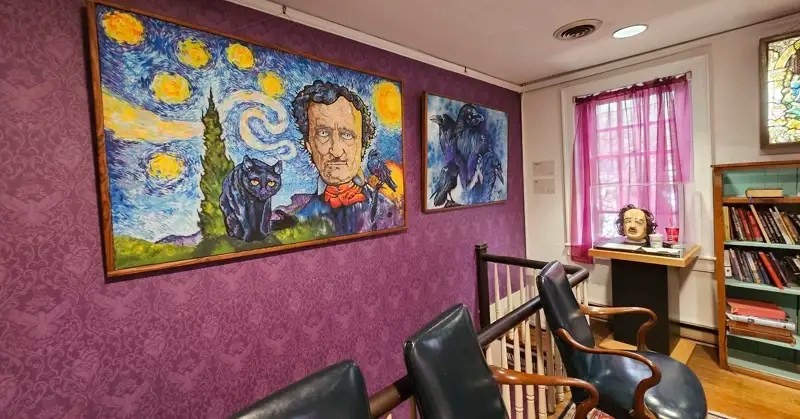
But back to Poe’s works.
Various interpretive signs tell the story behind some of Poe’s works. I especially enjoyed these, as I shared similar information as add-ons while writing my short story series, ’80s Tales of a Traveling Saleslady.
When it comes to Poe’s books, the museum has some rare editions and early publications. I remember reading parts of Tamerlane and Other Poems, Poe’s first poetry collection, so I enjoyed seeing it here. There are only 12 known surviving copies of the book!
Fast Fact: The collection contains a number of artifacts reflecting how Poe has been seen in the more than 175+ years since his death. My favorite? The Edgar Allan Poe bobblehead figures!

What’s in the Edgar Allan Poe Museum?
The Edgar Allan Poe Museum is made up of three buildings and a courtyard. My favorite exhibit, the Elizabeth Arnold Poe Memorial Building with artifacts covering his author’s career, is in the middle. It’s named for Poe’s mother, the English-born actress, Elizabeth (Eliza) Arnold Poe (1787 – 1811).
Fast Fact: The Elizabeth Arnold Poe Memorial Building isn't original. It was built in 1927 using some materials salvaged from earlier buildings tied to Poe's life.
The Old Stone House
The first building, where you enter the Poe Museum, is called the Old Stone House. It’s recognized as Richmond’s oldest surviving residential building. How old? It was built in the mid-1700s, somewhere between 1737 and 1754. The difference is due to local tradition crediting German immigrant Jacob Ege with its construction, versus tree-dating of the wooden floorboards.
Poe’s ties to the building itself are limited with one known exception. In 1824, at the age of 15, he stood as an honor guard outside the house on a visit from the Marquis de Lafayette to its owner, Samual Ege.
So, visitors start with belongings from Poe’s childhood.
Poe and his sister, Rosalie, were separated in 1811 after their mother died (their father had disappeared).
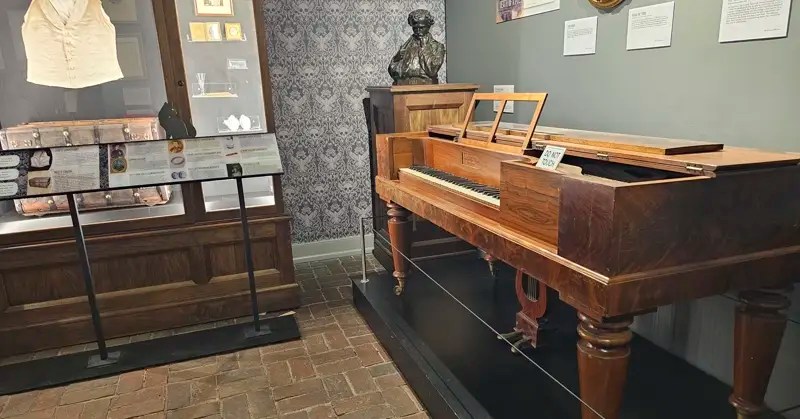
They stayed close into adulthood, so Rosalie’s piano is alongside her brother’s bed.
And the bed?
It’s a beautiful early 19th-century narrow wooden bed made of dark, polished hardwood.
As well as headboard and footboard, there are four short, turned corner posts topped with rounded, ball-like finials.
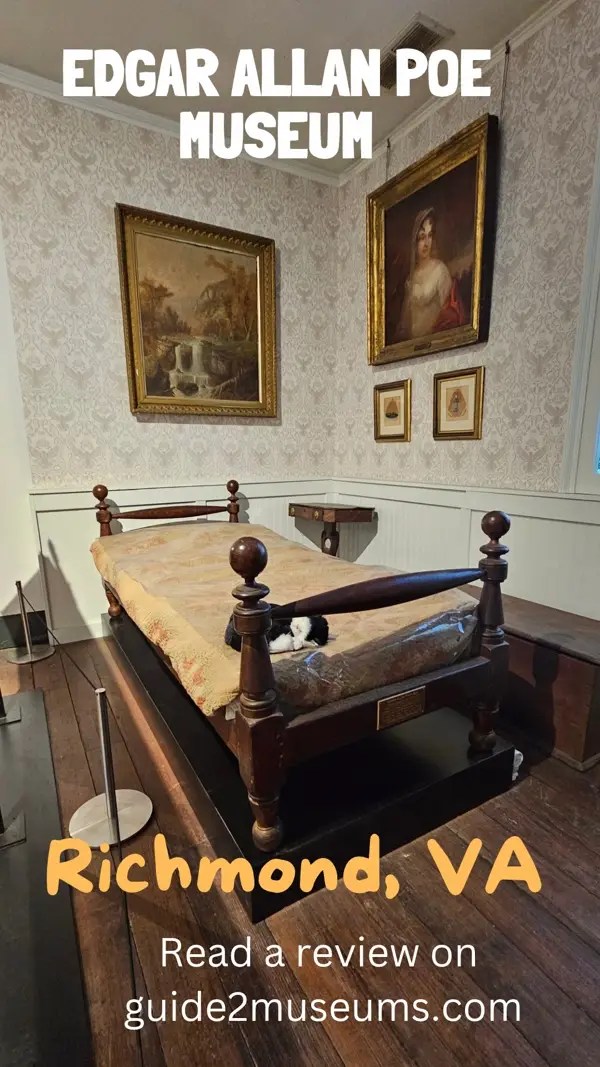
The bed’s coverlet, a Virginia star-pattern coverlet, is said to have been used by Poe.
Fast Fact: On my visit one of the museum's cats slept soundly on the coverlet of Poe's bed. The newest addition, Tib, is named for Edgar Allan Poe's childhood cat. Cat lovers can follow the cats on Instagram at: @poemuseumcats
Other artifacts I found especially interesting here included:
- Mantel from Poe’s foster family’s (John Allan) home that once stood six blocks from this historic property
- American Sheraton fancy painted side chairs used by Poe’s foster mother, Frances Allan
- Pair of marble-top tables from Duncan Lodge, where Rosalie was raised by her foster family, the Mackenzies
- Silver tea set used by Poe in his own home after he inherited it from his foster mother
- Irons used by enslaved servants in the Allan home
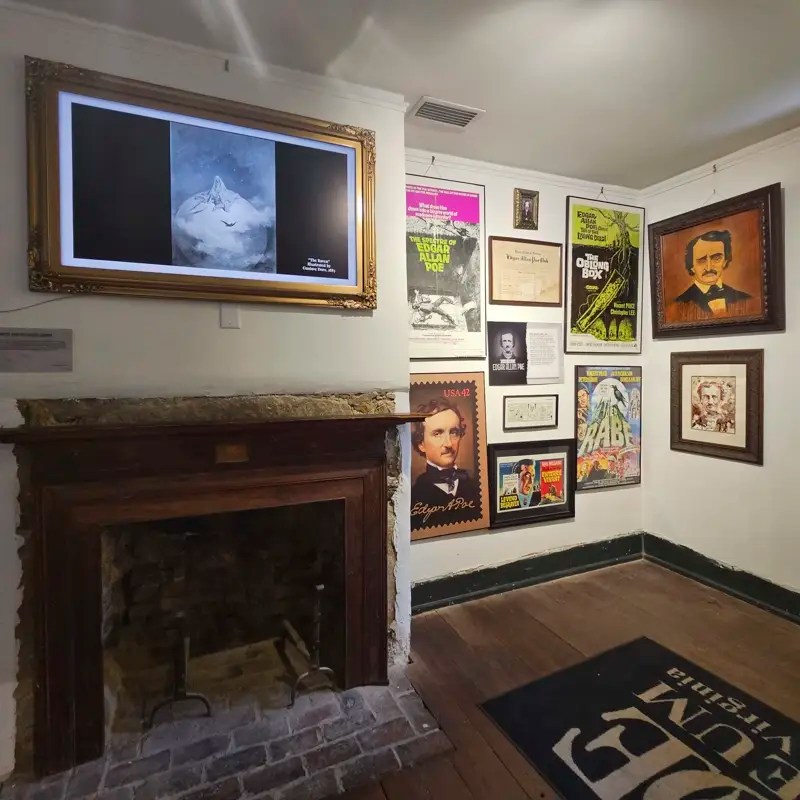
Courtyard: The Enchanted Garden
Set between the museum buildings, the Enchanted Garden is a beautiful hidden green space on the busy Richmond street. It was opened in 1922 as a memorial to Poe. What inspired it? Poe’s poem, To One in Paradise.
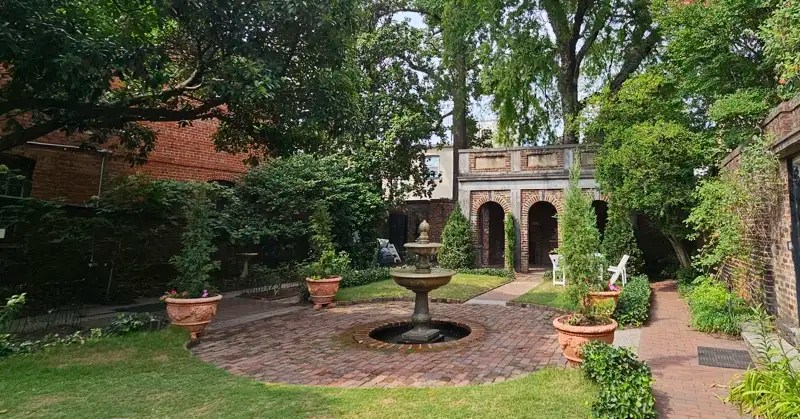
As well as flowers and shrubbery, the Enchanted Garden also has artifacts connected with Poe’s life. The stone benches were particularly interesting. They’re from the Yarrington Boarding House near the site where Poe married his wife, Virginia.
The Poe Shrine sits at the end of the garden. It’s built from reused bricks and building materials from the Southern Literary Messenger office. What’s that? A newspaper where Poe worked just a few blocks from the museum.
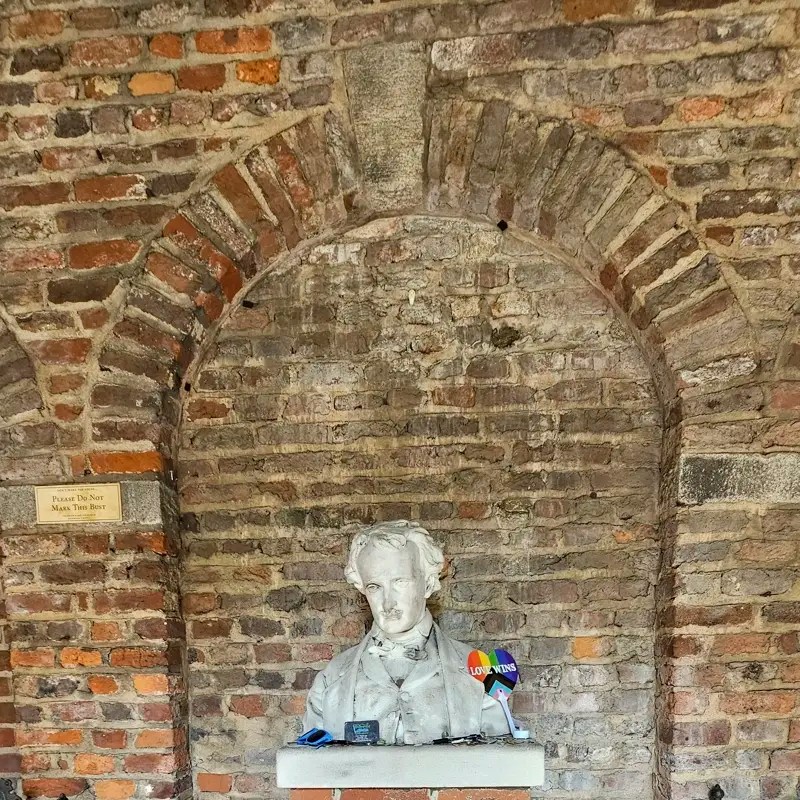
And of course, there’s also a “pallid bust” (a colorless, whitish sculpted statue of a person’s head and shoulders) of Poe inside the brick enclosure.
North Building
Edgar Allan Poe died mysteriously at the age of 40, on October 7, 1849, in Baltimore, Maryland. He’d been found by a newspaper reporter, dying in a Baltimore polling place, dressed in someone else’s clothes, and was taken to Washington Collect Hospital by his friend, Joseph Snodgrass. A week later, Snodgrass hosted his wake and paid for his coffin.
So what was mysterious about his death? The cause, of course!
The cause of his death has never been determined, but his attending physician described it as “inflammation of the brain,” “brain fever,” and “phrenitis.” To date, there are at least twenty-six different published theories.
~ Edgar Allan Poe Museum
Artifacts and interpretive panels describe the timeline around Poe’s final years and days. The artifacts include such things as:
- Gifts left on Poe’s grave
- Posthumous honors bestowed on Poe
- 2002 analysis of both Poe’s and his wife Virginia’s hair to try to determine if metals might have caused his death
Linda’s Road Trip Tips
Put Richmond on your list of East Coast bucket list of cities to visit! Okay, so I loved Richmond and the surrounding area.
If you’re road-tripping, check out nearby Ashland. Horse race enthusiasts, like me, will enjoy seeing the American sporting legend Secretariat monument.
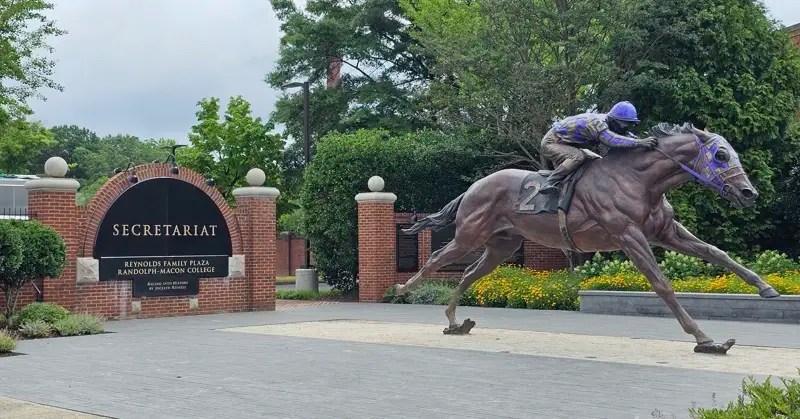
It’s 21 feet long and 11.5 feet tall, running as this amazing thoroughbred would have been during the three races that earned him the 1973 Triple Crown.
While you’re in Ashland, check out one of the U.S.’s most unusual historic railroad settings. What’s different? The downtown is divided by an active railroad line, plus there’s an historic old depot open for a stop. You can even take a walk through a 1926 Red Caboose!
And if you’re hungry? Indulge your sweet tooth at The Henry Clay Inn. The desserts were phenomenal. Luckily, I was able to share with others in my group, so I tasted a few!

If you can’t get enough of trucks and tractors, I also highly recommend spending at least a few hours in Colonial Heights at the Keystone Truck & Tractor Museum.
Who Should Visit the Edgar Allan Poe Museum?
The Poe Museum has wide appeal for literature enthusiasts. Anyone who studied Poe’s works in high school or college will find lots to relate to as they go through the exhibits. Likewise, lovers of the darker side in movies and books will get lots of insights into one of the genre’s original creators.
It’s a good stop for a multi-generational group with teens (small children won’t find a lot here).
The collection will inspire lots of conversations about favorite short stories and poems, along with Poe-inspired 21st-century editions.
Museum road trippers looking for something a little different will love the setting and the collection.
It’s a specialty museum that defines the word special!
When it comes to accessibility, visitors should keep in mind that the museum is in authentic historic buildings.
Doorways and thresholds aren’t always even. Staircases are narrow and steep.
However, the garden includes an accessible ramped walkway, so those with mobility issues can see at least parts of the museum.
How Do You Visit the Edgar Allan Poe Museum?
The Edgar Allan Poe Museum is on one of Richmond’s oldest commercial streets–East Main Street. Starting in the late 1700s, the street has been lined with businesses, shops, warehouses, and commercial districts. The nearby Richmond Main Street Station is one of Richmond’s most impressive historic buildings.
Parking & Public Transportation: The museum has a small, free parking lot, at the corner or East Main Street and North 20th Street. Street parking (check for restrictions) is also available on surrounding streets including East Main Street, North 20th Street, and Franklin Street. The GRTC Route 14 (Hermitage/East Main) bus (buses were free when I was there) stops at Main + 21st Street, which is just a short walk away.
Street Address: 1914 E Main Street, Richmond, Virginia.
The museum is open year-round. Check hours and admission costs at the Poe Museum website.
Keep up to date with what’s happening with the Poe Museum Facebook page.
Visit the Richmond Poe Museum virtually with WETA PBS on YouTube.
Plan your visit with Google Maps.
Read More Virginia Museum Reviews
Check out all these museum reviews for the state of Virginia, USA.
Read More Specialty Museum Reviews
- Master of the Macabre & Gothic: Edgar Allan Poe Museum in RichmondTake a look into the life and works of the writer who explored the world of psychological terror in his writings–the Edgar Allan Poe Museum in Richmond, Virginia.
- Texas Ranger Hall of Fame and Museum: Waco, TexasDiscover 200+ years of law enforcement history in the Texas Ranger Hall of Fame and Museum in Waco. A variety of galleries take visitors through the centuries, including a pop culture gallery.
- MOPOP in Seattle: Unparalled Look at Pop CultureSeattle’s Museum of Pop Culture has one of the world’s largest pop culture collections. Check out everything from Guitar Gallery to the Infinite Worlds of Science Fiction.
- Astonishing Evolution of Shoes: Bata Shoe Museum in TorontoShoes have been making fashion statements for centuries! The Bata Shoe Museum covers 4,500 years of shoes from every culture in the world.
- Toronto Police Museum & Discovery Centre: Two Centuries of Law Enforcement HistoryThe Toronto Police Museum is a popular Ontario attraction. Learn about the evolution of policing from the 1888 call boxes to modern forensics.
- Missouri State Penitentiary Museum: Jefferson City, MissouriWhether you’re looking for quirky or historic, a visit to Jefferson City’s Missouri State Penitentiary Museum fills the bill. After operating for 168 years, the prison was opened as a museum in 2013.
- Butch Cassidy Bank Robbery Museum: Montpelier, IdahoMontpelier, Idaho, is home to the Butch Cassidy Bank Robbery Museum. See this last verified location robbed by the Wild Bunch.
- Frontier Prison Museum: Rawlins, WyomingPrison life in the early 1900s was a matter of survival as you’ll learn when you visit the Wyoming Frontier Prison Museum in Rawlins.
- Toronto’s First Post Office Museum & National Historic Site: OntarioToronto’s First Post Office Museum is in downtown Toronto, Canada. Discover many crazy facts about early postal history in Canada.
- Gone With the Wind Museum: Memorabilia in Jefferson, TexasScarlett O’Hardy’s Gone With the Wind Museum appeals to the romance in all of us. Whether you just want to know more about the book and movie or their Hollywood production, the museum takes you back into Southern U.S. history.