The Royal Tyrrell Museum has it all in the world of dinosaurs–a massive collection, extraordinary mummified specimens, immersive interactive experiences, and live preparation labs. Plus, it’s an active research facility making breakthrough scientific discoveries. No wonder the Tyrrell is Alberta’s most visited museum!
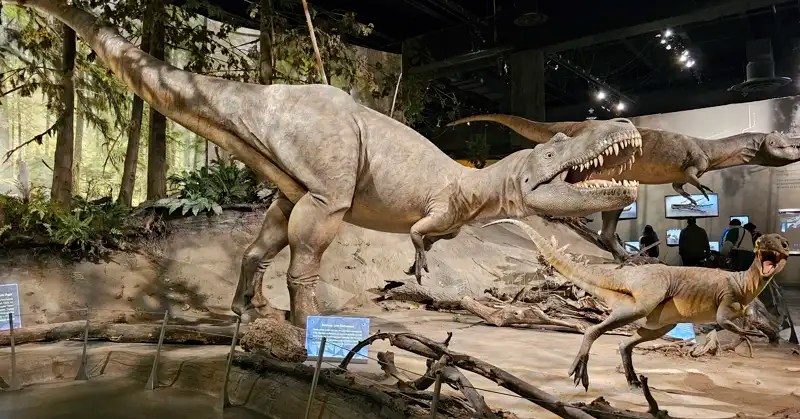
Linda’s Pick of the Exhibits
So what caught my eye in this museum that covers 3.9 billion years of Earth’s history? Everything! It was hard to pick, for sure.
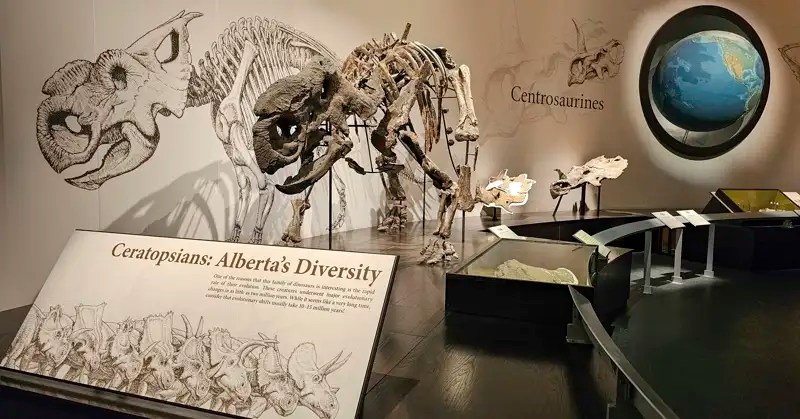
However, when it came down to the nitty gritty, I picked the Ceratopsians, or horned dinosaurs. What makes them stand out? Well, it’s not overall length or weight, but rather a rapid rate of evolution.
Indeed, these dinosaurs experienced major evolutionary changes in as little as two million years. How long does evolution usually take? The Tyrrell notes that evolutionary shifts usually take 10 to 15 million years!
What’s the rarest horned dinosaur in the Royal Tyrrell Museum?
Hellboy, a new species of horned dinosaur discovered in a cliff along the Oldman River in southeastern Alberta, is likely it’s rarest resident.
And how was Hellboy discovered? A member of the public found the 1.6 metre skull when the waterline fell. The skull was on a steep cliff that often experienced dangerous rockfalls.
Hellboy was a chasmosaur, but looked like a centrosaur. Centrosaurs had become extinct before Hellboy appeared, but he has the big nose horns and small eye horns of a centrosaur. Some even called his armour-plating bizarre.
While Hellboy is part of the family of Triceratops three-horned monsters, he does have one claim of having the longest. The longest what? The longest nose, up to 28 cm (11 inches) long!
So where did Hellboy’s name actually come from? From the problems encountered during extracting it from the hard rock where it was found. Since the section of the river where it was found was also a habitat for Alberta’s provincial fish, the bull trout, excavators also had to ensure no sediment or debris hit the water.
And finally, a romantic element often trumps everything. Indeed, Caleb Brown, a paleontologist at the museum, proposed to a co-worker at the end of a scientific paper he published about Hellboy!
There are also various other highlights in the Ceratopsian specimens at Royal Tyrrell. They include:
- Calli – A mostly complete Triceratops skull from Canada, considered one of the best-preserved and most complete.
- Royal Horn Face – A holotype Regaliceratops specimen known for its ornate, crown-like projections on its frill.
- Chasmosaurus – Prominent specimens with large, perforated frills.
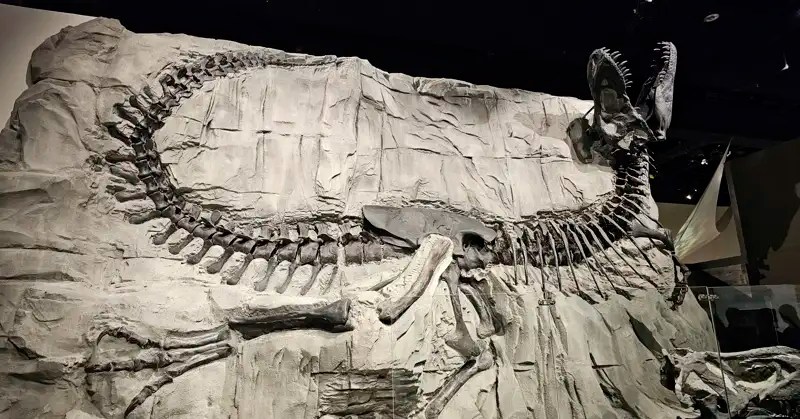
What’s at the Royal Tyrrell Museum?
The Tyrrell Museum opened on September 25, 1985. It’s named for Joseph Burr Tyrrell, who discovered a 70-million-year-old skull near present-day Drumheller in 1884.
That dinosaur was named Albertosaurus sarcophagus. The “Royal” part of the museum’s name was granted five years later by Queen Elizabeth II in recognition of the museum’s palaeontology contributions.
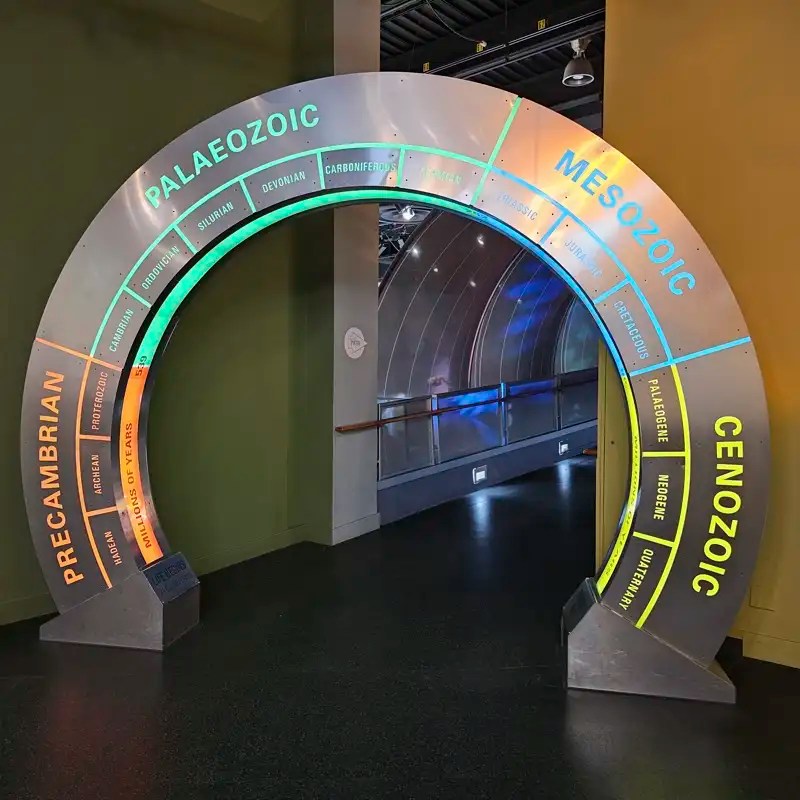
While the museum location spans 77,500 sq. m (835,000 sq. ft), the main exhibit building is just 12,300 sq. m (132,500 sq. ft.). Inside the main building, only about 0.5% (about 800 fossils) of the collection is displayed in the exhibits. Indeed, the collection has more than 170,000 individual specimens and adds thousands of artifacts each year!
Fast Fact: Royal Tyrrell Museum has over 350 holotypes. What are they? The definitive physical specimens used by scientists to describe and name brand new species.
That leaves lots of rooms for changing exhibits, so there’s always something new to see.
Galleries & Areas
The main galleries take you, as you’d expect, on a journey through time. From early single-celled life to the last ice age and mammoths, information is presented in charts, dioramas, casts alongside real fossils, and interactive exhibits.
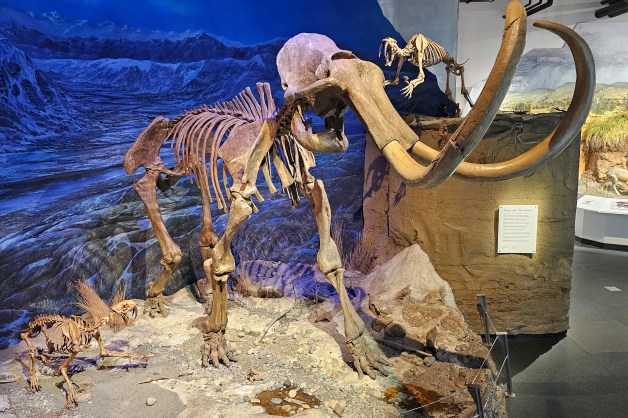
All in all, the galleries cover roughly 3.9 billion years!
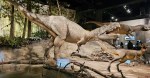
And the focus of all those years is Dinosaur Hall. Here, you’ll find beasts so big they could step on you like a mouse or a bug. And while you probably won’t be able to pronounce the dinosaur names, they’re all provided along with tidbits of additional information.
Fast Fact: The majority of specimans in the Royal Tyrrell were found in Alberta, one of the most remarkable places in the world to find fossils, particularly those from 80 - 55 million years ago.
~ Royal Tyrrell
For those who’ve always wanted to go on a dinosaur dig, you can watch through the glass windows around the Preparation Lab. Scientists are at work on the other side, freeing fossils from rock, showing you the painstaking skills required to extricate those bones.
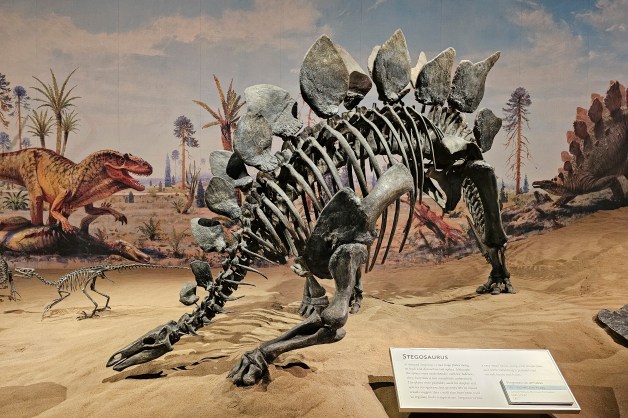
There’s also a Cretaceous Garden. It provides a peaceful, beautiful greenhouse collection of ancient plant relatives. As well, the family spaces provide kids with touchable fossils, interactive displays, and activities to keep them engaged in learning.
Athough Tyrannasaurus rex is among the most iconic dinosaurs that lived in Alberta during the Late Cretaceous, it only existed for about 1.0 million years at the end of the Mesozoic Era along with Triceratops and Ankylosaurus. During that time, Alberta’s climate was warmer and drier than it had been previously, perhaps allowing T. rex and these other large dinosaurs to replace earlier forms such as Albertosaurus, Daspleosaurus, Eotriceratops, and Euoplocephalus that lived during cooler and wetter conditions.
~ Royal Tyrrell Museum
Linda’s Road Trip Tips
Drumheller, Alberta, where the Royal Tyrrell Museum is located, is located pretty close to me. So, we’ve been visiting periodically since our kids were small in the ’80s.
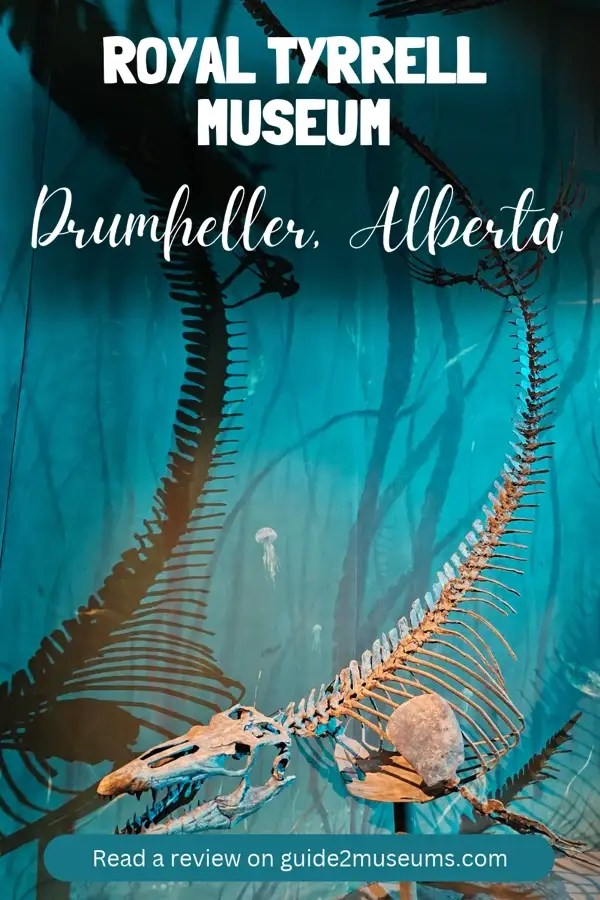
On our last visit, we stayed at the budget-friendly Travelodge by Wyndham Drumheller.
As well as comfort and price, it had the advantage of being next to a number of businesses that included a liquor store and the Happy Belly Grill & Bar.
David declared the Happy Belly fish & chips were better than Joey’s Only, his prior favorite!
While you’re at the museum, I highly recommend taking some time to walk the Badlands Interpretive Trail next to it.
The one-kilometer (.62 miles) paved loop trail lets you easily explore Midland Provincial Park and the Alberta Badlands.
And I can guarantee that no matter how many times you’ve visited badlands, there’s always a new shape or configuration to see!
The interpretive trail is free, but you can also sign up for other types of guided activities and hikes that have a cost.
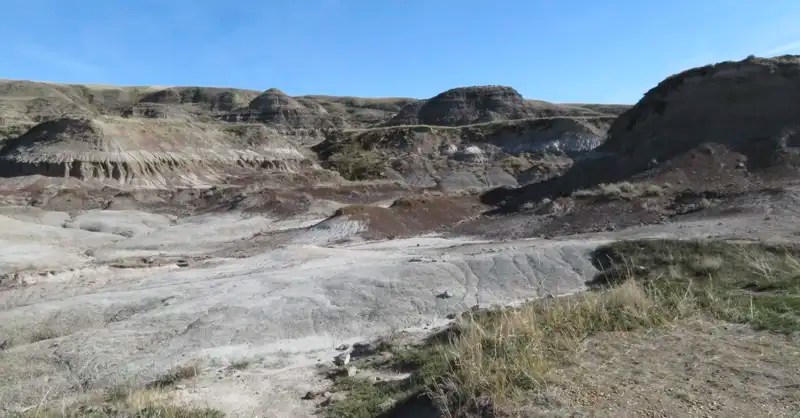
If you’re road-tripping, do head on to the Atlas Coal Mine National Historic site to learn more about this part of Alberta’s history. Along the way, you can see the world’s largest dinosaur roadside attraction in downtown Drumheller, the Hoodoos, the Star Mine Suspension Bridge, and the East Coulee School Museum.
Who Should Visit the Royal Tyrrell Museum?
Now who should visit is an easy question. Everyone should visit the Royal Tyrrell, because, after all, dinosaurs fascinate us all!
Fast Fact: The Royal Tyrrell has 5 specimens in the Guinness Book of World Records.
The museum is a top-tier family museum, even for kids who haven’t dragged home every dinosaur book from the library yet. (They will after a visit!)
Kids, from toddlers to teens, enjoy seeing these giant creatures and using the interactives.
Indeed, this is another great intergenerational destination.
As the ongoing popularity of movies like Jurassic Park (1993) shows, dinosaur fans come from every age-group.
I know we’ve rewatched all of the movies in the series a few times.
No matter the visitor’s age, from stroller to wheelchair, Royal Tyrrell has you covered.
Manually operated wheelchairs and strollers are available to rent at the Visitor Services Desk. The museum has elevators between floors and wheelchair ramps.
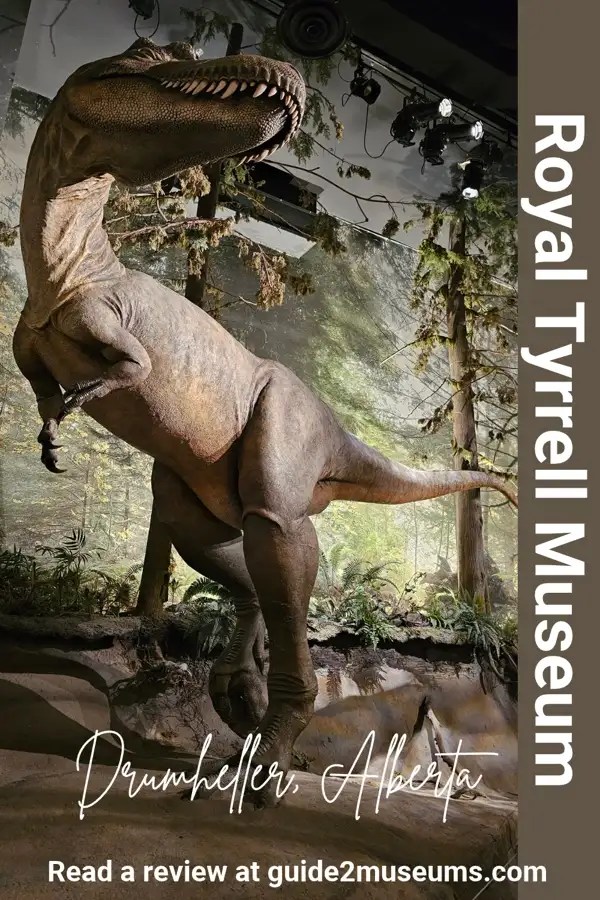
Birds are living dinosaurs. The idea was initially controversial but gained momentum as some traits previously considered exclusive to birds–such as wishbones, hollow bones, and feathers–were found to be shared by bipedal carnivorous dinosaurs known as theropods.
~ Royal Tyrrell Museum
We spent about two hours on our last visit, but it was about our fifth. If someone in your group is a big dinosaur fan and it’s your first visit, you might want to plan for up to half a day.
How Do You Visit the Royal Tyrrell Museum?
The Royal Tyrrell Museum is located in Midland Provincial Park on Highway 838. It’s just a short drive of 6 km (4 miles) from downtown Drumheller.
Parking: The museum provides free parking for everything from small cars and bicycles to motor coaches and RVs. During the peak summer season, a courtesy shuttle is available for visitors with limited mobility to take them from the parking lot to the entrance.
Street Location: Midland Provincial Park, AB-838, Drumheller.
The museum is open year-round, but days and hours vary by season. Check open times and admission costs on the Royal Tyrrell Museum website. You can also buy advance tickets online to avoid line-ups on the busiest days.
Keep up to date with what’s happening on the Royal Tyrrell Museum of Palaeontology Facebook page.
Take a virtual tour on YouTube with the Royal Tyrrell Museum.
Plan your visit using Google maps.
More Places to See in Alberta
Check out more things to see and do in Alberta with all of guide2museum.com’s reviews of museums in Alberta.
Explore More Natural History Museums
- Royal Tyrrell Museum: World-Class Dinosaur Museum in Drumheller, AlbertaThe Royal Tyrrell Museum is a top tier destination for natural history enthusiasts and those fascinated with dinosaurs. Most of the specimens from 80 – 55 million years ago were found in Alberta.
- Glacier Gardens: Juneau Botanical Gardens & Rainforest ToursGlacier Gardens are botanical gardens that offer a soft adventure taking visitors 600 feet up Thunder Mountain through the Tongass temperate rainforest. The forest is the world’s largest remaining intact coastal temperate rainforest.
- Royal Ontario Museum in Toronto ReviewCanada’s largest museum, ROM, explores natural history and world cultures, providing interactive learning experiences such as the Bat Cave. Visit the Royal Canadian Museum in Toronto, Ontario.
- Amazing Giant Bison, Beaver, Mammoths & More: Yukon Beringia Museum in WhitehorseGiant ancient animals tell the story of life in Beringia, the Yukon landmass of the last ice age. Over 50 Yukon fossils are featured in the Yukon Beringia Interpretive Centre in Whitehorse.
- Royal Saskatchewan Museum & World’s Largest T-Rex DinosaurSee the world’s largest T. rex dinosaur at the Royal Saskatchewan Museum in Regina. Its five galleries all have impressive artwork to bring the displays to life.
- Naranjo Museum: Dinosaurs & Fossils in Lufkin, TexasThe Naranjo Museum of Natural History is located in Lufkin, Texas. You’ll find lots of dinosaurs, fossils, and even a moon rock.
- Field Museum: Natural History Museum in Chicago, IllinoisThe Field Museum in Chicago is considered one of the world’s best dinosaur museums. But that’s not all – see nearly 40 million artifacts and learn fascinating facts about earth’s natural history!