Visitors to Montreal, Quebec, have many great museum attractions to add to an itinerary. Many overlook the Écomusée du fier monde, which tells a poignant story of the city’s industrial neighborhoods and the stories of the working-class people who lived in them. However, these memories, struggles, and achievements of ordinary people shouldn’t be missed!
Linda’s Pick of the Exhibits
The Écomusée du fier monde gave me an insight into a world far removed from my personal experience. However, it also showed me that no matter what part of the country we live in, there are threads that connect us.
I’d deliberately chosen this museum about lives in Montreal’s industrial neighborhood specifically for those insights. So, it was the exhibits about life in this area that most fascinated me.
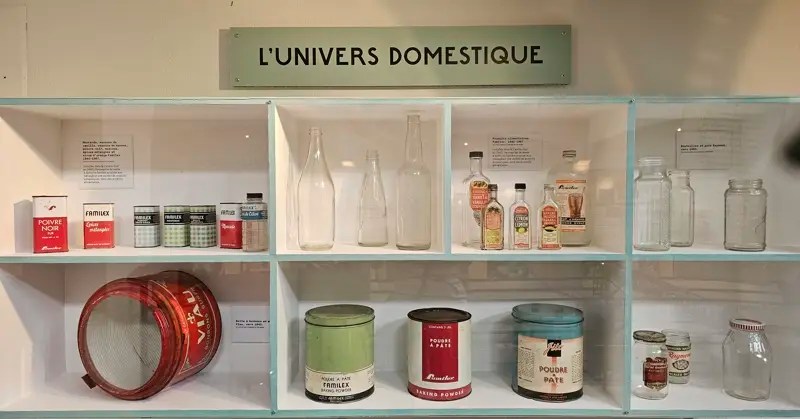
The image above is a great example of how things were the same, but different. Many of the product containers shown are from the Familex brand (the spices and food flavoring extracts) and Raymond brand of jams, pickles, ketchup, mustard and more.
But they were different, weren’t they?
Officially, yes. But Quebec’s Familex brand was similar in business model and products to the Watkins traveling salesmen’s goods I’d grown up with. It was always an exciting day when the Watkins‘ man and his station wagon pulled into our farm yard!
My favorites? The drink mix flavors, so we could have orange or root beer at home.
Fast Fact: The Montreal based Familex company was founded in 1928. In 1943 it bought the building first occupied by Barsalou (a soap manufacturer). Familex manufactured dozens of different household products from maple extract to insecticides! Hundreds of Familex representatives sold these products door-to-door around the city and even on country roads. The building was destroyed by fire on January 20/21, 2026.
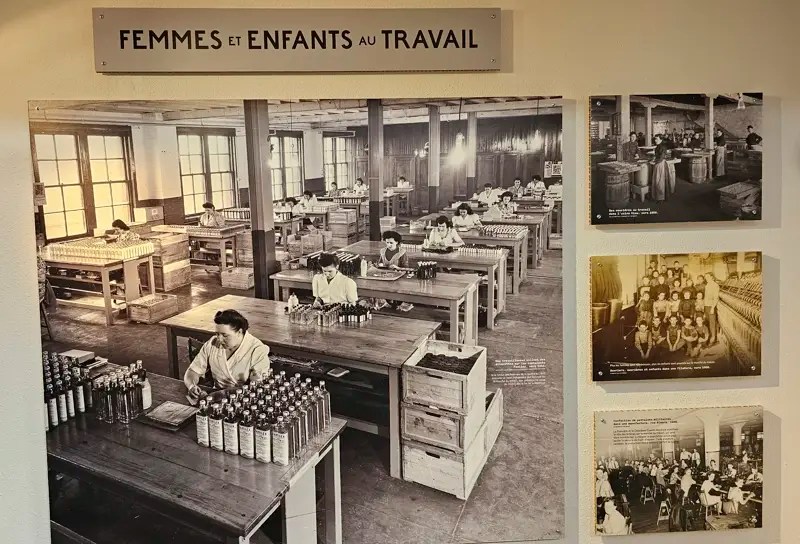
The Raymond story is another success from Montreal manufacturing. Founded in 1905, the company employed as many as 1200 people at its busiest, processing everything from strawberry jam to table syrup.
But the museum’s story is about more than what’s inside the containers. It’s about the workers. Raymond’s workforce was predominantly female, as were the production workers at Familex. It provides a valuable reminder that the history of Montreal’s working-class neighborhoods is also a history of working women.
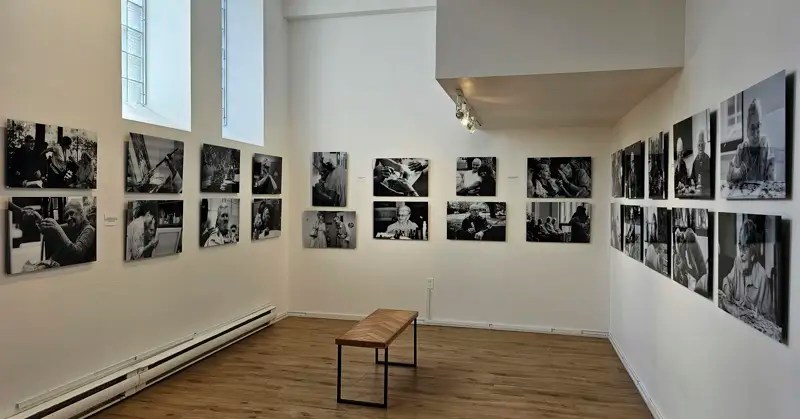
What’s in the Écomusée du fier monde?
The Écomusée du fier monde is situated in the former Généreux Public Bathhouse. A bathhouse, you ask? Well, in 1927, things like indoor plumbing, private bathrooms and hot showers were luxuries not readily available to the working class of Montréal’s Centre-Sud neighbourhood.
The bathhouse was built with Art Deco architecture, vaulted ceilings, and impressive interior spaces. Back in the day, it was a place for locals to wash and bathe and meet with neighbors. Today, it’s part of the museum’s interpretation of the community.
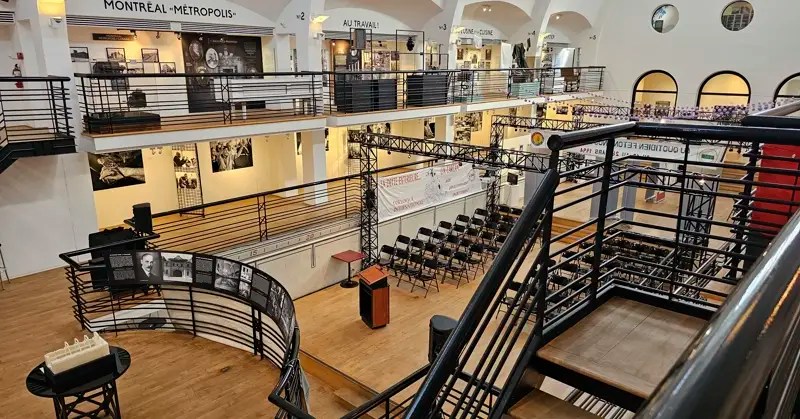
Occupying three floors, the museum houses both permanent and temporary exhibition areas.
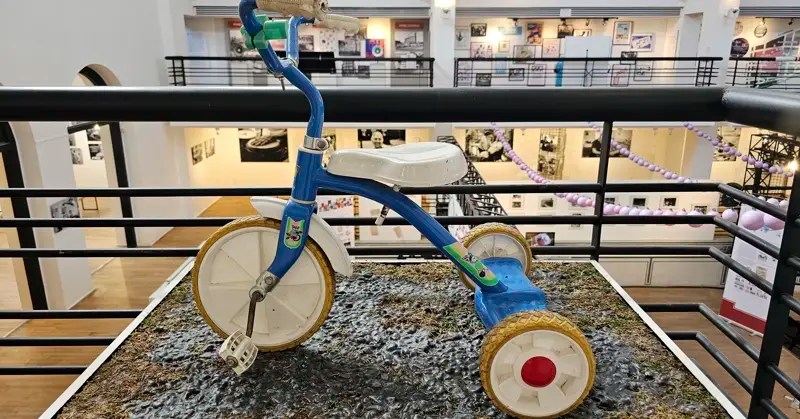
One of the most fascinating things about the museum is its design. An entire large central space–once the bathhouse’s swimming pool–rests under a curved ceiling. Cubicles built into the walls along two sides on the top two levels separate exhibits in an easy-to-follow timeline.
Fast Fact: The original bathhouse (Bain Généreux) opened in 1927. Its swimming pool occupied the large central area. In 1940, the pool welcomed 87,450 swimmers! It eventually became a training facility for the Club aquatique Montréal Olympique.
Main Permanent Exhibition
The main permanent exhibition is titled All the Livelong Day! The Joys and Sorrows of Life in a Working-Class Neighbourhood. Its time period? Mid-1800s onward. That covers a big span from industrialization to deindustrialization to community activism.
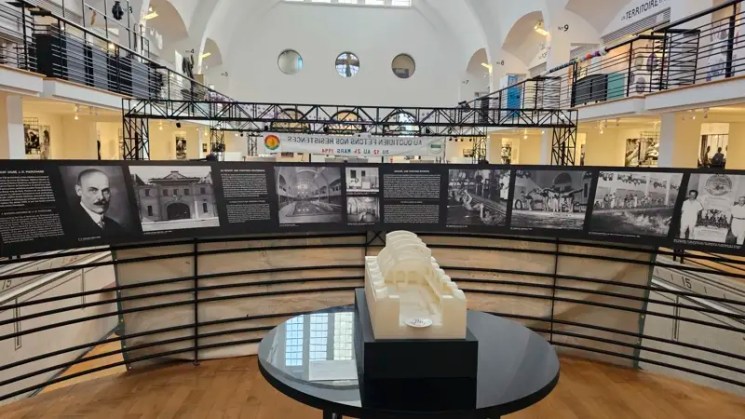
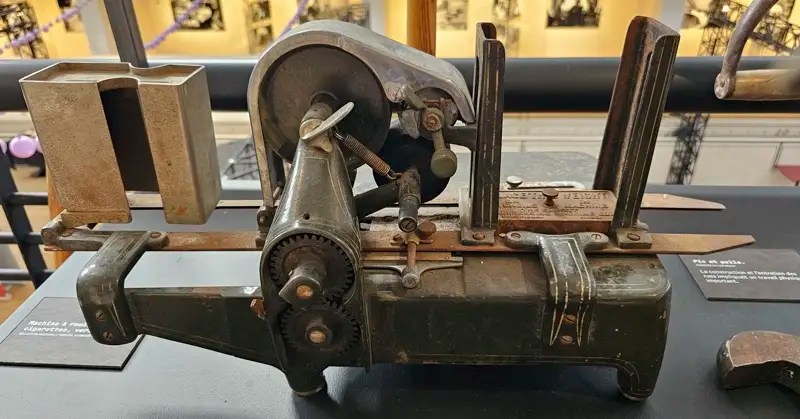
Stories are told here in various ways. Photographs document the changing buildings and people. Artifacts, such as a machine that made cigarettes, ties manufacturing and the daily grind of lives together. There are also archival documents and personal testimonies.
As time went on, deindustrialization in the area resulted in lost jobs and urban redevelopment. The 1974 housing protest display shows how residents responded.
In addition to permanent exhibitions, there are also rotating displays.
“Members of a dynamic bourgeoisie made their fortunes in a range of sectors, including food, leather, textiles, metalworking, tobacco, rubber, chemicals, and railway equipment. As for workers and their families, they faced difficult conditions in neighbourhoods organized around factory life.”
~ Écomusée du fier monde museum
Linda’s Road Trip Tips
I visited Montreal on a marathon trip that started in Quebec City, Montreal, then Gatineau and Ottawa, finally flying into Toronto. My transportation between them? The Orleans Express bus line. It ran right on time, provided comfy seats, and even offered free Wi-Fi service.
When I travel, I’m always looking for new experiences–even in places to stay.
So, I selected the historic Grey Nuns Residence at Concordia University (I was there on summer break) in Montreal. Built between 1869 and 1871, it was named a National Historic Site of Canada in 2011.
It had been sold to Concordia University in 2007, and converted to a residence for 600 students.
Was it an experience? Yes, indeed.
The rooms were much more spacious than I expected, and I loved the tall, openable window.
Bathrooms, of course, were down the hall, but I was lucky and my room was just a few feet away.
Even though I hit temperatures around 90 degrees (32 C) for my stay, closing the curtains and opening the window at night kept the room all right.
The best thing about the Residence (besides the low cost!) was its location only half a block away from the Guy-Concordia station on the Montreal Metro Green Line. I bought a very inexpensive Metro weekend pass and began exploring.
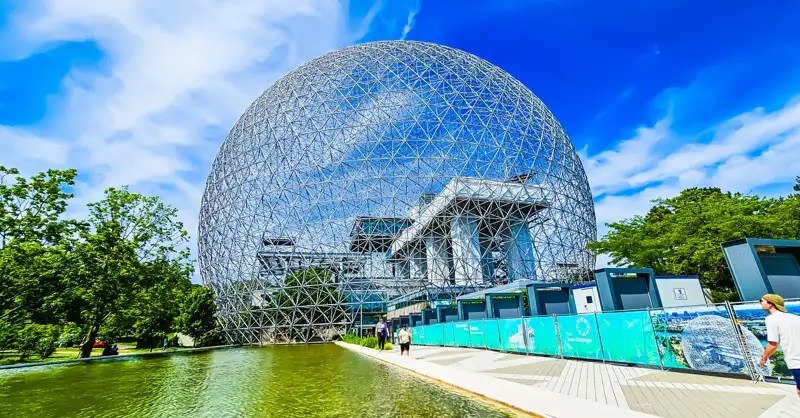
Must-see museums and historic sites in Montreal? The Biosphere was a top pick for me. I’d had the geodesic dome, former Expo 67 pavilion, on my bucket list for years.
I like to mix things up, so I also visited the Montreal Museum of Fine Arts. There, I found the distinctive works of Montreal artist, Alan Glass, my favorite. Its close proximity to the Residence (a 10 minute walk), also made it an obvious choice with my short stay.
Who Should Visit the Écomusée du fier monde museum?
The Écomusée du fier monde is particularly intriguing for visitors who love community heritage museums. It provides a much more intimate history than you normally get, particularly as it covered a single street.
And of course, its former purpose as a bathhouse makes the museum intriguing to architecture lovers as well as museum-goers.
Its 1920s architecture is beautiful and would also appeal to social history enthusiasts.
After all, what’s more fascinating than taking a deep dive into a single community and its history from the 1850s to today?
The museum has some practical challenges when it comes to accessibility and preserving its historic aspects.
There are wheelchair lifts to all exhibition levels. However, they’re small and may require staff assistance.
Likewise, anyone with physical limitations can’t follow the entire exhibition route to keep the timeline incremental. Visitors with hearing impairments can access digital tablets for the permanent exhibition.
How long will a visit take? I spent about an hour on the permanent exhibit and half an hour on the temporary exhibits.
How Do You Visit the Écomusée du fier monde museum?
The Écomusée du fier monde is located in The Village (Le Village). It’s best known as one of North America’s largest and most recognizable LGBTQ+ neighborhoods, providing a center for nightlife, entertainment, diversity, and community pride.
Parking: There isn't a museum parking lot for cars. Some municipal parking spaces are available in the surrounding neighborhood. I used the Metro and got off at Berri-UQAM.
Street Address: 2050 Atateken Street, Montreal, Quebec, Canada.
The museum is open year round. Check the days and hours at the museum website.
Keep up to date with the museum Facebook page. (in French with translation available)
See this music background, virtual YouTube visit by Bonjour Life in Canada.
Read More Quebec Museum Reviews
Check out all these museum reviews for the Canadian province of Quebec!
Explore More Heritage Museums
- Écomusée du fier monde: Working-Class Museum of Centre-Sud, MontrealMontreal, Quebec’s Écomusée du fier monde museum provides insights into a single neighborhood from industrialization (1850s) through to deindustrialization. Its strength is in capturing the voices of residents.
- Musée Huron-Wendat: Preserving First Nations History in QuebecThe museum is a key Indigenous tourism attraction in Quebec. Its interactive cultural experiences and adjoining multimedia light are a must-do on a Quebec City visit.
- Grand Coteau Heritage & Cultural Centre: Shaunavon, SKVisit a local museum, art gallery, public library, and visitor centre at the Grand Coteau Heritage & Cultural Centre in Shaunavon, Saskatchewan. There’s always something happening!
- Boot Hill Museum: Kansas Wild West Myth Meets Lived HistoryThe Boot Hill Museum in Dodge City, Kansas, provides an authentic–and exciting–look into the state’s past as Queen of the Cowtowns.
- Maple Creek’s Intriguing Jasper Cultural & Historical CentreLearn more about “The Old Cowtown of Maple Creek,” Saskatchewan, with a visit to the Jasper Cultural & Historical Centre. From a Charlie Russell print collection to mounted policing history, you’ll find lots of intriguing stories.
- Front Street Cowboy Museum: Ogallala, NebraskaStep into the wild, wild west in Ogallala, Nebraska. Its stories cover cowboys and lawmen to the Nebraska Sandhills Warrior Rabbit and undertakers.
- Discover the Mormon Handcart Historic Site & Devil’s Gate in WyomingDiscover the history of pioneers who walked across the U.S. pulling hardcarts holding all of their belongings. The Mormon Handcart Historic Site consists of Martin’s Cove and the Sun Ranch.
- See 100 Miles Across Nebraska From Scotts Bluff National MonumentFrom hiking to museum exhibits about the Oregon Trail that ran through Gering, Nebraska, Scotts Bluff National Monument is a great summer stop. You’ll also see photos, sketches, and watercolors by William Henry Jackson.
- Standout Ranching History at the MonDak Heritage Center: Sidney, MontanaCheck out the ranching displays and 1930s Main Street at the MonDak Heritage Center in Sidney, North Dakota. If you love Western art, see the collection from J.K. Ralston.
- New Iceland Heritage Museum: Gimli, Manitoba, CanadaFrom Icelandic Rocks! to life inside an Icelandic settlement, there’s lots to learn at the New Iceland Heritage Museum. It’s situated in Gimli on the shore of Lake Winnipeg 55 miles from Winnipeg, Manitoba.
- Crazy Horse Memorial & Museums: South Dakota’s Black HillsThe Crazy Horse Memorial is a sculpture cut into Thunderhead Mountain in the Black Hills of South Dakota. There’s also a museum and cultural center with the memorial.
- Myra Museum: Lustron House & More in Grand Forks, North DakotaThe Myra Museum in Grand Forks, North Dakota, is an open air heritage museum. It features the historic Campbell House and a Lustron metal prefabricated home, as well as several other furnished buildings and a main museum building.
- Fort Cody Trading Post: Miniature Wild West Show in North Platte, NebraskaThe key attraction at the Fort Cody Trading Post in North Platte, Nebraska, is a miniature wild west show. This amazing piece of art consists of 20,000 to-scale carvings of Buffalo Bill’s show.
- Miracle of America Museum: 40+ Buildings in Polson, MontanaThe Miracle of America Museum is located in Polson, Montana, just outside Glacier National Park. It’s an eclectic collection of Americana from logging tow boat to toys and dolls.
- Sukanen Ship Pioneer Village & Museum: Moose Jaw, SaskatchewanThe Sukanen Ship Pioneer Village and Museum is just outside Moose Jaw, Saskatchewan. This open air museum features a huge Allis Chalmers & Case IH tractor collection, and much more!
- Museum of Northern British Columbia: Indigenous Art & History in Prince Rupert, British ColumbiaThe Museum of Northern British Columbia is in Prince Rupert. Its collection focuses on the Indigenous art and history of the area’s First Nations.
- Heritage Village: Museum in Weyburn, SaskatchewanHeritage Village museum is located in Weyburn, Saskatchewan. It recreates a small town of the early 1900s in an open air collection of buildings and artifacts.
- Vermilionville: Living History Open Air Village in Lafayette, LouisianaThe Vermilionville Historic Village is an open air museum in Lafayette, Louisiana. It has a variety of displays, artifacts, buildings, and costumed interpreters on 23 acres along Bayou Vermilion.
- Museum of the Southern Jewish Experience: New Orleans, LouisianaThe Museum of the Southern Jewish Experience curates the history and experiences of people from 13 southern states. Jews and non-Jewish people will find the history fascinating.
- National Doukhobor Heritage Village: Veregin, SaskatchewanMany Doukhobor people came to Saskatcewan in the early 1900s to escape religious persecution in Russia. Visit their historic settlement in Veregin.
- Bonanzaville: Open Air Pioneer Village Museum in Fargo, North DakotaThe open air pioneer village museum, Bonanzaville, in Fargo, North Dakota, has 40+ historic buildings. It contains typical pioneer community & agricultural exhibits with lots of extras.
- Range Riders Museum: Old West Lives Again in Miles City, MontanaVisit the Range Riders Museum in Miles City, Montana, for a real old west experience. Created by working cowboys, it tells the story of the West.